On this page
For a blackout shopping list, buy in this order: bottled water, no-cook food and a tin opener, then a torch with spare batteries, a battery FM radio and a power bank, then first aid and hygiene items. That matches the government's Be Ready list. No blackout is planned or forecast, so spread the buying over several weeks.
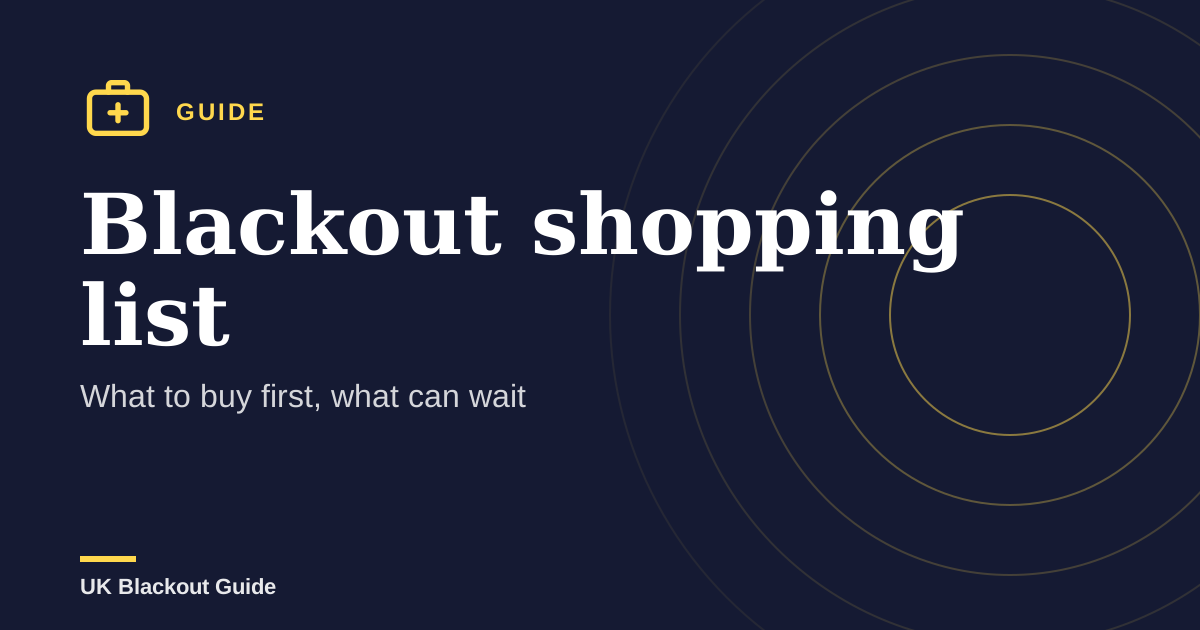
- No blackout is forecast. Spread purchases over weeks.
- Water and no-cook food come first.
- Then torch, batteries, FM radio and power bank.
- Generators and bulk food are not on the official list.
- Check the kit every six months.
A list based on what the government asks for
What to buy for a blackout is set out in the government's Be Ready kit list, and this page puts it in buying order. Be Ready, launched on 22 October 2026, asks households to be able to manage for three days as general preparedness. No blackout has been announced, planned or forecast, and the campaign says to build the kit gradually, which is the idea behind preparing without panic buying.
So there are three stages below: first shop, second shop, and things that can wait. Before buying anything, spend an evening checking what you own, using our one-evening blackout plan.
First shop: water, food and a tin opener
These are cheap, sold everywhere and you will use them anyway.
- Bottled water: 3 litres per person per day for drinking, so 9 litres each for three days. Add more for cooking and washing.
- Food that needs no cooking or fridge: tinned fish, beans, soup you can eat cold, fruit, crackers, cereal bars, long-life milk, or anything else from which foods to keep in for an emergency.
- A manual tin opener, if yours is electric or missing.
- Baby supplies and pet food, if they apply. Be Ready prefers ready-to-feed formula.
If you want to store tap water instead of buying bottles, use containers made for the job, and the water containers buying list compares sizes.
Second shop: light, radio and phone charging
These are the items Be Ready names that most homes lack. A battery or wind-up torch comes first, and the torches buying list has both kinds. The campaign says torches are safer than candles.
Then a battery or wind-up FM radio, for news if broadband and mobile data stop.
Then a power bank. Around 20,000 mAh gives a typical phone 3 to 4 charges, and the power banks buying list compares sizes.
Add spare batteries in the sizes your torch and radio take, which our guide to which batteries to keep at home helps you work out.
Third shop: first aid, hygiene and cash
Be Ready lists a first aid kit, essential medication, hand sanitiser and wet wipes. Check the first aid kit you have before buying another, since plasters and wipes go out of date. Ask your pharmacist or GP about keeping a sensible reserve of prescription medicines, and follow their advice.
Cash is on the list too, in notes and coins, because card payments can fail in a power cut. You do not buy it, but add it to the plan, and decide how much cash to keep at home. Printed copies of documents and a written contact list cost almost nothing.
Blankets, sleeping bags and warm clothing are usually in the house already. Gather them before buying more. A hot water bottle or an extra fleece blanket is a low-cost addition if your home runs cold.
What can wait
Nothing in this section is on the official list. These are comfort items some households add later:
| Item | Why it can wait |
|---|---|
| LED lantern | Nicer for lighting a room, but a torch meets the need. |
| Vacuum flask | Useful for hot drinks if filled before a planned cut. |
| Portable power station | Runs a router or laptop. Costly, and optional for three days. |
| Camping stove | For outdoor use only. The official food list needs no cooking. |
Never use a camping stove, barbecue or generator indoors, in a garage or in a tent. Carbon monoxide has no smell. If you own any fuel-burning appliance, fit an audible alarm marked EN 50291.
What to leave on the shelf
Be Ready does not ask for a generator, months of food or specialist survival gear. Bulk buying leaves less for other people and often goes to waste. Our guide on what not to buy for a power cut names the common regrets.
If a particular torch or radio is out of stock, another type will do, as what to buy when torches and radios are out of stock explains.
Keeping costs down and the kit fresh
Adding two or three items to each weekly shop spreads the cost over a month or so. Own-brand tins and supermarket water are fine. Building an emergency kit on a budget gives a week-by-week plan.
Store everything together, off the floor, somewhere cool. Be Ready says to check the kit every six months. Eat and replace the food, change stored tap water, test the torch and radio, and recharge the power bank. Write the check date on a label on the box, so that anyone in the house can see when it was last done.
Checklist
Blackout shopping list: what to buy first, and what can wait
- Bottled water, 9 litres per person
- Three days of no-cook food
- Manual tin opener
- LED torch and spare batteries
- Battery or wind-up FM radio
- Power bank and cable
- First aid kit, hand sanitiser, wet wipes
- Cash in notes and coins
- Baby supplies and pet food, if needed
Common questions
Do I need to buy everything this week?
No. Be Ready advises building the kit gradually, and no blackout has been announced or forecast.
Should a camping stove be on my list?
It is not on the official list, which asks for food that needs no cooking. If you buy one, use it outdoors only.
How much water should I buy for a family of four?
At 3 litres per person per day for three days, a family of four needs 36 litres for drinking, with more for cooking and washing.
Is a ready-made kit easier?
It can cover the torch, radio and first aid items in one purchase, but you still need to add water, food and medication.
Reviewed against these sources on 18 November 2026. If official advice has changed since, follow the official advice.
General information only. This page is not professional, safety, medical, legal or financial advice, and it is not official guidance. No national blackout has been forecast or announced, and nothing here suggests one is expected. We are independent and have no connection to the government or any energy company. Always check the official sources linked on this page. Full disclaimer
Keep reading
 Guide
Build an emergency kit for under £50
How to build a three-day UK emergency kit cheaply: what you already own, what to buy first, what can wait, and the few items where cheap is a false saving.
Read: Build an emergency kit for under £50 Question
What does the government say to keep at home for a power cut?
What to buy for the blackout, according to the government: the Be Ready list of water, food, a torch, an FM radio, a power bank, medication and cash.
Read: What does the government say to keep at home Guide
UK emergency kit list: the official items and what we would add
The full UK emergency kit list for managing three days at home, based on the government's Be Ready advice, with quantities for water, food, light and power.
Read: UK emergency kit list: the official items and Guide
How to prepare for a blackout in the UK
How to prepare for a blackout in the UK: the official Be Ready three-day list, the numbers to save, and the home checks to do. No blackout is forecast.
Read: How to prepare for a blackout in the UK