On this page
Usually yes, at first. In a short, local power cut most houses on mains water keep cold water at the tap. Official advice is clear that mains water can be disrupted during and after power cuts, because pumping and treatment need electricity. Flats with booster pumps and homes on private supplies can lose water straight away.
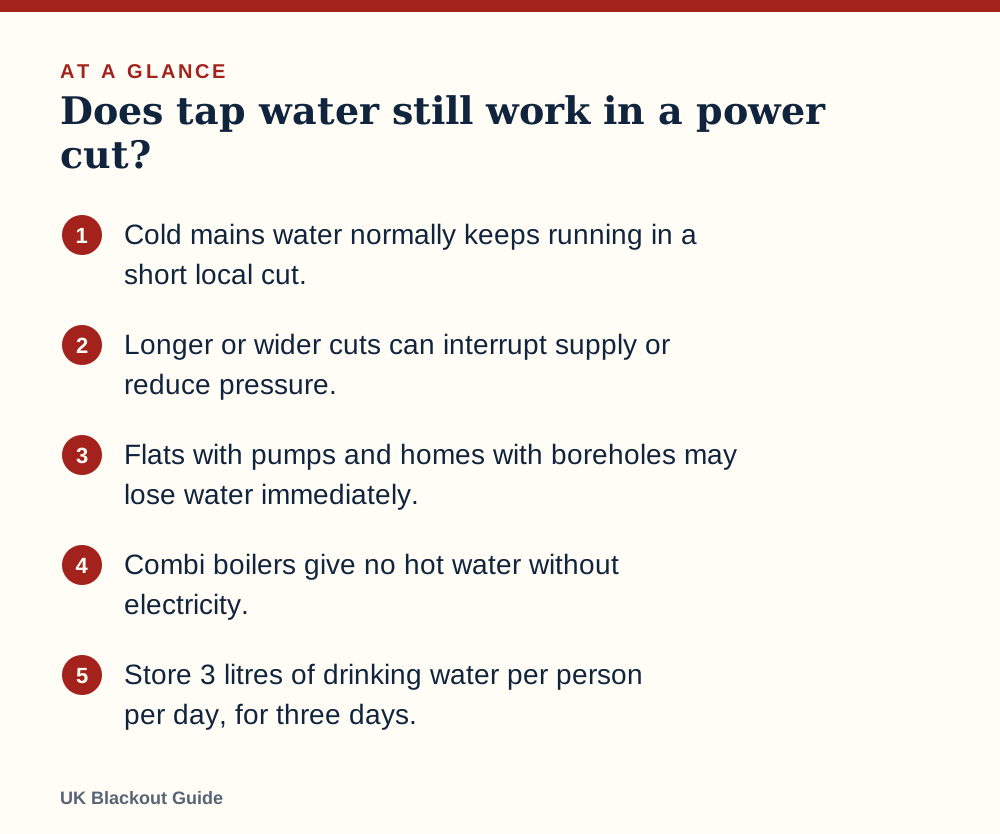
- Cold mains water normally keeps running in a short local cut.
- Longer or wider cuts can interrupt supply or reduce pressure.
- Flats with pumps and homes with boreholes may lose water immediately.
- Combi boilers give no hot water without electricity.
- Store 3 litres of drinking water per person per day, for three days.
Why the tap often keeps running, and why it can stop
Water reaches most homes under pressure from the mains network, and much of that network holds a reserve in service reservoirs and water towers. For a cut of an hour or two on your street, you are unlikely to notice any difference at the cold tap.
The system behind the tap is another matter. Treatment works and pumping stations run on electricity. In a long or widespread outage, pressure can drop or supply can stop, and it may take time to recover after the lights come back. The government's Be Ready advice says plainly that mains water can be disrupted during and after power cuts.
If the water returns cloudy or your water company issues a notice, follow its instructions. Our guide to making water safe to drink explains boiling and treatment.
Homes that lose water straight away
Some homes depend on a pump that sits inside the building, and that pump stops with the power.
- Flats in taller blocks. Many use booster pumps to lift water to upper floors. See what a power cut means in a flat.
- Private supplies. A borehole or well with an electric pump gives nothing once the pressure vessel empties.
- Pumped showers and some pressurised systems. The water may still reach the house, but not at a usable flow.
If any of these apply to you, stored water matters from the first hour, not the second day.
Hot water, showers and toilets
A combi boiler cannot fire without electricity, so hot water stops at once. A hot water cylinder keeps what it has already heated, and it stays warm for some hours. Electric showers do not work at all. The options are set out in whether you can shower in a power cut.
Toilets flush as long as the cistern refills. If the mains fails you can still flush by pouring a bucket of water into the bowl, which is one reason to keep non-drinking water as well. The detail is in flushing a toilet during a power cut.
How much water to keep at home
The official Be Ready kit list asks for bottled water for three days, at 3 litres per person per day for drinking, with more for cooking and washing. For a household of four that is 36 litres for drinking alone.
Shop-bought bottles are the simplest start. Refillable containers cost less per litre over time and let you store washing water too. We work through the quantities in how much water to store for your household.
If you would like to compare sizes and shapes first, we have a list of the water containers that suit home storage. Fill them from the cold kitchen tap, label them with the date, and keep them somewhere cool and dark.
Common questions
Should I fill the bath when the power goes off?
In a long or widespread cut it is a sensible precaution for flushing and washing water. Do not rely on it for drinking, and keep small children away from a filled bath.
Is tap water safe to drink after a power cut?
Normally yes. If your water company issues a boil notice or the water looks or smells unusual, follow the company's advice before drinking it.
Does a water softener or filter tap work without power?
Units with electric valves or pumps may stop or bypass. A plain cold kitchen tap fed directly from the mains is the one to rely on.
Reviewed against these sources on 18 November 2026. If official advice has changed since, follow the official advice.
General information only. This page is not professional, safety, medical, legal or financial advice, and it is not official guidance. No national blackout has been forecast or announced, and nothing here suggests one is expected. We are independent and have no connection to the government or any energy company. Always check the official sources linked on this page. Full disclaimer
Keep reading
 Guide
What stops working in a blackout, and in what order
What stops working in a blackout and when: heating, broadband and card payments go at once, mobile signal and water can follow. A timeline for UK homes.
Read: What stops working in a blackout, and in what Explainer
The 9 August 2019 power cut: what happened
On 9 August 2019 a lightning strike and the loss of two generators cut power to about 1 million customers, most for under an hour. What happened and why.
Read: The 9 August 2019 power cut: what happened News
Amazon Web Services outage, May 2026: what happened and why
The Amazon Web Services outage of 7 May 2026 began when a US data centre overheated. What AWS said, who was affected, and what it means for UK households.
Read: Amazon Web Services outage, May 2026: what News
Amazon Web Services outage, October 2025: what happened and why
The Amazon Web Services outage of 20 October 2025 disrupted Lloyds, HMRC, Snapchat and many more. AWS blamed a DNS fault in its DynamoDB database service.
Read: Amazon Web Services outage, October 2025: