On this page
In most homes, yes. A standard toilet flushes by gravity and the cistern refills from mains water pressure, neither of which needs electricity in your home. The exceptions are macerator toilets, homes where water is pumped (some flats and private supplies) and long, wide outages where mains water itself is disrupted.
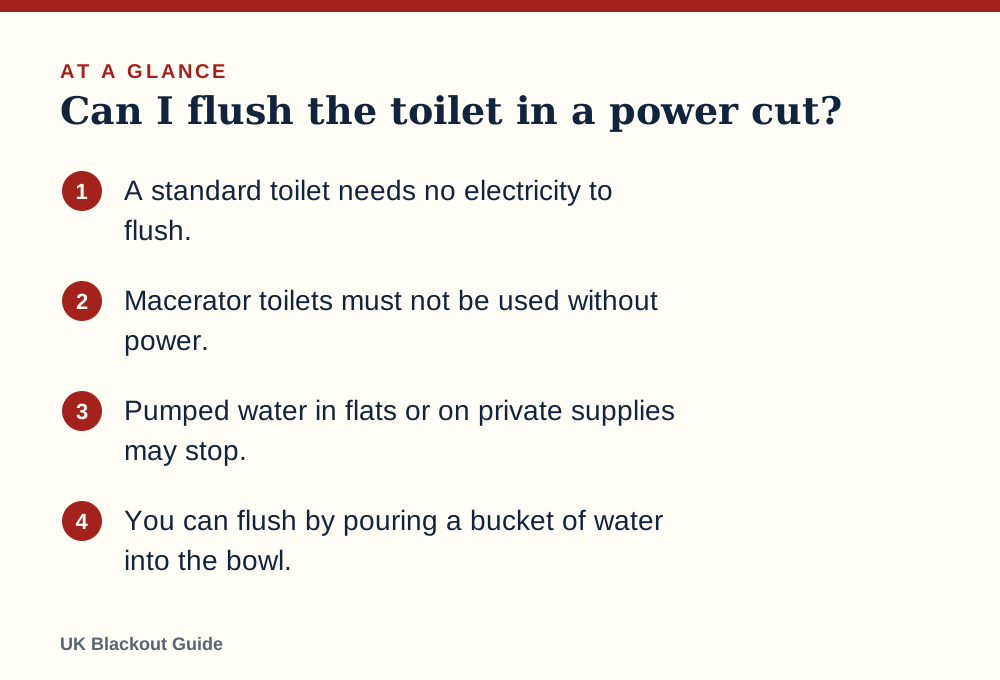
- A standard toilet needs no electricity to flush.
- Macerator toilets must not be used without power.
- Pumped water in flats or on private supplies may stop.
- You can flush by pouring a bucket of water into the bowl.
Why an ordinary toilet keeps working
Pressing the handle releases water stored in the cistern, and gravity does the rest. The cistern then refills from the mains or from a tank in the loft. Nothing in that chain plugs in.
So in a normal local power cut of a few hours, use the toilet as usual. The waste leaves through the drains by gravity in most streets too.
When flushing will not work
Macerator toilets. These have an electric unit behind the pan that grinds and pumps waste through a narrow pipe. They are common in loft conversions, basements and en-suites added away from the main soil pipe. Without power the pump cannot run, so do not flush one. The water has nowhere to go and may overflow.
Pumped water supplies. Taller blocks of flats often use electric booster pumps to lift water to upper floors, one of the points in our guide to a power cut in a flat, and homes on a private well or borehole rely on a pump. When the pump stops, each cistern has one flush left in it and will not refill.
Wide or long outages. The government's Be Ready advice notes that mains water can be disrupted during and after power cuts, because water companies need electricity for pumping and treatment, which is the subject of whether tap water keeps running in a power cut.
Flushing with a bucket
If the cistern will not refill, you can flush a standard toilet by hand. Pour a bucket of water into the bowl in one quick, steady go. The rush of water pushes the contents round the bend exactly as a normal flush would. Pouring slowly just raises the level.
The water does not need to be clean. Use rainwater from a butt, bath water or washing-up water, and keep your stored drinking water for drinking. If you get warning of a planned cut and your water is pumped, filling the bath beforehand gives you plenty of flushes.
Flush less often when water is short, part of the routine in washing and toilets without water. A lidded container of non-drinking water kept for this purpose is a simple precaution for flats and rural homes.
Our water container guide compares sizes, and remember the separate official figure for drinking: 3 litres per person per day.
If you cannot flush at all
For a macerator-only home, or a long outage with no water, you need a fallback. The simplest is a camping toilet, of the kind in our portable toilet round-up, or a sturdy bucket lined with a strong bag and some absorbent material. Wash or sanitise your hands every time.
Common questions
How many flushes do I get if the water stops?
One per toilet, from the water already in the cistern. After that you need to pour water into the bowl by hand.
Can I use a macerator toilet if I pour water in?
No. Without power the macerator cannot pump waste away, so adding water risks an overflow.
Do sewers work in a power cut?
Most household waste drains by gravity. Some areas rely on sewage pumping stations, so in a long, wide outage follow any advice from your water company.
Reviewed against these sources on 18 November 2026. If official advice has changed since, follow the official advice.
General information only. This page is not professional, safety, medical, legal or financial advice, and it is not official guidance. No national blackout has been forecast or announced, and nothing here suggests one is expected. We are independent and have no connection to the government or any energy company. Always check the official sources linked on this page. Full disclaimer
Keep reading
 Guide
How to prepare for a blackout in the UK
How to prepare for a blackout in the UK: the official Be Ready three-day list, the numbers to save, and the home checks to do. No blackout is forecast.
Read: How to prepare for a blackout in the UK Guide
Power cuts in flats and tower blocks
What a power cut means if you live in a flat: lifts, dark stairwells, pumped water, door entry systems and why open flames and stoves are a bigger risk.
Read: Power cuts in flats and tower blocks Guide
Washing and toilets when the water is off
How to flush a toilet, wash and stay clean when the mains water is off in a power cut, how much water it takes and what to use when there is none to spare.
Read: Washing and toilets when the water is off Buying guide
Best power cut essentials: the blackout kit worth buying
The blackout kit worth buying for a UK power cut: a battery torch, a lantern, a power bank, a wind-up radio, an automatic light and a flask, with picks.
Read: Best power cut essentials: the blackout kit