On this page
You can flush most toilets by pouring a bucket of water quickly into the bowl, and you can wash properly with about a litre of water, a flannel and soap. Use non-drinking water for flushing, save drinking water for drinking, and keep hands clean with sanitiser and wipes, which are on the official kit list.
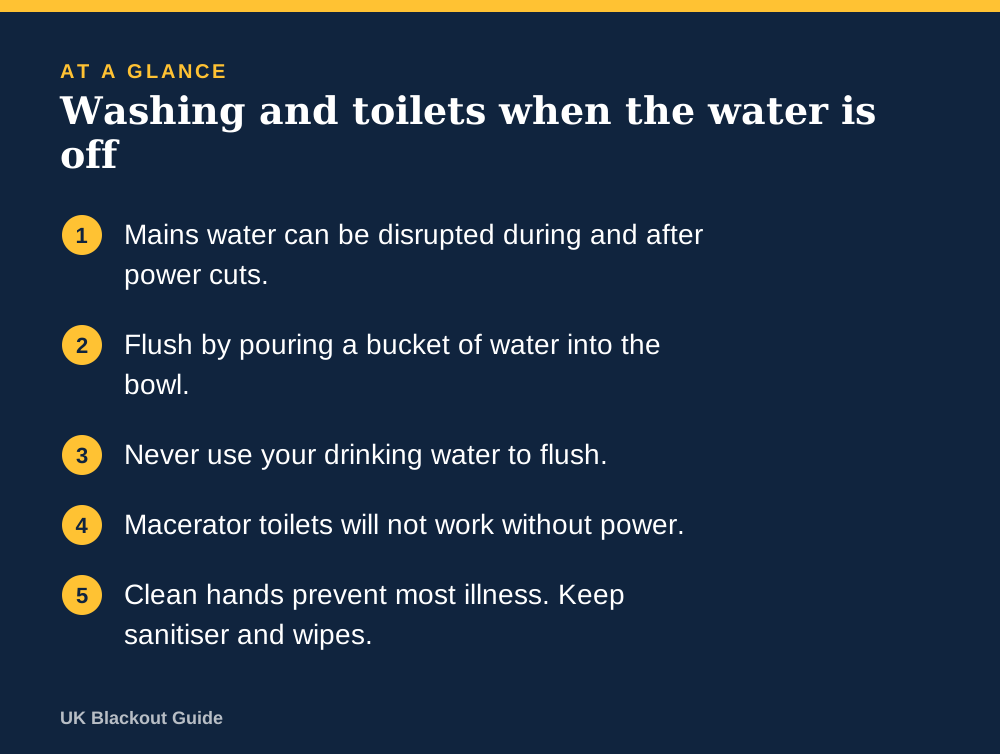
- Mains water can be disrupted during and after power cuts.
- Flush by pouring a bucket of water into the bowl.
- Never use your drinking water to flush.
- Macerator toilets will not work without power.
- Clean hands prevent most illness. Keep sanitiser and wipes.
Why the water might go off
Most local power cuts do not affect your taps. Water in a power cut still has to be pumped and treated using electricity, though, and the official Be Ready advice says mains water can be disrupted during and after power cuts. In a long or widespread outage you might see low pressure or no water at all.
Flats on upper floors are often first to notice, because many blocks use electric booster pumps, a known part of coping with a power cut in a flat.
If water is still flowing but a long cut looks likely, fill the bath, buckets and washing-up bowl at once. That water is your flushing and washing reserve.
Flushing a toilet with a bucket
A standard toilet does not need power, so you can flush the toilet in a power cut, and it does not need the cistern. Pour water straight into the bowl, quickly and in one go, from about waist height. The rush of water pushes the contents through the trap exactly as a flush would. A slow trickle will just raise the level.
Half a bucket to a full bucket usually does it, depending on the toilet. You can also refill the cistern by hand and use the handle, which is tidier and easier for children.
Good sources of flushing water are the bath you filled, water butts, washing-up water and water from hot water bottles. None of it needs to be clean.
Macerator toilets and pumped systems need electricity. Do not use them in a power cut, because waste will not be pumped away. If you live below street level or have a pumped drain, the same applies.
Making flushing water last
Flushing is by far the thirstiest thing a household does. If your reserve is one bathful, you cannot flush after every visit for three days.
The usual rule in a water shortage is to flush solids every time and liquids only every few visits, with the lid kept down. Put used toilet paper from "liquid only" visits in a lined bin if you want to stretch it further.
If you store water in advance, it helps to keep flushing water and drinking water in clearly different water containers.
None of this comes out of your drinking allowance, which is a separate sum set out in how much water to store.
When there is no water to flush with
If the water is off for days and you have nothing to spare, or the drains are backing up, stop using the toilet as normal. A portable camping toilet is the cleanest answer. It has a sealed waste tank you empty later, when services are back.
The improvised version is a sturdy bucket with a lid, lined with two strong bin bags, with cat litter, sawdust or shredded paper added after each use to soak up liquid and smell. Tie the bags off, double-bag them and store them outside in a lidded bin until normal collections resume, the same approach we set out for sanitation in a long outage.
Washing yourself with a litre of water
You will not be able to shower if the pressure has gone, and an electric shower will not work anyway, so whether you can shower in a power cut depends on the type you have.
A strip wash does the job. Put about a litre of water in a bowl, warm if you can manage it. Wash face first, then underarms, then groin, then feet, using a flannel and a little soap, and dry off properly. Brush your teeth with a small cup of drinking water.
No-rinse wipes and other waterless hygiene supplies are a good substitute when water is very short, and useful for anyone who cannot stand at a basin.
Hands, dishes and laundry
Hand hygiene is what actually keeps people well. Clean your hands after the toilet, after handling waste bags and before touching food, every time. Use soap and a little water if you have it, sanitiser if you do not.
For dishes, wipe plates with kitchen roll, wash in a small bowl of water and reuse that water for flushing. Clothes can wait for several days, and if the outage runs on you can still wash clothes without power.
Common questions
Can I flush wet wipes in an emergency?
No. Wipes block drains and sewers, which are already under strain in a long outage. Bag them and bin them.
Can I use rainwater to flush the toilet?
Yes. Rainwater from a water butt is well suited to flushing and saves your stored water for drinking and washing.
Is it safe to drink water from the bath?
No. A filled bath is for flushing and washing. Keep drinking water in clean, sealed containers.
Where do I empty a portable toilet?
Into a working toilet connected to the sewer, once water and drainage are back to normal. Follow the maker's instructions and wash your hands afterwards.
Reviewed against these sources on 18 November 2026. If official advice has changed since, follow the official advice.
General information only. This page is not professional, safety, medical, legal or financial advice, and it is not official guidance. No national blackout has been forecast or announced, and nothing here suggests one is expected. We are independent and have no connection to the government or any energy company. Anything involving electricity, gas, fuel or food safety should be checked with a qualified professional or the relevant official body before you act on it. Always check the official sources linked on this page. Full disclaimer
Keep reading
 Buying guide
Best emergency toilets for when the water is off
Portable toilets for when the mains water is off in a power cut, from lined bucket styles that need no water to flushing cassette models. From Amazon UK.
Read: Best emergency toilets for when the water is Buying guide
Best emergency water storage containers
Food grade water containers and jerry cans for an emergency drinking water store, picked from Amazon UK listings on capacity, fittings and ratings.
Read: Best emergency water storage containers Question
How long does bottled water last in an emergency kit?
How long sealed bottled water lasts in storage, what the best-before date means, how to store it at home and when to replace water you bottled yourself.
Read: How long does bottled water last in an Question
Can I flush the toilet in a power cut?
Most UK toilets flush normally in a power cut because they work by gravity. Macerator toilets and homes with pumped water are the main exceptions.
Read: Can I flush the toilet in a power cut?