On this page
Keep three things under control: toilets, hands and rubbish. Flush with a bucket of non-drinking water while the drains work, and switch to a lined bucket or camping toilet if they do not. Wash or sanitise hands after the toilet and before food. Double-bag rubbish and store it outside, away from doors.
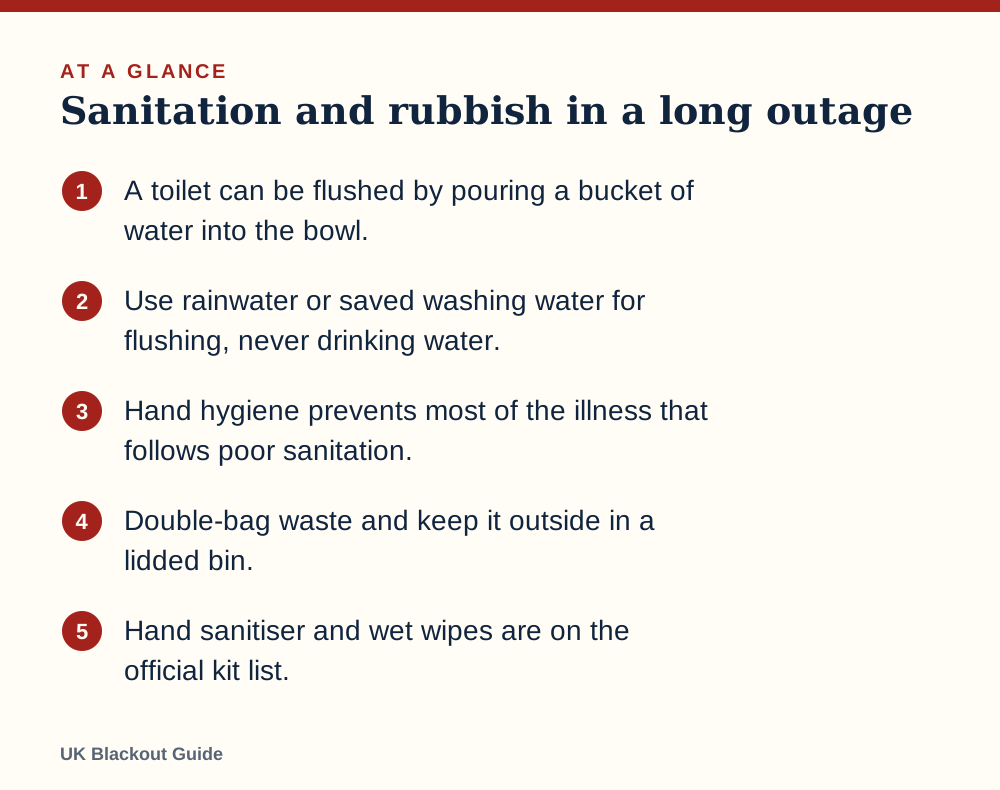
- A toilet can be flushed by pouring a bucket of water into the bowl.
- Use rainwater or saved washing water for flushing, never drinking water.
- Hand hygiene prevents most of the illness that follows poor sanitation.
- Double-bag waste and keep it outside in a lidded bin.
- Hand sanitiser and wet wipes are on the official kit list.
Why hygiene needs a plan after the first few days
In a short power cut, sanitation looks after itself. The government's Be Ready advice covers three days, and its kit list includes hand sanitiser and wet wipes. It has not asked households to prepare for longer and has not suggested a long outage is expected, so this page is optional planning. Over a longer period hygiene needs a routine, because official advice says mains water can be disrupted during and after power cuts, hot water is scarce and bin collections may slip.
The illnesses involved are ordinary stomach bugs, but they spread quickly in a household that cannot wash easily, and they are harder to cope with when you are short of water. The fixes are simple and cheap if you set them up early.
Toilets while the drains still work
A toilet does not need its cistern to flush, which is the short answer to whether you can flush the toilet in a power cut. Pour about half a bucket of water quickly into the bowl and it will clear. This works as long as the sewer is carrying waste away, which is usually the case in houses on mains drainage.
Use non-drinking water: rainwater, bath water, or water saved from washing up and laundry. Flush less often for urine, and keep the lid down.
If your home uses a pumped system, such as a macerator toilet, a basement pump or some flats and rural properties with pumping stations, waste may not clear without power. If water rises in the bowl or drains gurgle and back up, stop flushing.
When you cannot flush
If there is no water to spare or the drains have stopped, you need a dry toilet. The simplest is a sturdy bucket with a lid, lined with two strong bin bags, with a handful of absorbent material such as cat litter, sawdust or shredded paper added after each use. Some people line the existing toilet bowl with a bag instead, which keeps the familiar seat.
A portable camping toilet is more comfortable and better sealed, which matters in a flat or with children and older relatives.
Tie bags when half full, double-bag them and store them outside in a lidded bin until normal collections resume or your council gives instructions.
Hands first, everything else second
Clean hands after the toilet and before touching food do more than any other measure. Soap and a small amount of water is best. A tip-tap, which is a bottle with a small hole in the cap hung over a bowl, washes hands with a fraction of the water a running tap uses.
Hand sanitiser and wet wipes, the basic hygiene supplies for washing without water, are on the government's Be Ready kit list for the times when water is too short. Sanitiser works poorly on visibly dirty hands, so wipe first.
For washing yourself when water is short, a flannel and a bowl of warm water does the job with about two litres.
Rubbish, food waste and the thawed freezer
The biggest single load of waste in a long cut arrives around day three, when the freezer has thawed. A full freezer typically stays frozen for about 48 hours, and food that has warmed should not be kept. The principle of food safety in a power cut is: if in doubt, throw it out.
Bag spoiled food tightly, double-bag it and get it outside the same day. Keep it in a lidded wheelie bin or a sealed container, in shade and away from doors and windows, to hold down smells and keep foxes, rats and flies off it. Keep a note or photos of what you discard, since some home insurance policies cover freezer contents.
Reduce everything else. Flatten packaging, rinse tins with used washing-up water so they do not smell, and separate dry waste, which can wait for weeks, from wet waste, which cannot.
Do not burn household rubbish in the garden or in a stove. Plastics give off toxic smoke, and fire services are harder to reach when phones are unreliable.
Nappies, period products and illness
Households looking after babies and toddlers in a power cut should hold extra disposable nappies and nappy sacks, as the official kit list suggests, because washing reusables needs hot water you may not have. Bag used nappies and store them with the outdoor waste.
Keep a reserve of period products and a way to dispose of them in sealed bags. If someone develops diarrhoea or vomiting, give them their own towel and, if possible, their own toilet or bucket. Clean surfaces with diluted bleach, and keep them drinking. Seek medical advice through NHS 111 if you can reach it, or 999 in an emergency.
Dishes and laundry with little water
Wipe plates with kitchen paper before washing, then use two bowls: one of hot soapy water, one for rinsing. Wash the cleanest items first. The used water can then flush the toilet.
Laundry can wait longer than you expect. Air clothes, wear layers you can rotate, and wash only underwear and socks by hand, which is all that washing clothes without power needs to mean.
Checklist
Sanitation and rubbish in a long outage
- Bucket for flushing with non-drinking water
- Lidded bucket or camping toilet
- Strong bin bags and absorbent material
- Soap, hand sanitiser and wet wipes
- Bleach or disinfectant and rubber gloves
- Toilet roll for at least two weeks
- Nappies and period products if needed
- Lidded outdoor bin for bagged waste
Common questions
Can I pour bleach into a bucket toilet?
A small amount of disinfectant helps with smell, but never mix bleach with other cleaning products. Absorbent material such as cat litter does most of the work.
Is it safe to bury human waste in the garden?
It is a last resort. Double-bagging and storing waste for collection is safer, as burying it near the house, a well or a watercourse can contaminate water.
Will bin collections continue in a long power cut?
They may be delayed if fuel, staff or depots are affected. Follow your council's announcements and store waste securely outside in the meantime.
Reviewed against these sources on 18 November 2026. If official advice has changed since, follow the official advice.
General information only. This page is not professional, safety, medical, legal or financial advice, and it is not official guidance. No national blackout has been forecast or announced, and nothing here suggests one is expected. We are independent and have no connection to the government or any energy company. Always check the official sources linked on this page. Full disclaimer
Keep reading
 Question
How do I wash clothes without power?
How to wash and dry clothes by hand in a long power cut using two buckets, a little detergent and as little water as possible, and what to wash first.
Read: How do I wash clothes without power? Question
Can portable solar keep a household going in a long power cut?
What portable solar panels can and cannot power in a UK home during a long outage, with realistic summer and winter output and example daily loads.
Read: Can portable solar keep a household going in Question
How long could a national blackout last?
How long a national blackout in Great Britain could last, based on NESO's restoration standard, the National Risk Register and what happened in past events.
Read: How long could a national blackout last? Guide
Washing and toilets when the water is off
How to flush a toilet, wash and stay clean when the mains water is off in a power cut, how much water it takes and what to use when there is none to spare.
Read: Washing and toilets when the water is off