On this page
Wash by hand in a bucket or the bath. Soak clothes in warm or cold water with a small amount of detergent for 20 to 30 minutes, agitate for a few minutes, wring, rinse in clean water once or twice, wring again and hang to dry. Wash underwear and socks first and air everything else.
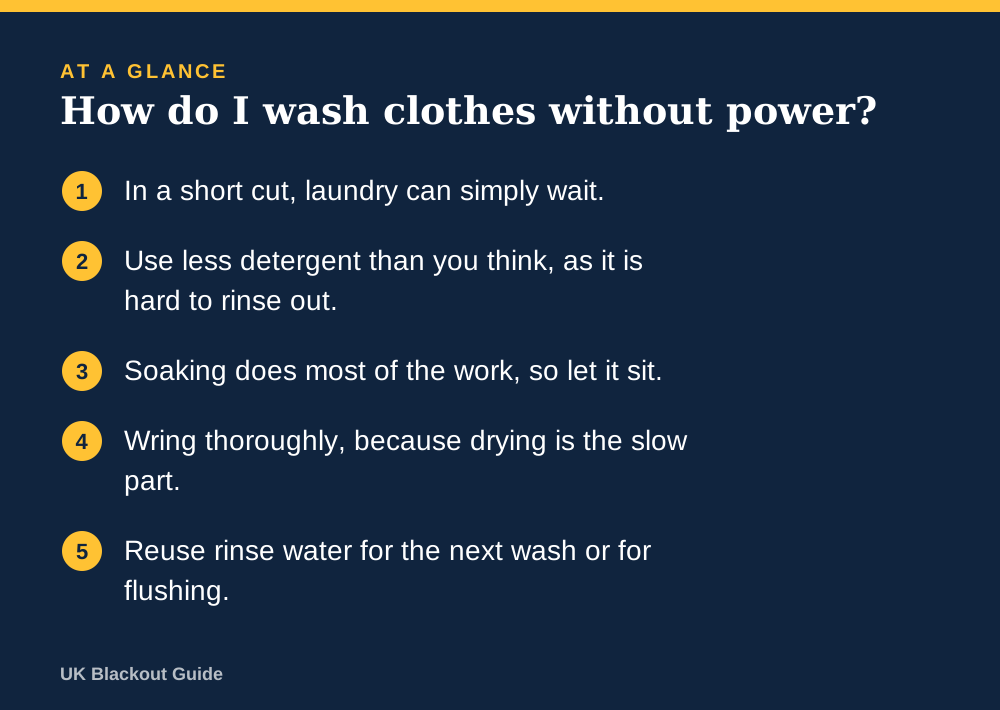
- In a short cut, laundry can simply wait.
- Use less detergent than you think, as it is hard to rinse out.
- Soaking does most of the work, so let it sit.
- Wring thoroughly, because drying is the slow part.
- Reuse rinse water for the next wash or for flushing.
Decide what really needs washing
For a cut of a few days, do not wash anything. Most households have a week of underwear and socks, and outer clothes can be aired and worn again. Hang them by an open window or outside for a few hours.
Laundry only becomes a job in a longer outage, and even then the list is short: underwear, socks, tea towels, flannels and anything soiled. Baby clothes and bedding after illness take priority. Jumpers, trousers and coats can go weeks. If water is limited, drinking and hand washing come first, the same order of priorities as in our guide to sanitation in a long outage.
The two-bucket method
- Soak. Put the clothes in a bucket, bowl or the bath and cover with water. Cold works. Warm is better for grease and sweat. Add about a third of your usual detergent and leave for 20 to 30 minutes.
- Agitate. Squeeze, swish and knead for three to five minutes. A clean sink plunger pushed up and down does this well and saves your hands. Rub collars, cuffs and stains against themselves.
- Wring. Lift each item and wring out as much soapy water as you can.
- Rinse. Move the clothes to a second bucket of clean water, swish and wring. Repeat if the water is very soapy.
- Reuse. The rinse water becomes the wash water for the next, dirtier load. The final dirty water flushes the toilet.
Wash light and lightly soiled things first and the dirtiest last. Do not use stored drinking water if you have rainwater or other clean non-drinking water to hand.
If you have no detergent, a small squirt of washing-up liquid or a bar of soap rubbed into the fabric works. Too much makes rinsing hard and wastes water.
Heating water safely
Warm water helps but is not required. If your gas hob still lights, heat a pan and mix it into cold water in the bucket. Otherwise heat water on a camping stove outdoors, as covered in how to boil water without electricity.
Never use a camping stove or barbecue indoors to heat water. They produce carbon monoxide, which has no smell. Carry hot water carefully, and keep children away from buckets of it.
Drying without a tumble dryer or radiators
Drying is the slow part, particularly in winter in an unheated house. Wring each item twice. Then roll it tightly in a dry towel and press or stand on the roll, which pulls out much more water.
Hang washing outdoors whenever it is dry and breezy, even in cold weather. Indoors, use an airer in a room with a window slightly open, and space the items out. Wet washing adds moisture to a cold house, which encourages condensation and mould and makes rooms feel colder, so avoid drying in the one warm room you are living in.
Do not dry clothes over candles, gas heaters or close to a wood burner. It is a fire risk.
Reducing how much laundry you create
Wear a thin thermal base layer next to the skin and change that, not the jumper over it, since base layers are easy to rinse and quick to dry. Keep one set of clothes for dirty jobs. Use wipes for a quick wash so clothes stay fresher for longer.
We list suitable products in the best hygiene supplies for washing without water.
Common questions
Can I wash clothes in cold water?
Yes. Cold water with detergent and a good soak cleans most everyday dirt. Warm water helps with grease and heavily soiled items.
Can a power station run a washing machine?
Generally no. Washing machines draw a lot of power when heating water, and a full cycle would drain most portable units. Hand washing is the practical option.
How do I wash clothes after sickness or diarrhoea?
Wear gloves, rinse off solids, soak in the hottest water you can safely manage with detergent, and wash these items separately. Wash your hands well afterwards.
Reviewed against these sources on 18 November 2026. If official advice has changed since, follow the official advice.
General information only. This page is not professional, safety, medical, legal or financial advice, and it is not official guidance. No national blackout has been forecast or announced, and nothing here suggests one is expected. We are independent and have no connection to the government or any energy company. Always check the official sources linked on this page. Full disclaimer
Keep reading
 Guide
Sanitation and rubbish in a long outage
How to manage toilets, hand washing, rubbish and food waste in a long power cut, when water pressure may be low and bin collections may be delayed.
Read: Sanitation and rubbish in a long outage Guide
How to manage 30 days without mains power
Optional planning for 30 days without mains power, far beyond the three days UK guidance asks for: what water, food, energy and health would need.
Read: How to manage 30 days without mains power Guide
Preparing for 90 days: stock, rotation and routine
An honest look at preparing for 90 days: why it is far beyond official UK planning, what stock and rotation would involve, and where its limits are.
Read: Preparing for 90 days: stock, rotation and Buying guide
Best hygiene supplies for when the water is off
No-rinse body wipes for keeping clean when the water or hot water is off in a power cut. Eight packs from Amazon UK compared on count, size and ratings.
Read: Best hygiene supplies for when the water is