On this page
The one warm room method means giving up on heating the whole house and keeping a single small room as warm as possible. Pick a small room with few outside walls, seal the draughts, move everyone and everything you need into it, and close every other door. Body heat, bedding and any safe heater then go much further.
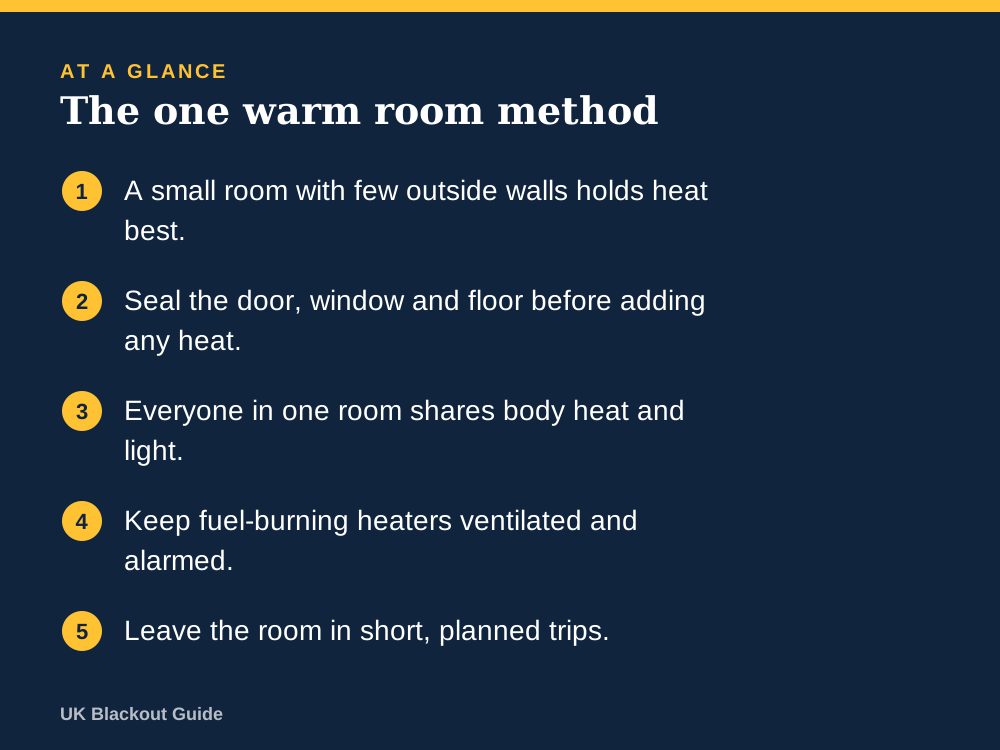
- A small room with few outside walls holds heat best.
- Seal the door, window and floor before adding any heat.
- Everyone in one room shares body heat and light.
- Keep fuel-burning heaters ventilated and alarmed.
- Leave the room in short, planned trips.
Why one room works when a whole house does not
Heat escapes through walls, windows, floors and gaps. The less surface you have around the air you are trying to keep warm, the slower it cools. A three-bedroom house has a huge surface. A box room has very little.
People are heaters too. An adult at rest gives off roughly as much heat as an old 100 watt light bulb. Four people in a small sealed room add a steady trickle of warmth that would vanish without trace across a whole house. The method is about concentrating what you already have, which is why it sits at the centre of keeping warm in a power cut.
Choosing the room
The best room is not always the living room. Walk round with these points in mind.
- Size. Smallest room that fits everyone sitting and, if needed, sleeping.
- Outside walls. One is better than two. A room in the middle of the house is ideal.
- Windows. Small and double glazed beats a large bay or patio doors.
- Sun. A south-facing window gives free heat on a clear winter day.
- Floor. Carpet over a room below is warmer than a tiled ground floor.
- Heat source. If you have a wood burner or working gas fire, that room usually wins even if it is larger.
- Toilet. Being close to one matters more by day two than it seems on day one.
Upstairs rooms are often warmer because heat rises through the house. In a flat, an inner room away from the stairwell and outside walls tends to hold heat best.
Sealing it up in about twenty minutes
Do this quick draught-proofing before the room cools, because you are trapping the heat that is already there.
- Close the door and lay a draught excluder or rolled towel along the bottom.
- Draw the curtains and tuck them onto the windowsill or behind the radiator shelf so cold air cannot roll out underneath. Open them again on the sunny side during daylight.
- Hang a blanket over the door, and over the window if the curtains are thin.
- Cover bare floors with rugs, duvets, yoga mats or flattened cardboard.
- Shut every other internal door in the house.
Thick lined curtains make a real difference at night, when a window is the coldest surface in the room.
Do not seal out the air a flame needs
If anything in the room burns fuel, it must keep its ventilation. Never block an air brick, wall vent or chimney in a room with a wood burner, open fire, gas fire or portable gas heater. Keep a window slightly open when using a portable gas heater. Carbon monoxide has no smell, so fit an audible alarm that meets EN 50291.
Never bring a barbecue, camping stove, patio heater or generator into the room. If the only heat you have is body heat and bedding, you can seal as tightly as you like. Understand the carbon monoxide risks in a power cut before you light anything you do not use regularly.
What to bring in
Every trip out of the room lets heat escape, so stock it once. You want light, information, warmth, food and something to do.
For light, an LED lantern lights a whole room better than a torch and has no flame near the bedding. Add a battery or wind-up radio, power banks, a filled flask, water, snacks that need no cooking, any medication, and books or games. Bring all the bedding you own, including spare duvets to sit on.
A small tent pitched in the room, or a den made from a clothes horse and blankets, makes a room within the room. Children often find this the best part of the whole event, which helps if you are managing a power cut with children.
Living in it for more than a night
For a three-hour rota cut you may not need any of this. For an outage that runs into days, routine keeps the room working. Air it briefly once or twice a day, ideally around midday, because several people breathing in a sealed room make it damp and stuffy. Five minutes with the door open is enough.
Group trips out: toilet, kitchen and a check on the rest of the house in one go. While you are out, look at the fridge and freezer only if you must, since a closed freezer stays frozen far longer. Keep a thermometer in the room if you have one. The NHS advises 18°C or above for rooms you use, and knowing how cold is too cold helps you decide when to seek somewhere warmer.
At night, everyone sleeps in the same room, which makes sleeping warm without heating far easier.
Checklist
The one warm room method
- Pick the smallest room with the fewest outside walls
- Block the gap under the door
- Draw and tuck curtains, add a blanket over thin ones
- Cover bare floors
- Close all other internal doors
- Check ventilation and CO alarm if any flame is used
- Bring in light, radio, water, food, medication and bedding
- Air the room for five minutes each day
Common questions
Is it warmer upstairs or downstairs in a power cut?
Usually upstairs, because warm air rises and there is a heated space below rather than a cold floor. A downstairs room with a working fire will still beat an unheated bedroom.
Will a tent indoors really make a difference?
Yes. A small tent or blanket den traps body heat in a much smaller volume of air. Never use any flame or fuel-burning heater inside it.
How many people can share one room safely?
As many as can sit and sleep comfortably. Air the room briefly each day, and keep proper ventilation if any fuel-burning heater is in use.
Reviewed against these sources on 18 November 2026. If official advice has changed since, follow the official advice.
General information only. This page is not professional, safety, medical, legal or financial advice, and it is not official guidance. No national blackout has been forecast or announced, and nothing here suggests one is expected. We are independent and have no connection to the government or any energy company. Anything involving electricity, gas, fuel or food safety should be checked with a qualified professional or the relevant official body before you act on it. Always check the official sources linked on this page. Full disclaimer
Keep reading
 Guide
Quick draught-proofing that holds heat in
Quick draught-proofing for a power cut: how to find leaks, fix doors, windows, floors and chimneys with household items, and which vents to leave alone.
Read: Quick draught-proofing that holds heat in Buying guide
Best blankets for power cuts
Wool and fleece blankets for keeping warm in a power cut, picked from Amazon UK listings on material, size and price, with advice on how many to keep.
Read: Best blankets for power cuts Buying guide
Best draught excluders to keep heat in during a power cut
Draught excluders to keep heat in during a power cut: seven door excluders and window film kits from Amazon UK listings, with ventilation advice.
Read: Best draught excluders to keep heat in during Question
How cold is too cold for a house in a power cut?
How cold is too cold for a house in a power cut: the NHS 18°C guideline, who is most at risk below it, and when to move somewhere warmer or call for help.
Read: How cold is too cold for a house in a power