On this page
Insulate underneath you as well as on top, sleep in dry base layers with a hat and socks, use a winter-rated sleeping bag or stacked duvets and blankets, and take a covered hot water bottle to bed. Share one room. Turn off every flame heater and candle before anyone falls asleep.
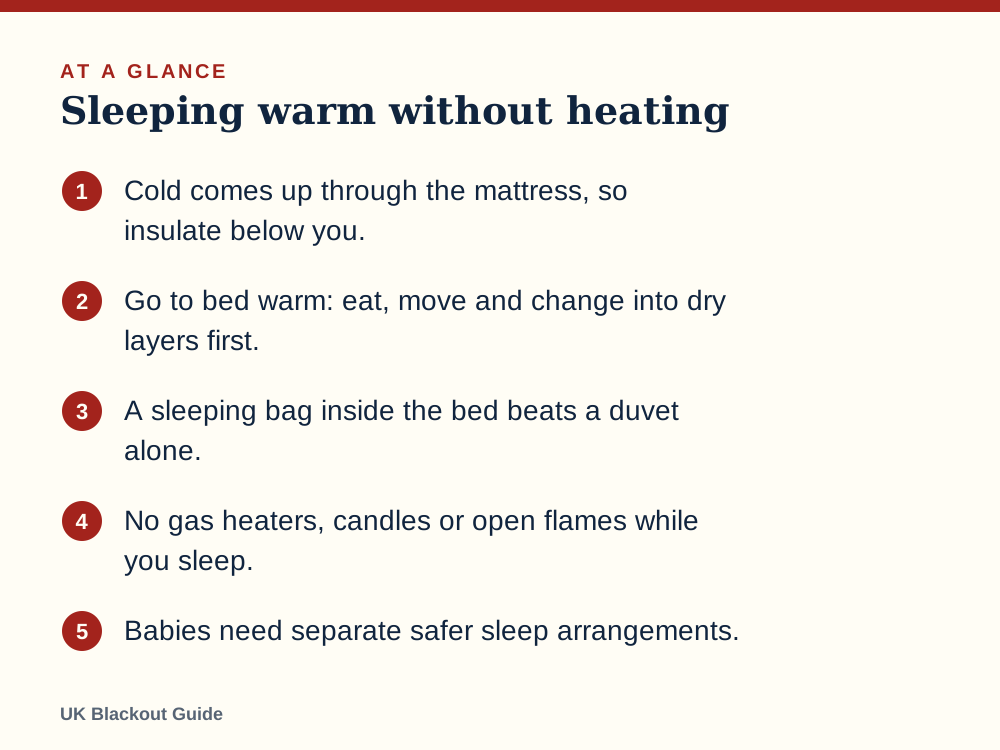
- Cold comes up through the mattress, so insulate below you.
- Go to bed warm: eat, move and change into dry layers first.
- A sleeping bag inside the bed beats a duvet alone.
- No gas heaters, candles or open flames while you sleep.
- Babies need separate safer sleep arrangements.
Why nights are harder than days
When you sleep, your body makes less heat and you cannot respond to feeling cold by moving or adding a layer. Meanwhile the house is at its coldest in the hours before dawn. A bedroom that was tolerable at ten in the evening can be several degrees colder by five in the morning.
So the bed has to do the work. Set it up while you still have daylight or good lantern light, as part of your wider plan for keeping warm in a power cut.
Build the bed from the bottom up
Most people pile covers on top and forget what is underneath. Your weight squashes whatever you lie on, and squashed bedding insulates poorly. On a normal mattress this matters a little. On an airbed, sofa or floor it matters a lot, because the cold air or floor beneath pulls heat out of you all night.
- Under you. A wool blanket or spare duvet on top of the mattress, under the sheet. On a floor or airbed, add a foam camping mat, rug or thick cardboard beneath.
- Around you. A sleeping bag, or a duvet folded so you are lying inside it.
- Over you. A second duvet or blankets, tucked in at the sides and foot so warm air cannot escape when you turn.
Wool and fleece are good for the layer nearest you because they stay warm even if the room is a little damp.
Sleeping bags and what the ratings mean
A sleeping bag for a cold house wraps insulation all the way round you with no gaps, which is why it outperforms loose covers in a cold room. Use it inside the bed with a duvet on top.
Bags sold in the UK usually show a comfort temperature and an extreme temperature. The comfort figure is the one to shop by. The extreme figure describes survival, not sleep. For an unheated British house in winter, a bag with a comfort rating around 0°C or lower gives a sensible margin, which usually means one sold as three or four season. A mummy shape with a hood is warmest. Two bags that zip together suit couples or a parent with an older child.
A cheap foil blanket is not a substitute for bedding, though a foil blanket has some uses as an extra layer.
Go to bed warm
Bedding only keeps in the heat you bring to it. If you get in cold, you will stay cold for a long time.
Have something to eat and a warm drink in the hour before bed. Do two minutes of gentle movement, such as walking up and down the stairs, enough to feel warm but not to sweat. Then change into dry clothes kept only for sleeping, following the same rules as layering for warmth indoors: a base layer, thick loose socks and a soft hat. The clothes you wore all day hold moisture, even if they feel dry. Go to the toilet before you settle, since a full bladder makes it harder to stay warm and nobody wants to get out of a warm bed at three in the morning.
Hot water bottles, used safely
A hot water bottle placed in the bed ten minutes before you get in takes the chill off. Keep it by your thighs or stomach once you are in, not only at your feet, because that is where it warms the most blood.
Fill it with hot water that has cooled for a few minutes, never boiling water. Fill it to about two thirds, squeeze the air out, screw the stopper tight and always use a cover. Check the rubber for cracks and replace old bottles. If the kettle is out of action, there are other ways to fill a hot water bottle, including a flask filled earlier in the day.
Share a room, and switch everything off
Sleeping in one room is warmer and safer. Body heat adds up, one lantern serves everyone, and you will notice if someone is unwell. Use your one warm room if it is big enough.
Before anyone sleeps: turn off portable gas heaters, put out every candle, and never bring a barbecue, camping stove, patio heater or generator indoors. Carbon monoxide has no smell and people who are asleep do not notice the symptoms. Keep a working audible carbon monoxide alarm (EN 50291) and smoke alarm within earshot.
A properly installed wood burner can be left to die down with the door shut, following the maker's instructions. Use a battery light for getting around in a power cut at night.
Babies, older people and pets
Looking after babies and toddlers in a power cut has its own rules. Babies under one should not have hot water bottles, duvets, pillows or loose heavy blankets, and should not be overheated. Dress them in layers suited to the room and follow safer sleep guidance.
Older people and anyone unwell are more at risk in a cold bedroom. If someone is hard to wake, confused or has stopped shivering while still cold, treat it as an emergency and check the signs of hypothermia. Pets will usually find the warmest spot themselves, and a dog on the bed is extra heat.
Common questions
Is it better to sleep in clothes or without in a sleeping bag?
Wear a dry base layer, socks and a hat. Clean, dry layers add insulation. Damp daytime clothes make you colder, so change before bed.
Can I use an electric blanket in a power cut?
A mains electric blanket will not work without power, and running one from a power station drains it quickly. A hot water bottle does the same job with no electricity.
Should I sleep with my head under the covers?
It is better to wear a hat and use a sleeping bag hood. Breathing under the covers makes the bedding damp, which reduces how well it insulates.
Is it safe to sleep in a room at 10°C?
A healthy adult with good bedding can sleep safely in a cold room. Babies, older people and those with health conditions are at greater risk and should be kept in the warmest room available and checked on.
Reviewed against these sources on 18 November 2026. If official advice has changed since, follow the official advice.
General information only. This page is not professional, safety, medical, legal or financial advice, and it is not official guidance. No national blackout has been forecast or announced, and nothing here suggests one is expected. We are independent and have no connection to the government or any energy company. Anything involving electricity, gas, fuel or food safety should be checked with a qualified professional or the relevant official body before you act on it. Always check the official sources linked on this page. Full disclaimer
Keep reading
 Guide
How to keep warm in a power cut
How to keep warm in a UK power cut: layers, one heated room, hot drinks, safe heat sources and the carbon monoxide rules you must not break.
Read: How to keep warm in a power cut Buying guide
Best blankets for power cuts
Wool and fleece blankets for keeping warm in a power cut, picked from Amazon UK listings on material, size and price, with advice on how many to keep.
Read: Best blankets for power cuts Buying guide
Best hot water bottles for power cuts
Hot water bottles for power cuts: six 2 litre bottles from Amazon UK listings, with safe filling advice and how to heat the water when the kettle is off.
Read: Best hot water bottles for power cuts Buying guide
Best sleeping bags for a winter power cut
Sleeping bags for a winter power cut, picked from Amazon UK listings on season rating, hood, size and price, for sleeping warm in an unheated house.
Read: Best sleeping bags for a winter power cut