On this page
A portable gas heater is safe indoors only if it is designed for indoor domestic use, such as a cabinet heater, and you follow the instructions: ventilate the room, keep it clear of furnishings, fit a carbon monoxide alarm and turn it off before sleeping. Patio heaters and camping heaters must never be used indoors.
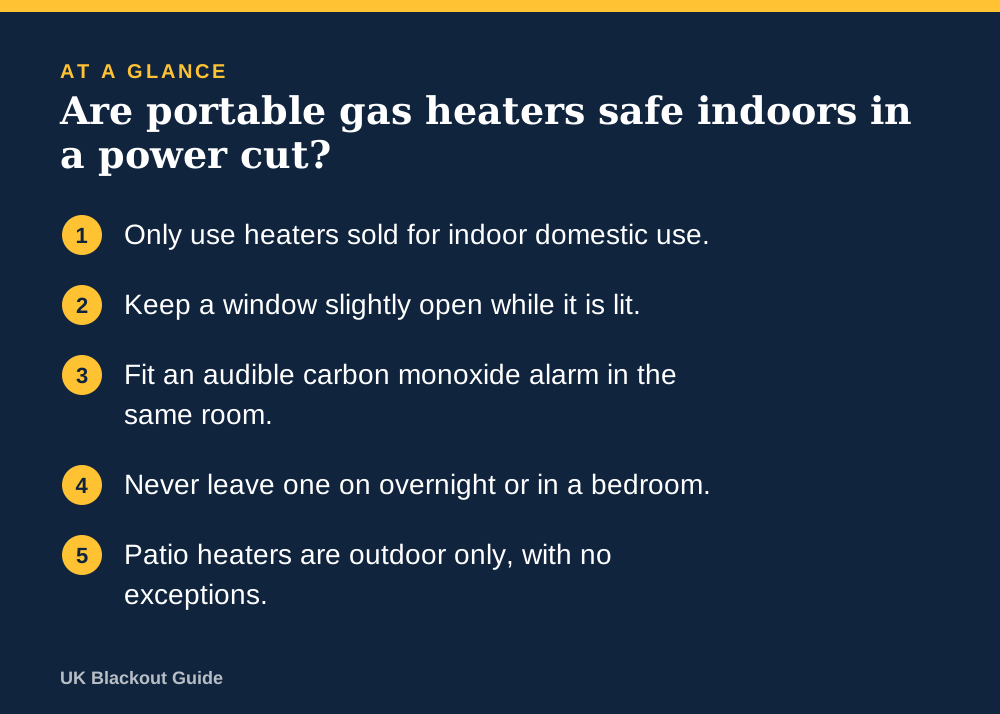
- Only use heaters sold for indoor domestic use.
- Keep a window slightly open while it is lit.
- Fit an audible carbon monoxide alarm in the same room.
- Never leave one on overnight or in a bedroom.
- Patio heaters are outdoor only, with no exceptions.
Indoor heaters and outdoor heaters are different products
The words portable gas heater cover two very different things. A cabinet heater is a wheeled box with a gas cylinder inside and a radiant or catalytic panel on the front. It is made for living rooms and normally includes a flame failure device, which cuts the gas if the flame goes out, and an oxygen depletion sensor, which shuts the heater down if the air in the room becomes stale.
Patio heaters, small heaters that screw onto camping gas cartridges, and site or workshop space heaters are built for the open air or for large ventilated spaces. They have none of those protections and burn far more gas.
Never use a patio heater, camping stove, barbecue or generator indoors, in a garage or in a tent. They produce carbon monoxide, which has no smell and can kill.
The rules for using a cabinet heater
An indoor heater still burns gas inside your home with no flue. Used properly it is a recognised way to heat a room. Used carelessly it carries the same risks as any flame.
- Ventilate. Keep a window slightly open and never block air vents. The room size and ventilation the heater needs are in its instructions.
- Give it space. Keep it well clear of curtains, furniture and bedding, facing into the room. Never dry clothes on or over it.
- Stay awake and stay in. Turn it off when you go to bed or leave the house.
- Avoid bedrooms and bathrooms, and follow any other room limits the maker gives.
- Do not move it while lit.
- Fit an alarm. One of the audible carbon monoxide alarms marked EN 50291, in the same room.
Symptoms of carbon monoxide poisoning are headache, dizziness, nausea, breathlessness and collapse. If anyone feels unwell with the heater on, turn it off and get into fresh air.
Cylinders, condensation and upkeep
Change the cylinder with the heater off and cool, away from any flame, and check the hose and regulator for cracks each winter. If you smell gas, turn off the cylinder valve, ventilate, and do not relight until the leak is found. Store spare cylinders upright, outdoors or in a ventilated outbuilding, not in the living space or a cellar.
Burning bottled gas releases water vapour, so expect condensation on windows. The slightly open window deals with both the moisture and the air supply. If you rent, check your tenancy agreement, since some landlords and many blocks of flats do not allow gas cylinders indoors.
Choosing one for power cuts
Among portable gas heaters for the home, a cabinet heater suits a household with no wood burner or working gas fire that wants real room heat in a long winter outage. It needs a cylinder bought and stored in advance, because in a wide power cut shops may not be able to sell you one.
If you would sooner not burn anything at all, heating a room without electricity is still possible with layers, blankets and closed doors.
Common questions
Can I leave a portable gas heater on overnight?
No. Turn it off before you sleep and use a sleeping bag, blankets and a hot water bottle for the night.
Do indoor gas heaters produce carbon monoxide?
A well-maintained heater in a ventilated room burns cleanly, but any gas appliance can produce carbon monoxide if it is faulty or starved of air. That is why ventilation and an alarm are both needed.
Can I use a patio heater in the house if I open the windows?
No. Patio heaters are for outdoor use only. Open windows do not make them safe indoors.
Reviewed against these sources on 18 November 2026. If official advice has changed since, follow the official advice.
General information only. This page is not professional, safety, medical, legal or financial advice, and it is not official guidance. No national blackout has been forecast or announced, and nothing here suggests one is expected. We are independent and have no connection to the government or any energy company. Anything involving electricity, gas, fuel or food safety should be checked with a qualified professional or the relevant official body before you act on it. Always check the official sources linked on this page. Full disclaimer
Keep reading
 Guide
Heating a room without electricity: safe options
Safe ways to heat a room without electricity in the UK, from wood burners to indoor gas heaters, plus the heat sources that must never come indoors.
Read: Heating a room without electricity: safe Buying guide
Best carbon monoxide alarms for power cut heating and cooking
Carbon monoxide alarms for power cut heating and cooking: seven battery alarms from Amazon UK listings, with advice on EN 50291 and where to put them.
Read: Best carbon monoxide alarms for power cut Buying guide
Best heaters for power cuts (no electricity needed)
Heaters for power cuts that need no electricity: five portable gas heaters from Amazon UK listings, with firm safety rules on indoor use and ventilation.
Read: Best heaters for power cuts Guide
Carbon monoxide: the hidden danger in power cuts
Why carbon monoxide risk rises in a power cut, which heaters and stoves cause it, the symptoms to watch for, alarms to fit and what to do if one sounds.
Read: Carbon monoxide: the hidden danger in power