On this page
The only room heaters that work with no electricity burn gas from their own cylinder. For indoor use, choose one the manufacturer states is designed for indoor domestic use, run it in a ventilated room with a carbon monoxide alarm, and never leave it on overnight. Outdoor and camping heaters must stay outdoors.
- A gas cylinder heater needs no mains at all.
- Only use a heater indoors if the maker says it is for indoor use.
- Every fuel-burning heater needs ventilation and a CO alarm to EN 50291.
- Never use patio heaters, barbecues or camping stoves indoors.
- Do not sleep with a gas heater running.
Gas central heating usually stops in a power cut, because the boiler's pump and controls need electricity. A portable gas heater that runs from its own cylinder needs no mains at all, which is why people ask about them after every winter storm. They can work, but they are the riskiest item in the warmth section of this site.
Read whether portable gas heaters are safe indoors before buying anything. Then decide whether you need one. Many households can get through a short cut with cheaper steps.
Carbon monoxide has no smell. Never use generators, barbecues, camping stoves or patio heaters indoors, in garages or in tents. Symptoms of poisoning include headache, dizziness, nausea, breathlessness and collapse.
Our picks for a power cut, at a glance


Manhattan Contemporary Calor Gas Heater
★ 4.5 from 478 buyers · About £250 when checked 18 November 2026This is a living-room style heater sold for use with Calor gas, at about £250, so it heats from a cylinder with no mains supply. It is rated 4.5 from 478 buyers. Check the listing and manual for the room size and ventilation it requires, and whether a cylinder and regulator are included.
- Designed as a home heater
- 4.5 stars from 478 buyers
- About £250 before gas
- Title gives no heat output, so check the listing
Calor Provence 3kW Flueless Gas Stove Heater
★ 4.6 from 335 buyers · About £430 when checked 18 November 2026The listing states a 3 kW output in a flueless, portable stove design, enough for the single room a household gathers in during a winter cut. It is rated 4.6 from 335 buyers. At about £430 it is a serious purchase, best suited to a household that would use it in ordinary winters as well as in emergencies.
- Stated 3 kW output
- 4.6 stars from 335 buyers
- Stove appearance
- About £430
- Flueless heaters need permanent ventilation in the room
EVOCAMP Portable Gas Heater 1.7 kW with ODS
★ 4.3 from 470 buyers · About £82 when checked 18 November 2026The listing states a 1.7 kW ceramic radiant heater with an oxygen depletion sensor (ODS), which shuts the gas off if oxygen in the room falls too low. It costs about £82 and has 4.3 stars from 470 buyers. The title mentions tents as well as indoor use, so read the manual carefully and follow its ventilation rules exactly.
- ODS named in the listing
- Stated 1.7 kW
- About £82
- An ODS is not a carbon monoxide alarm
- Never use while sleeping, whatever the title suggests
Mr. Heater MH11BFLEX Portable Propane Heater
★ 4.4 from 1,100 buyers · About £161 when checked 18 November 2026A portable propane heater with 4.4 stars from about 1,100 buyers, the most reviewed gas heater in the catalogue. It costs about £160 and needs no mains. The title does not state indoor domestic use, so treat it as a heater for well ventilated outbuildings unless the manufacturer's instructions say otherwise.
- Around 1,100 ratings
- Portable
- No indoor claim in the title
- Check which cylinder and regulator it needs in the UK
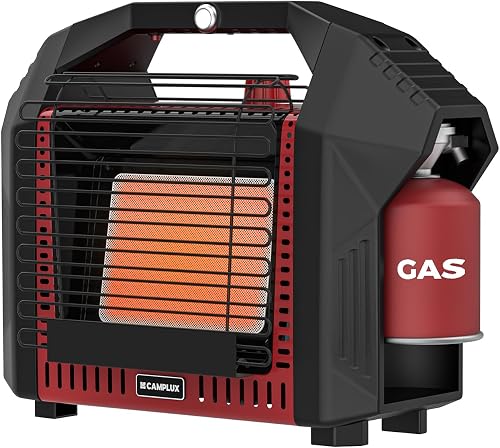
CAMPLUX Portable Gas Heater 3.6 kW, Outdoor Use
★ 4.4 from 206 buyers · About £144 when checked 18 November 2026The listing is clear that this 3.6 kW heater is for outdoor use, with ODS and tip-over protection named. It is about £145, rated 4.4 from 206 buyers. It could warm a sheltered patio or open-sided area where people gather, but it must not come inside.
- Stated 3.6 kW
- Tip-over protection named
- Clear about outdoor use
- Not for use in the house, garage or a tent
- Fewer ratings
How we chose
These heaters were chosen from Amazon UK listings on 18 November 2026 using the stated heat output, intended use, safety features named in the title, price and verified buyer ratings. None has been hands-on tested by us. We left out an electric fan heater that appeared in the same search, and a large propane space heater meant for sites and workshops. Prices and stock change.
Indoor rated or not is the first question
Some gas heaters are built and approved for living rooms. Others are built for patios, building sites or campsites and give off far more fumes than a room can clear. The manufacturer's instructions decide which is which, not the photos on a listing. If the manual does not say the heater is for indoor domestic use, keep it outside. Our guide to heating a room without electricity compares gas heaters with wood burners and other options. A gas hob is not a room heater either.
Ventilation and a carbon monoxide alarm
Any heater that burns gas uses up oxygen and produces water vapour and combustion gases. Follow the minimum room size and ventilation stated in the manual, which usually means a window slightly open or a permanent vent. Fit an audible carbon monoxide alarm in the same room and look for EN 50291 on the listing. We list suitable models in carbon monoxide alarms for the home. If the alarm sounds or anyone develops a headache or dizziness, turn the heater off, open doors and windows and get outside. The gas emergency number is 0800 111 999.
Cylinders, regulators and storage
Heaters are often sold without the gas cylinder, and sometimes without the hose and regulator. Check which gas type (butane or propane) and which cylinder size the heater takes, and that the regulator matches. Change cylinders outdoors or in a well aired space, away from any flame, and follow the supplier's storage advice. If you smell gas, stop using the heater. Have gas appliances checked and serviced by a Gas Safe registered engineer where the manufacturer advises it.
Keep a spare cylinder only if you can store it safely, upright and outside the living space. A cylinder that runs out halfway through a cold evening is a nuisance, but it is not a reason to store gas in a hallway or under the stairs.
Use it for a few hours, in one room
A gas heater makes most sense as a short boost to one warm room in the evening, with everyone awake. Turn it off before bed and rely on bedding overnight. Keep it at least a metre from furniture, curtains and blankets, never dry clothes on it, and keep children and pets away.
Before winter, light the heater once in daylight so you know how the ignition and controls work. The first time you use it should not be in the dark with cold hands.
How much to spend on a heater for a power cut
Under £100 buys a small 1.7 kW radiant heater. Check with care that the manufacturer permits the indoor use you have in mind, because cheap gas heaters are often camping products. Between £140 and £250 the choice is between outdoor or workshop heaters and a living-room cabinet heater made for use with a home gas cylinder. The high end, about £430, buys a 3 kW flueless stove-style heater that looks like furniture and would be used every winter. That is hard to justify for emergencies alone. Whatever the tier, budget for the cylinder, the regulator and a carbon monoxide alarm, and remember that for a short cut the cheapest option is to spend nothing here and rely on the layers and blankets described in keeping warm in a power cut.
Common questions
Can I leave a portable gas heater on overnight?
No. Turn it off before you sleep. Use sleeping bags, blankets and hot water bottles for the night.
Does an oxygen depletion sensor replace a CO alarm?
No. An ODS shuts the heater off when oxygen falls. You still need a separate audible carbon monoxide alarm to EN 50291.
Can I use a patio heater in a conservatory?
No. Patio heaters are for the open air only and must never be used in any enclosed space.
Do gas heaters cause condensation?
Flueless gas heaters release water vapour into the room, so expect more condensation. Ventilation helps with this as well as with safety.
Is a portable gas heater worth buying for one power cut?
Often not. Layers, blankets and one warm room cost far less and carry no fume risk.
Reviewed against these sources on 18 November 2026. If official advice has changed since, follow the official advice.
General information only. This page is not professional, safety, medical, legal or financial advice, and it is not official guidance. No national blackout has been forecast or announced, and nothing here suggests one is expected. We are independent and have no connection to the government or any energy company. Products are chosen from retailer listings and buyer ratings and have not been tested by us; some links earn us a commission. Anything involving electricity, gas, fuel or food safety should be checked with a qualified professional or the relevant official body before you act on it. Always check the official sources linked on this page. Full disclaimer
Keep reading
 Question
Are portable gas heaters safe indoors in a power cut?
Portable gas heaters are safe indoors only if made for indoor use and run with ventilation and a CO alarm. The rules, and which heaters to keep outside.
Read: Are portable gas heaters safe indoors in a Guide
Heating a room without electricity: safe options
Safe ways to heat a room without electricity in the UK, from wood burners to indoor gas heaters, plus the heat sources that must never come indoors.
Read: Heating a room without electricity: safe Question
Can I bring a barbecue indoors for heat in a power cut?
Never bring a barbecue indoors for heat. Why charcoal and gas barbecues cause carbon monoxide poisoning, even when cooling, and safer ways to keep warm.
Read: Can I bring a barbecue indoors for heat in a Question
Can I use a gas hob or oven for heat in a power cut?
Using a gas hob or oven to heat your home in a power cut is unsafe. The carbon monoxide and fire risks explained, and what to do for warmth instead.
Read: Can I use a gas hob or oven for heat in a