On this page
The NHS advises heating the rooms you use to at least 18°C. Below that, a healthy and well-dressed adult can cope for a time, but babies, older people and those with health conditions are at growing risk. If you cannot keep a vulnerable person warm, or anyone shows signs of hypothermia, move them or call for help.
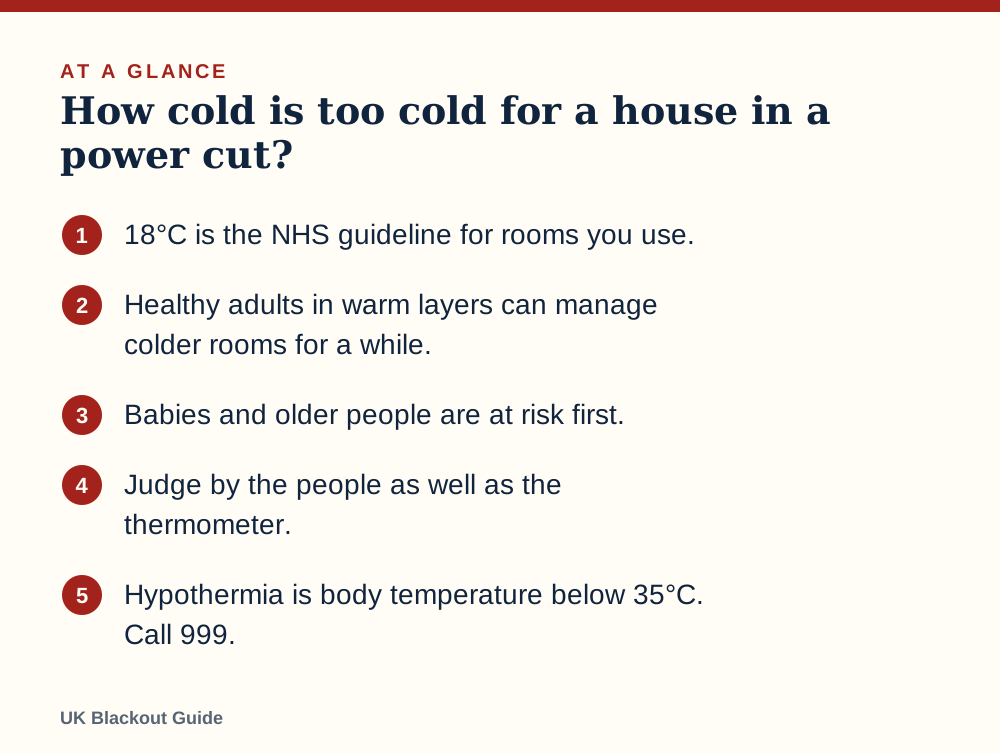
- 18°C is the NHS guideline for rooms you use.
- Healthy adults in warm layers can manage colder rooms for a while.
- Babies and older people are at risk first.
- Judge by the people as well as the thermometer.
- Hypothermia is body temperature below 35°C. Call 999.
The number to know is 18°C
NHS guidance is to heat the rooms you use, such as the living room and bedroom, to at least 18°C. It is aimed mainly at people who are more likely to become ill in the cold: those aged 65 and over, babies and young children, and people with long-term health conditions.
It is a guideline for normal winter living, not a cliff edge. A house at 16°C during a power cut is not an emergency for a healthy adult in a jumper. What matters is how far below the guideline the temperature falls, how long it stays there, and who is in the house.
Different people, different limits
A fit adult who is dressed in layers, fed, dry and moving about can live in a cold house for days, as people did in rural areas after Storm Arwen. It is uncomfortable, and it takes effort, but keeping warm in a power cut is manageable with the right clothing and bedding.
The picture changes for people who cannot make or keep heat so well. Babies lose heat quickly and cannot tell you. Older people may not feel the cold or may not move enough to generate warmth. People with heart, lung or circulation problems are put under strain by cold air. For these groups, treat anything under 18°C as a reason to act: more layers, a warmer room, more frequent checks.
This is general information. If someone in your home has a medical condition, follow the advice of their own doctor or nurse.
Watch the people as well as the thermometer
A simple room thermometer is useful because it turns a feeling into a number and shows you the trend. But the house does not get hypothermia. People do. Check each person regularly, especially anyone quiet.
Warning signs are shivering, cold pale skin, slurred speech, confusion and unusual tiredness. Hypothermia means a body temperature below 35°C and needs a 999 call. Our guide to the signs of hypothermia at home explains what to do while you wait.
Short of that, take notice if someone cannot get warm despite layers and warm blankets, has cold hands and feet that will not recover, or is too cold to sleep.
What to do as the temperature falls
Above about 18°C, carry on as normal with an extra layer. As the house drops below that, move to a deliberate plan: everyone into one warm room, hats and thick socks on, hot drinks from a flask, and proper bedding at night.
If you have a baby, an older person or someone unwell in the house and you cannot keep their room near 18°C, do not wait. Go to family, friends or a neighbour with heat, or call 105 and ask your network operator what support is available. People on the Priority Services Register are known to the network in advance.
The house has limits of its own. Once indoor temperatures approach freezing, plumbing is at risk, so read about keeping pipes from freezing before a hard frost.
Common questions
What temperature should a baby's room be?
Safer sleep guidance generally recommends a cool room of around 16 to 20°C with suitable bedding. In a colder house, add clothing layers and keep the baby in the warmest room. Follow advice from your midwife or health visitor.
Is it dangerous to sleep in a cold bedroom?
For a healthy adult with warm bedding, usually not. For older people, babies and those with health conditions it carries more risk, so they should sleep in the warmest room available.
How quickly does a house cool down with no heating?
It varies widely with insulation, wind and outside temperature. Closing doors and curtains and blocking draughts slows it noticeably.
Reviewed against these sources on 18 November 2026. If official advice has changed since, follow the official advice.
General information only. This page is not professional, safety, medical, legal or financial advice, and it is not official guidance. No national blackout has been forecast or announced, and nothing here suggests one is expected. We are independent and have no connection to the government or any energy company. Anything involving electricity, gas, fuel or food safety should be checked with a qualified professional or the relevant official body before you act on it. Always check the official sources linked on this page. Full disclaimer
Keep reading
 Buying guide
Best blankets for power cuts
Wool and fleece blankets for keeping warm in a power cut, picked from Amazon UK listings on material, size and price, with advice on how many to keep.
Read: Best blankets for power cuts Buying guide
Best thermals for a house with no heating
Thermals for a house with no heating: six thermal underwear sets from Amazon UK listings for staying warm indoors in a power cut, with fit advice.
Read: Best thermals for a house with no heating Guide
How to keep warm in a power cut
How to keep warm in a UK power cut: layers, one heated room, hot drinks, safe heat sources and the carbon monoxide rules you must not break.
Read: How to keep warm in a power cut Guide
Signs of hypothermia at home, and what to do
The signs of hypothermia to watch for in a cold home, who is most at risk in a power cut, what to do while you wait for help and what not to do.
Read: Signs of hypothermia at home, and what to do