On this page
Yes. A standard wood burner, multi-fuel stove or open fire needs no electricity and will heat the room as normal in a power cut. The exceptions are pellet stoves, stoves with electric fans or controls, and stoves with a back boiler linked to pumped central heating, which may be unsafe to light without power.
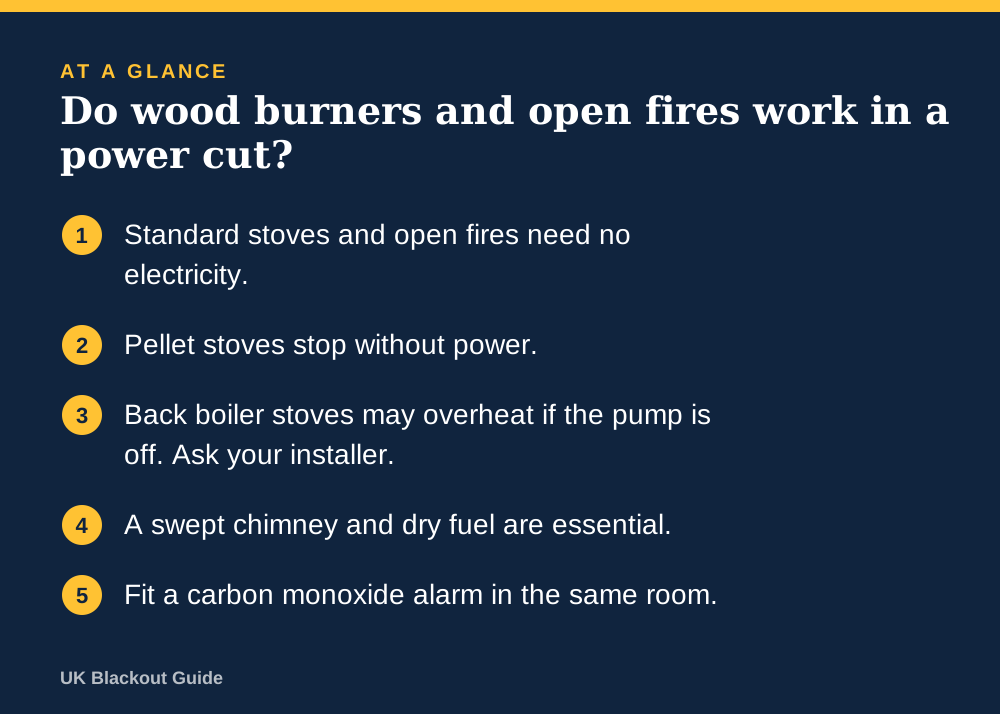
- Standard stoves and open fires need no electricity.
- Pellet stoves stop without power.
- Back boiler stoves may overheat if the pump is off. Ask your installer.
- A swept chimney and dry fuel are essential.
- Fit a carbon monoxide alarm in the same room.
Stoves and fires that carry on as normal
A freestanding or inset wood burner draws air in, burns fuel and sends the smoke up the flue using nothing but the natural pull of the chimney. An open fire is simpler still. If that describes yours, a power cut changes nothing about how you light or run it, and it becomes the obvious centre of your one warm room.
You can also heat a pan or kettle on the flat top of many stoves, which solves hot drinks and hot water bottles at the same time. Use a stable pan with a lid and oven gloves, and keep children back.
Stoves that need electricity
- Pellet stoves use an electric auger to feed fuel, plus fans and an igniter. They stop in a power cut.
- Stoves with built-in fans or electronic air controls may still burn but give less heat, or may not be designed to run unpowered. Check the manual.
- Stoves with a back boiler heat water as well as the room. If that water is moved by an electric pump, lighting the stove with the pump off can cause the water to overheat. Some systems are designed to cope with this by letting hot water circulate by gravity, and some are not.
If your stove or fire has a back boiler, ask your installer or a qualified heating engineer now whether it is safe to use in a power cut. Do not find out by trying it.
The rest of your heating will be off regardless, since central heating does not work without electricity.
Checks before you rely on it
A fire you light twice a year at Christmas is not ready to run for three days. Before winter:
- have the chimney swept, since soot, nests and debris can block the flue and push fumes into the room
- stock dry, seasoned wood or the smokeless fuel your stove is approved for, and keep a few days' worth indoors
- keep matches or a lighter, firelighters and kindling together where you can find them in the dark
- check the door seals and glass on a stove, and have a fireguard for an open fire
Never burn painted or treated wood, and never use petrol or other accelerants to get a fire going.
Carbon monoxide and fire safety
Solid fuel produces carbon monoxide, which has no smell. A clear flue carries it away. A blocked one does not. Fit an audible carbon monoxide alarm marked EN 50291 in the room, and test it before the first fire of the season. Symptoms of poisoning are headache, dizziness, nausea, breathlessness and collapse. If the alarm sounds or anyone feels ill, get out into fresh air.
Do not block the room's air vent while the fire is lit, even if it lets in a draught, because a fire starved of air is one route to carbon monoxide in a power cut. Keep bedding, drying clothes and log baskets well back from the stove, let ashes cool fully in a metal bucket outdoors, and never bring a barbecue indoors as a substitute for a fireplace. All of this is ordinary fire safety in a power cut, with a lit stove in the room.
If your stove turns out not to be usable, there are other ways of heating a room without electricity.
Common questions
Can I cook on a wood burner in a power cut?
On many stoves with a flat top, yes. A kettle or lidded pan works well. Check your manual and never leave pans unattended.
Is it safe to leave a wood burner lit overnight?
Follow the manufacturer's instructions. Many people let the fire die down with the door closed. Make sure the carbon monoxide and smoke alarms are working.
Does a gas fire work in a power cut?
Some do, particularly older models with manual ignition. Many modern ones with remote controls or fans need mains power. Check your manual.
Reviewed against these sources on 18 November 2026. If official advice has changed since, follow the official advice.
General information only. This page is not professional, safety, medical, legal or financial advice, and it is not official guidance. No national blackout has been forecast or announced, and nothing here suggests one is expected. We are independent and have no connection to the government or any energy company. Anything involving electricity, gas, fuel or food safety should be checked with a qualified professional or the relevant official body before you act on it. Always check the official sources linked on this page. Full disclaimer
Keep reading
 Buying guide
Best carbon monoxide alarms for power cut heating and cooking
Carbon monoxide alarms for power cut heating and cooking: seven battery alarms from Amazon UK listings, with advice on EN 50291 and where to put them.
Read: Best carbon monoxide alarms for power cut Guide
Carbon monoxide: the hidden danger in power cuts
Why carbon monoxide risk rises in a power cut, which heaters and stoves cause it, the symptoms to watch for, alarms to fit and what to do if one sounds.
Read: Carbon monoxide: the hidden danger in power Guide
Heating a room without electricity: safe options
Safe ways to heat a room without electricity in the UK, from wood burners to indoor gas heaters, plus the heat sources that must never come indoors.
Read: Heating a room without electricity: safe Question
Are portable gas heaters safe indoors in a power cut?
Portable gas heaters are safe indoors only if made for indoor use and run with ventilation and a CO alarm. The rules, and which heaters to keep outside.
Read: Are portable gas heaters safe indoors in a