On this page
Carbon monoxide is a poisonous gas with no smell, made when fuel burns without enough air. The risk rises in power cuts because people bring generators, barbecues, camping stoves and patio heaters indoors. Never do this, including in garages and tents. Fit an audible alarm that meets EN 50291, and get into fresh air if you feel unwell.
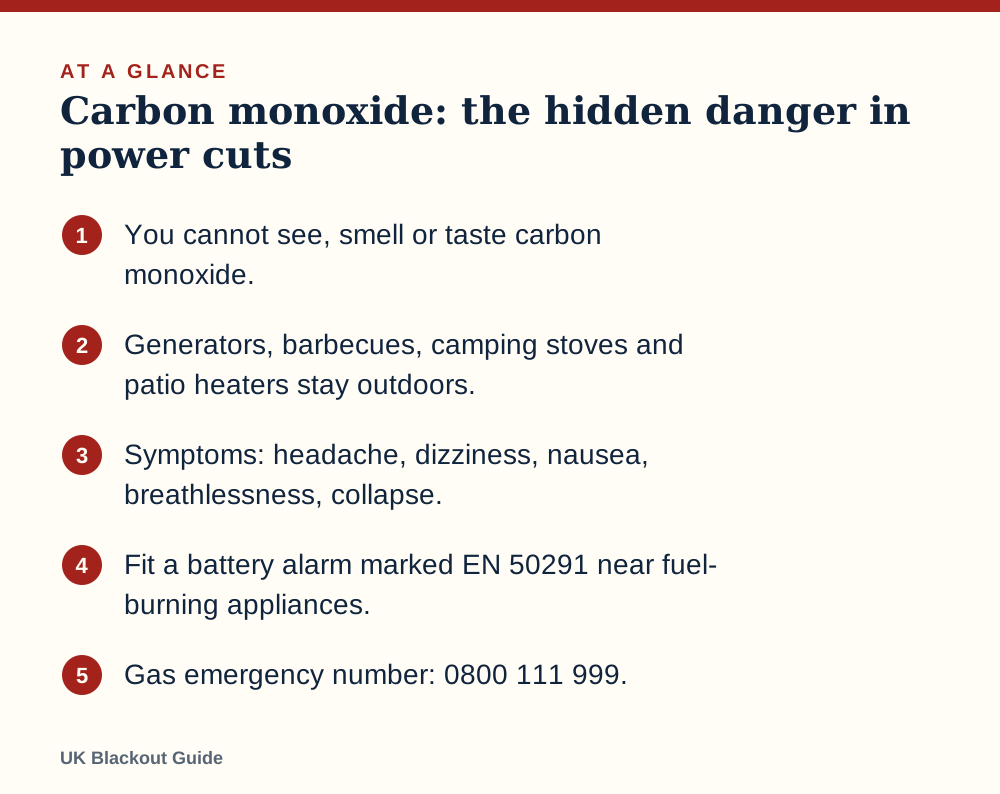
- You cannot see, smell or taste carbon monoxide.
- Generators, barbecues, camping stoves and patio heaters stay outdoors.
- Symptoms: headache, dizziness, nausea, breathlessness, collapse.
- Fit a battery alarm marked EN 50291 near fuel-burning appliances.
- Gas emergency number: 0800 111 999.
What carbon monoxide is
Carbon monoxide (CO) forms when any carbon-based fuel burns without enough oxygen. That includes mains gas, bottled gas, petrol, diesel, oil, paraffin, wood, coal and charcoal. It has no smell, colour or taste, so you have no natural warning that it is in the room.
When you breathe it in, it takes the place of oxygen in your blood. Low levels make you feel ill. High levels can cause collapse and death within a short time, and people who are asleep may never wake to notice symptoms.
Why the risk goes up when the power goes off
On a normal day, the fuel-burning appliances in a home are fixed, flued and serviced. In a power cut, people improvise. The heating is off, the cooker may not work, and equipment built for the garden or the campsite, such as a camping stove used indoors, looks like a sensible answer.
It is not. Outdoor equipment has no flue and is designed on the assumption that fumes will blow away. Indoors, the gas builds up. Houses are also sealed more tightly than usual in a cold power cut, with doors shut, curtains drawn and draughts blocked, which is exactly what you want for warmth and exactly what lets carbon monoxide collect.
Never use any of these indoors, in a garage or in a tent: generators, barbecues, camping stoves and patio heaters. An open garage door or a window left ajar does not make it safe.
The equipment behind most incidents
- Generators. A petrol or diesel generator produces large amounts of carbon monoxide in its exhaust. It must run outdoors, well away from doors, windows and vents, with the exhaust pointing away from the house. A garage, porch, shed or carport is not outdoors, which is why a generator must never run indoors or in a garage.
- Barbecues. Charcoal gives off carbon monoxide while it burns and carries on doing so as it cools, even when it looks dead. Bringing a barbecue indoors for heat has killed people in homes and tents.
- Camping stoves. Designed for open air. If you need to cook or boil water, do it outside.
- Patio heaters. For the open air only.
- Gas hobs and ovens. Safe for cooking in a ventilated kitchen, but not built to run for hours as a heater. This is why heating a room with the hob is unsafe.
- Fires and stoves you rarely use. A blocked or unswept chimney, a bird's nest in the flue or a covered air vent can send fumes back into the room.
- Car engines. Never run a car in a garage to charge phones or keep warm, even with the door open.
Symptoms, and the clues that point to carbon monoxide
The symptoms are headache, dizziness, nausea, breathlessness and collapse. They are easy to mistake for flu, a hangover or tiredness, which is part of the danger.
Suspect carbon monoxide if:
- symptoms started after a heater, stove or generator was lit
- more than one person feels ill at the same time, or pets seem unwell too
- you feel better when you go outside and worse when you come back in
Babies, children, pregnant women, older people and those with heart or breathing conditions are affected more quickly. This is general information, and anyone with symptoms should get medical advice.
Fit an alarm that still works with the power off
An audible carbon monoxide alarm is the only reliable warning, and we compare types in carbon monoxide alarms for the home. Choose one that meets the standard EN 50291 and runs on a battery, so it keeps working through a power cut. Colour-change spot detectors do not make a sound and will not wake you.
Put one in every room that has a fuel-burning appliance: boiler, gas fire, wood burner, open fire or portable gas heater. Follow the maker's instructions for height and distance from the appliance. Press the test button monthly and note the replacement date printed on the unit, because the sensor wears out after a set number of years.
An alarm is a backup, not permission. It does not make an outdoor appliance safe to use indoors. While you are checking alarms, look at the smoke alarms too, which may be running on their backup battery.
What to do if the alarm sounds or you feel ill
- Stop using the appliance and turn it off if you can do so quickly.
- Open doors and windows.
- Get everyone, including pets, out into fresh air.
- Call the gas emergency number on 0800 111 999 if a gas appliance may be involved.
- Call 999 if anyone has collapsed, is drowsy, confused or struggling to breathe. Otherwise seek medical advice promptly and say you suspect carbon monoxide.
- Do not go back in or use the appliance again until it has been checked by a qualified engineer, such as a Gas Safe registered engineer for gas.
If the mobile network is struggling during a wide outage, see how to reach 999 in a power cut. Emergency calls from a mobile can use any available network.
Safe ways to do the same jobs
Almost every carbon monoxide incident in a power cut starts with a reasonable need: warmth, hot food or electricity. Each has a safe answer.
For warmth, use clothing, bedding and one small room, and only heaters made for indoor use. Our guide to safe room heating without electricity sets out which are which.
For hot food and drinks, cook outdoors and carry the food in, or fill flasks, as described in cooking safely without electricity.
For electricity indoors, a battery power station produces no fumes at all, which is the main reason to consider a portable power station before a generator.
Common questions
Can I smell carbon monoxide?
No. It has no smell, taste or colour. A smell of gas is a different warning and also needs a call to 0800 111 999.
Does opening a window make an indoor barbecue or generator safe?
No. These produce carbon monoxide far faster than an open window or door can clear it. They must be used outdoors only.
Do electric heaters or power stations produce carbon monoxide?
No. Carbon monoxide comes only from burning fuel. Battery power stations and electric appliances do not produce it.
Will a smoke alarm detect carbon monoxide?
Not unless it is a combined smoke and carbon monoxide alarm. Check the label, and fit a separate carbon monoxide alarm if it does not say so.
How long do carbon monoxide alarms last?
The sensor has a limited life, set by the manufacturer and printed on the alarm. Replace the whole unit by that date.
Reviewed against these sources on 18 November 2026. If official advice has changed since, follow the official advice.
General information only. This page is not professional, safety, medical, legal or financial advice, and it is not official guidance. No national blackout has been forecast or announced, and nothing here suggests one is expected. We are independent and have no connection to the government or any energy company. Anything involving electricity, gas, fuel or food safety should be checked with a qualified professional or the relevant official body before you act on it. Always check the official sources linked on this page. Full disclaimer
Keep reading
 Question
Are portable gas heaters safe indoors in a power cut?
Portable gas heaters are safe indoors only if made for indoor use and run with ventilation and a CO alarm. The rules, and which heaters to keep outside.
Read: Are portable gas heaters safe indoors in a Buying guide
Best carbon monoxide alarms for power cut heating and cooking
Carbon monoxide alarms for power cut heating and cooking: seven battery alarms from Amazon UK listings, with advice on EN 50291 and where to put them.
Read: Best carbon monoxide alarms for power cut Question
Can I bring a barbecue indoors for heat in a power cut?
Never bring a barbecue indoors for heat. Why charcoal and gas barbecues cause carbon monoxide poisoning, even when cooling, and safer ways to keep warm.
Read: Can I bring a barbecue indoors for heat in a Question
Can I use a gas hob or oven for heat in a power cut?
Using a gas hob or oven to heat your home in a power cut is unsafe. The carbon monoxide and fire risks explained, and what to do for warmth instead.
Read: Can I use a gas hob or oven for heat in a