On this page
No, never. A barbecue used indoors, in a garage, in a porch or in a tent can kill. Charcoal and gas barbecues produce carbon monoxide, which has no smell, and charcoal keeps giving it off as it cools, even when it looks dead. Opening a window does not make it safe. Keep barbecues outdoors, always.
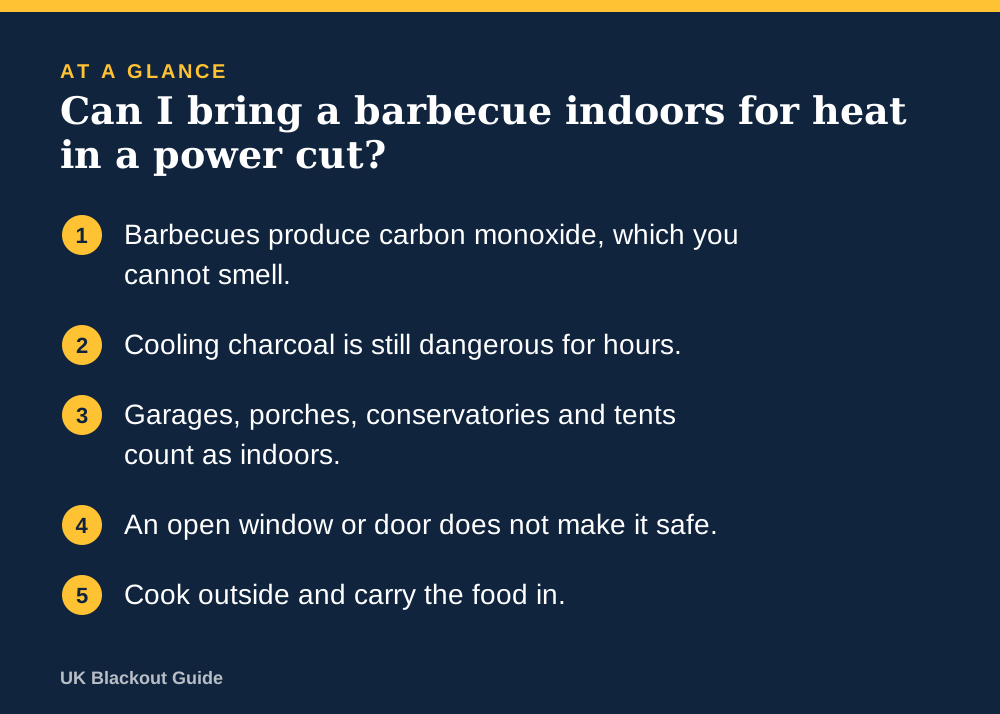
- Barbecues produce carbon monoxide, which you cannot smell.
- Cooling charcoal is still dangerous for hours.
- Garages, porches, conservatories and tents count as indoors.
- An open window or door does not make it safe.
- Cook outside and carry the food in.
Why a barbecue is so dangerous indoors
Charcoal burns slowly with limited air, which is exactly the condition that produces carbon monoxide. Outdoors the gas disperses at once. In a room it builds up quickly and silently. Gas barbecues are also designed only for the open air and have no flue.
Carbon monoxide has no smell, colour or taste. It replaces oxygen in your blood. The symptoms are headache, dizziness, nausea, breathlessness and collapse, and at high levels a person can lose consciousness before realising anything is wrong. People who are asleep get no warning at all.
Never use a barbecue, camping stove, patio heater or generator indoors, in a garage or in a tent. This applies even with doors and windows open.
The cooling barbecue trap
Many poisonings happen after the cooking has finished. Someone brings a still-warm barbecue into a tent, porch or kitchen to take the chill off, or to stop it being rained on. The flames are gone and there is no smoke, so it seems harmless.
It is not. Charcoal that is glowing, smouldering or just warm continues to release carbon monoxide for hours. A disposable barbecue is as dangerous as a full-size one. Leave it outside, well away from doors, windows and tents, until it is completely cold, and put the ashes out with water or leave them in a metal container outdoors.
Places that feel like outdoors but are not
A garage with the door up, a conservatory, a porch, a shed, a carport with walls, an awning and the doorway of a tent are all enclosed enough for carbon monoxide to collect. Fumes from a barbecue just outside an open door or window can also drift into the house. Stand the barbecue in the open, a few metres from the building, and never under a window.
If anyone feels ill after being near a barbecue, heater or stove, get them into fresh air. Call 999 if they are drowsy, confused, struggling to breathe or have collapsed. The full advice, including what to do if an alarm sounds, is in our guide to carbon monoxide in power cuts.
What a barbecue is good for in a power cut
Used outdoors, a barbecue is a perfectly good way to cook when the electricity is off. Grill food or heat a pan of water outside, then carry it in. Hot water can go into flasks and hot water bottles, which is a safe way to take the barbecue's heat indoors, and cooking safely without electricity has more ideas. The same rule applies to using a camping stove indoors.
Safer ways to warm up
If you are cold enough to consider this, deal with the cold directly. Put on more layers, get everyone into one small room, use blankets and sleeping bags, and have hot drinks. Our guide to keeping warm in a power cut sets out the steps in order.
If you want room heat that burns fuel, it has to come from an appliance made for indoor use, as covered in heating a room without electricity. Whatever you use, a carbon monoxide alarm should be in the room. If your home is too cold to stay in safely, call 105 and ask what local help is available, or go to someone with heat.
Common questions
Is a gas barbecue safer indoors than charcoal?
No. Gas barbecues also produce carbon monoxide and are designed for outdoor use only. Neither type should ever be used indoors.
Can I use a barbecue in the garage with the door open?
No. A garage traps carbon monoxide even with the door open, and fumes can pass into the house.
How long does a charcoal barbecue give off carbon monoxide?
For as long as the charcoal is warm, which can be many hours after cooking. Leave it outside until it is completely cold.
Reviewed against these sources on 18 November 2026. If official advice has changed since, follow the official advice.
General information only. This page is not professional, safety, medical, legal or financial advice, and it is not official guidance. No national blackout has been forecast or announced, and nothing here suggests one is expected. We are independent and have no connection to the government or any energy company. Anything involving electricity, gas, fuel or food safety should be checked with a qualified professional or the relevant official body before you act on it. Always check the official sources linked on this page. Full disclaimer
Keep reading
 Buying guide
Best carbon monoxide alarms for power cut heating and cooking
Carbon monoxide alarms for power cut heating and cooking: seven battery alarms from Amazon UK listings, with advice on EN 50291 and where to put them.
Read: Best carbon monoxide alarms for power cut Guide
Carbon monoxide: the hidden danger in power cuts
Why carbon monoxide risk rises in a power cut, which heaters and stoves cause it, the symptoms to watch for, alarms to fit and what to do if one sounds.
Read: Carbon monoxide: the hidden danger in power Guide
Heating a room without electricity: safe options
Safe ways to heat a room without electricity in the UK, from wood burners to indoor gas heaters, plus the heat sources that must never come indoors.
Read: Heating a room without electricity: safe Question
Are portable gas heaters safe indoors in a power cut?
Portable gas heaters are safe indoors only if made for indoor use and run with ventilation and a CO alarm. The rules, and which heaters to keep outside.
Read: Are portable gas heaters safe indoors in a