On this page
Hypothermia is a body temperature below 35°C. The NHS lists the signs as shivering, cold and pale skin, slurred speech, confusion and tiredness. It can happen indoors in a cold house. Call 999, then warm the person gently: move them somewhere warmer, remove wet clothing, wrap them in blankets and stay with them.
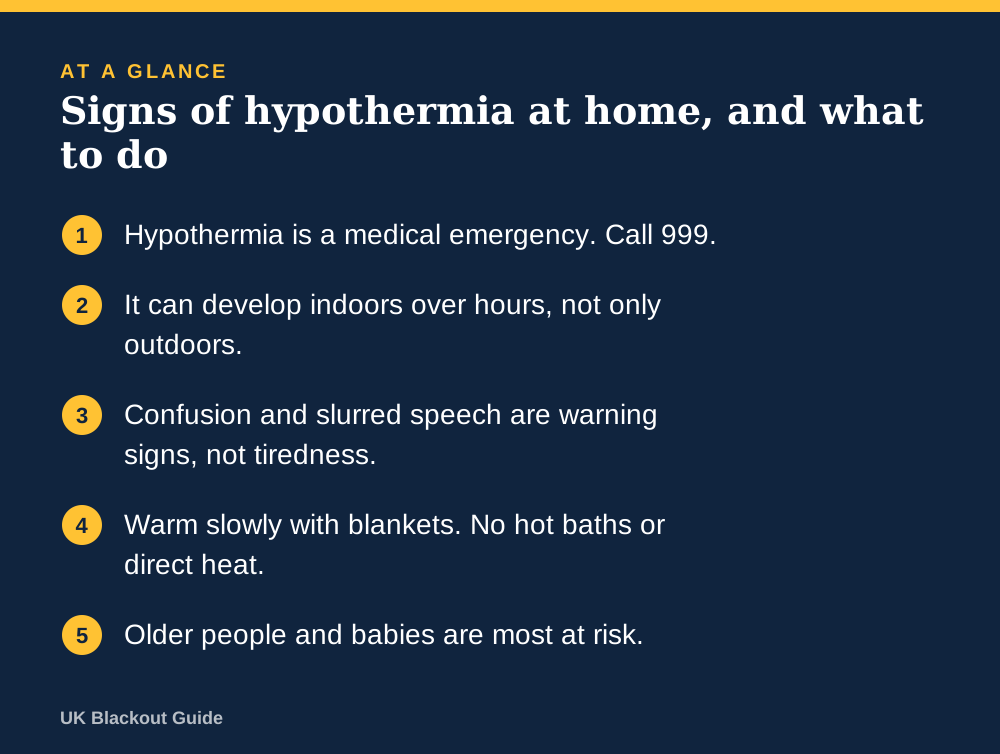
- Hypothermia is a medical emergency. Call 999.
- It can develop indoors over hours, not only outdoors.
- Confusion and slurred speech are warning signs, not tiredness.
- Warm slowly with blankets. No hot baths or direct heat.
- Older people and babies are most at risk.
It can happen in a living room
Most people picture hypothermia on a mountain. In Britain it also happens at home, to people sitting still for long periods in rooms that are too cold. It tends to come on slowly, over hours or days, which makes it easy to miss.
A winter power cut creates those conditions. The heating is off, the house cools steadily, and the people most at risk are often the least likely to complain. The NHS advises heating the rooms you use to at least 18°C. When that is not possible, you need to watch people as well as the thermometer. This page gives general information only, and sits alongside first aid basics worth learning now. Follow the advice of 999 call handlers and medical professionals.
The signs to look for
The NHS describes these signs of hypothermia:
- shivering
- cold, pale skin
- slurred speech
- confusion
- tiredness or drowsiness
Shivering is the body trying to warm itself, and it is an early sign. Slurred words, clumsiness, muddled answers or wanting to be left alone to sleep suggest things are getting worse. A person who was shivering and has stopped, but is still cold and drowsy, needs help urgently.
A baby with hypothermia may be cold to the touch, floppy, unusually quiet and sleepy, and may refuse to feed, so caring for babies and toddlers in a power cut means checking them by touch.
People with hypothermia often do not realise it. Confusion is part of the condition, so do not rely on someone telling you they are fine.
Who is most at risk in a cold house
Anyone can become hypothermic if they are cold for long enough, but some people get there faster:
- older people, especially those living alone or who move around little
- babies and young children, who lose heat quickly
- people with conditions that affect circulation, mobility or awareness, including dementia
- anyone who has been drinking alcohol, which speeds heat loss while making you feel warm
- people who are wet, exhausted or have not eaten
If that describes someone you care for, plan ahead. Register them on the Priority Services Register. In a long cut, knocking on a neighbour's door may be what finds someone in time.
What to do straight away
Call 999 if you think someone has hypothermia. If the mobile network is patchy, emergency calls can roam onto any available network, and there are other routes described in calling 999 in a power cut.
While you wait, the NHS advice is to:
- Move the person indoors or to the warmest, most sheltered place you have.
- Take off any wet clothing.
- Wrap them in a blanket, sleeping bag or dry towel, covering the head as well as the body.
- Give a warm non-alcoholic drink and some sugary food, such as chocolate, but only if they are fully awake.
- Keep them awake by talking to them until help arrives.
- Stay with them.
If they are lying down, put something between them and the floor: cushions, a folded duvet or a camping mat. Sitting close and sharing a blanket is a safe way to add warmth.
What not to do
Do not put the person in a hot bath, use a hot water bottle or heat lamp to warm them up, rub their arms, legs, hands or feet, or give them alcohol. The aim is to warm the person gradually.
Do not light a barbecue, camping stove or patio heater indoors in an effort to warm the room quickly. They produce carbon monoxide, which adds a second emergency to the first. Use blankets and body heat. Our guide to heating a room safely without electricity lists what can be used.
Do not leave them alone to sleep it off. Drowsiness is a symptom.
What to keep in the house
You do not need specialist equipment. Warm blankets, dry clothes, a hat and a way to make a warm drink cover the first aid. A filled flask is useful in any winter power cut for exactly this reason.
Foil emergency blankets are cheap, tiny and worth having in a first aid kit or the car. They cut heat lost to draughts and evaporation, but they have no padding, so use one over a layer of clothing and under a proper blanket. That limit is the practical answer to whether foil blankets work in a cold house: they help, but only as one layer among several.
A room thermometer helps too, because it gives you a number to act on when you are judging how cold is too cold for a house.
Stopping it happening
Prevention is ordinary and it works, and it is the same routine as keeping warm in a power cut. Dress people in layers before they feel cold, feed them regularly, keep them moving a little, and gather everyone in one room. Check on anyone at risk every hour or so, and at least once in the night. Look at them, talk to them and feel their skin.
If you cannot keep a vulnerable person warm at home, whether a baby or an older relative you are looking after, do not wait for symptoms. Call 105 to ask your network operator what help is available locally, or move them to a relative or neighbour with heat.
Common questions
What body temperature counts as hypothermia?
Below 35°C. Normal body temperature is around 37°C. Many household thermometers do not read low enough to confirm it, so act on the signs.
Can you get hypothermia indoors?
Yes. Sitting still for long periods in a cold home can cause it, particularly in older people and babies.
Should I give someone with hypothermia a hot bath?
No. The NHS advises against hot baths, hot water bottles and heat lamps. Warm the person gradually with blankets and dry clothing and call 999.
Is shivering a good or bad sign?
Shivering is the body's normal response to cold and an early warning. If someone stops shivering but is still cold, drowsy or confused, their condition may be getting worse.
Reviewed against these sources on 18 November 2026. If official advice has changed since, follow the official advice.
General information only. This page is not professional, safety, medical, legal or financial advice, and it is not official guidance. No national blackout has been forecast or announced, and nothing here suggests one is expected. We are independent and have no connection to the government or any energy company. Anything involving electricity, gas, fuel or food safety should be checked with a qualified professional or the relevant official body before you act on it. Always check the official sources linked on this page. Full disclaimer
Keep reading
 Buying guide
Best blankets for power cuts
Wool and fleece blankets for keeping warm in a power cut, picked from Amazon UK listings on material, size and price, with advice on how many to keep.
Read: Best blankets for power cuts Buying guide
Best emergency foil blankets
Emergency foil blankets for power cuts, cars and grab bags: six packs and ponchos from Amazon UK listings, and what foil can and cannot do for warmth.
Read: Best emergency foil blankets Question
Do foil emergency blankets actually work?
Foil blankets do work, but only at certain jobs. What a foil emergency blanket can and cannot do in a cold house, and the right way to use one.
Read: Do foil emergency blankets actually work? Question
How cold is too cold for a house in a power cut?
How cold is too cold for a house in a power cut: the NHS 18°C guideline, who is most at risk below it, and when to move somewhere warmer or call for help.
Read: How cold is too cold for a house in a power