On this page

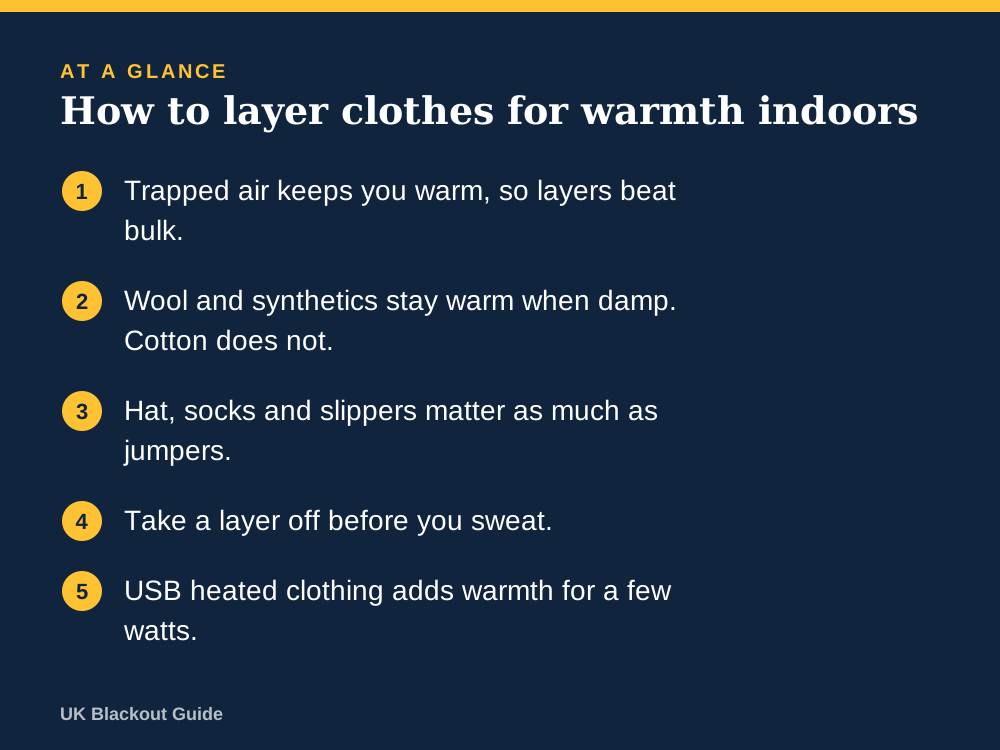
Wear three kinds of layer: a close-fitting base layer that keeps skin dry, one or two loose mid layers such as fleece or wool that trap air, and an outer layer to hold it all in. Cover your head, feet and hands. Several thin layers are warmer than one thick one and are easier to adjust.
- Trapped air keeps you warm, so layers beat bulk.
- Wool and synthetics stay warm when damp. Cotton does not.
- Hat, socks and slippers matter as much as jumpers.
- Take a layer off before you sweat.
- USB heated clothing adds warmth for a few watts.
Clothes do not make heat, they keep it
Your body produces heat all the time. Clothing works by trapping a layer of still air next to you, and still air is a very good insulator. Each extra layer adds another pocket of trapped air, which is why two thin jumpers are usually warmer than one thick one of the same weight.
Fit matters. Layers that are too tight squash the air out and can restrict blood flow to hands and feet. Each layer should sit comfortably over the one beneath. This is the first and cheapest step in keeping warm in a power cut, and it works whether the cut lasts three hours or three days.
The three layers, from the skin out
| Layer | Job | Good choices | Avoid |
|---|---|---|---|
| Base | Sits close to skin and moves moisture away | Merino wool or synthetic thermals, long-sleeved sports tops, leggings | Cotton T-shirts if you are active |
| Mid | Traps air | Fleece, wool jumper, padded gilet, down jacket | Anything tight |
| Outer | Holds warm air in, blocks draughts | Dressing gown, loose coat, oversized hoodie, blanket poncho | Stiff or heavy coats you cannot sit in |
Indoors you do not need a waterproof shell. The outer layer just needs to stop warm air escaping when you move, so a thick dressing gown over a fleece does the job well.
Why the base layer earns its place
Most people already own jumpers and coats. The layer usually missing from the drawer is a proper base layer, and it makes the biggest difference for its cost. Thermal tops and leggings close the gaps at the waist, wrists and ankles where heat leaks, and they keep working under pyjamas at night.
Cotton absorbs moisture and holds it against the skin, which cools you down once it is damp. Wool and synthetic thermal base layers stay warm when slightly damp and dry faster. Sitting still in a cold room, a cotton vest is fine. Carrying logs or water, it is not.
Head, hands and feet
When you are cold, your body protects its core by sending less blood to the hands and feet, so they chill first. Any uncovered skin loses heat, and the head and neck are the parts people most often leave bare indoors.
- Head and neck. A soft hat and a scarf or neck warmer. Wear the hat in bed too.
- Feet. One pair of thick wool socks beats two tight pairs. Add slippers or indoor shoes with a sole, because cold floors pull heat out through your feet.
- Hands. Fingerless gloves let you use a phone or turn pages. Mittens are warmer if you are sitting still.
- Legs. Leggings or thermals under loose trousers. Jeans alone are poor insulation.
A rechargeable hand warmer in a pocket helps people who struggle with cold fingers, and a covered hot water bottle on the lap warms the blood going to your legs.
Adjust before you sweat
The point of layers is that you can take one off. If you are about to do something active, such as carrying water or bedding up the stairs, remove a mid layer first and put it back when you sit down. Sweat-damp clothing chills you quickly once you stop.
If clothes do get damp, change them. Keep one dry set of base layers and socks in reserve for sleeping. Getting into bed in dry clothes is one of the simplest ways of sleeping warm in an unheated house.
Where heated clothing fits
USB heated gilets and jackets have thin heating panels powered from a power bank. They draw only a few watts, so they are one of the few sensible ways to turn stored battery power into warmth. A power station cannot run a fan heater for long, but a heated gilet runs for hours from a power bank.
Wear a USB heated gilet or jacket as a mid layer: over the base layer so the panels are close to your body, and under an outer layer so the heat is not lost to the room. Do not sleep in one, and keep it away from anyone who cannot tell you they are too hot. Keep a charged power bank reserved for it so your phone does not go short.
Dressing children and older relatives
Children lose heat faster than adults and are often too busy to notice. Dress them in the same three layers and check the back of the neck with your hand: it should feel warm and dry, not sweaty and not cold. Babies under one should not wear hats indoors for sleep and can overheat, so follow safer sleep guidance, as with everything else about looking after babies and toddlers in a power cut.
Older people may feel the cold less and so not add layers when they need them. If you are supporting an older relative, lay the clothes out and prompt them, and know the early signs of hypothermia. Ask yourself how cold the house has become, not only how cold they say they feel.
Common questions
Are two pairs of socks warmer than one?
Only if your feet still have room. Two tight pairs squeeze out the trapped air and restrict blood flow, which makes feet colder. One thick wool pair with roomy slippers is usually better.
Is cotton bad for keeping warm?
Dry cotton is fine when you are sitting still. Once damp from sweat it holds moisture against your skin and cools you, so wool or synthetics are the safer choice next to the skin.
Should I wear a coat indoors?
Yes, if you need it. A loose coat or dressing gown over a fleece is a perfectly good outer layer. Take it off for active jobs so you do not sweat.
How many layers do I need?
Most people are comfortable sitting in a cold room with a base layer, two mid layers and a loose outer layer, plus a hat and thick socks. Add or remove one as you need.
Reviewed against these sources on 18 November 2026. If official advice has changed since, follow the official advice.
General information only. This page is not professional, safety, medical, legal or financial advice, and it is not official guidance. No national blackout has been forecast or announced, and nothing here suggests one is expected. We are independent and have no connection to the government or any energy company. Anything involving electricity, gas, fuel or food safety should be checked with a qualified professional or the relevant official body before you act on it. Always check the official sources linked on this page. Full disclaimer
Keep reading
 Buying guide
Best heated clothing for power cuts
Heated clothing for power cuts: seven USB heated gilets from Amazon UK listings, with advice on batteries, power bank runtime and safe use indoors.
Read: Best heated clothing for power cuts Buying guide
Best thermals for a house with no heating
Thermals for a house with no heating: six thermal underwear sets from Amazon UK listings for staying warm indoors in a power cut, with fit advice.
Read: Best thermals for a house with no heating Question
Do USB heated gilets work from a power bank in a power cut?
USB heated gilets do run from a power bank. How long one lasts on 10,000 and 20,000 mAh, what output you need, and why some power banks cut out.
Read: Do USB heated gilets work from a power bank Question
How cold is too cold for a house in a power cut?
How cold is too cold for a house in a power cut: the NHS 18°C guideline, who is most at risk below it, and when to move somewhere warmer or call for help.
Read: How cold is too cold for a house in a power