On this page
Use hot water from the tap if you have a cylinder, water saved earlier in a flask, a pan heated on a gas hob lit with a match, the top of a wood burner, or a camping stove or storm kettle used outdoors. Hot tap temperature is enough. Never fill a hot water bottle with boiling water.
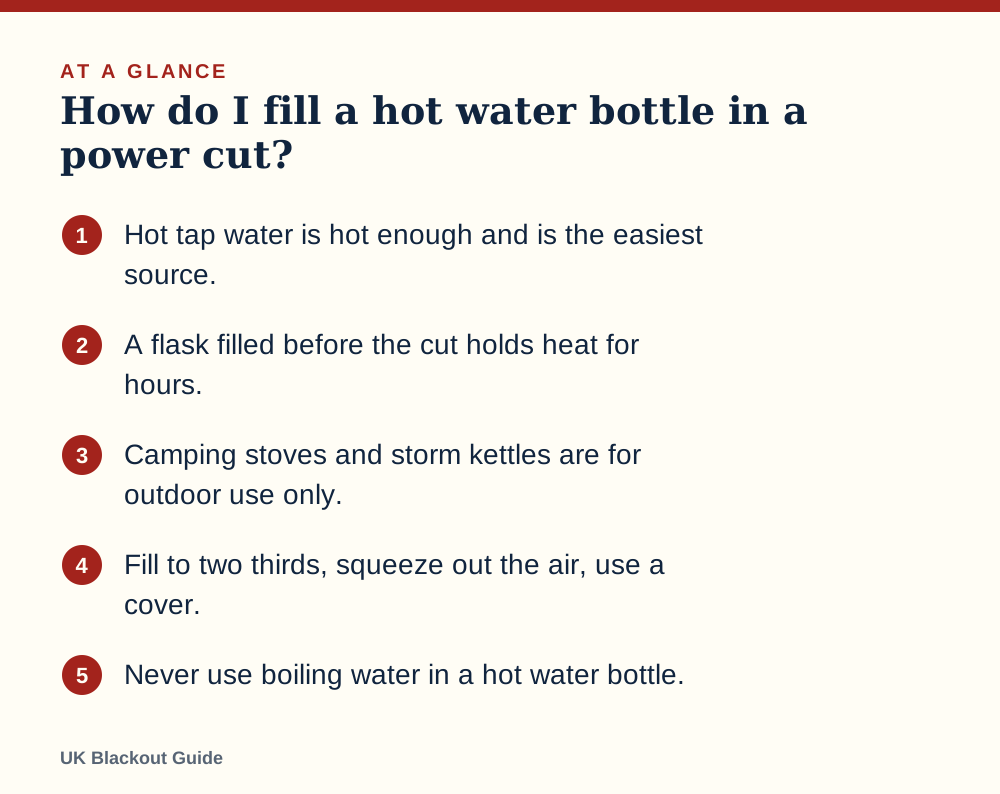
- Hot tap water is hot enough and is the easiest source.
- A flask filled before the cut holds heat for hours.
- Camping stoves and storm kettles are for outdoor use only.
- Fill to two thirds, squeeze out the air, use a cover.
- Never use boiling water in a hot water bottle.
Five sources of hot water, easiest first
- The hot tap. If your home has a hot water cylinder, the water in it stays hot for many hours after the power goes off. This is the simplest answer on the first evening of a cut. Combi boilers have no stored water, so the hot tap will run cold.
- A flask. If you get warning of a cut, or it is still early, fill every flask you own with hot water. A good vacuum flask keeps water hot enough for a bottle well into the night.
- A gas hob. Many gas hobs can be lit with a match when the electric ignition is dead. Heat a lidded pan, then turn the hob off. It is for heating water, never for heating the room.
- A wood burner. A kettle or pan on the flat top of a stove heats steadily while the fire warms the room.
- A camping stove or storm kettle, outdoors. Heat the water outside and carry it in.
Our guide to boiling water without electricity compares the outdoor options in more detail.
Using a stove without the carbon monoxide risk
Never use a camping stove, barbecue or storm kettle indoors, in a garage or in a tent. They produce carbon monoxide, which has no smell and can kill. Symptoms are headache, dizziness, nausea, breathlessness and collapse.
Set the stove on level ground outside, sheltered from the wind but in the open air, away from doors and windows. Use a pan with a lid and a handle you can grip in gloves. A torch or head torch keeps both hands free in the dark.
Heating one large pan and sharing it between bottles and a flask saves fuel and trips outside. We compare models in camping stoves for emergencies.
Fill it the safe way
Burns from hot water bottles are almost always caused by boiling water, overfilling or an old bottle splitting. In torchlight, take extra care.
- Check the bottle for cracks, thin patches or a perished stopper. If in doubt, do not use it, and replace it with one of our pick of hot water bottles.
- Let boiled water stand for a few minutes first. Water from the hot tap or a flask filled hours ago is already at a suitable temperature.
- Hold the bottle upright by the neck over the sink and pour slowly. A jug gives you more control than a heavy pan.
- Fill to no more than two thirds.
- Lower the bottle gently onto a surface until water shows at the neck, to push the air out, then screw the stopper in firmly.
- Dry it, check for leaks and put the cover on.
Do not sit or lie on a hot water bottle, and do not give one to a baby.
Make the heat last, and plan for next time
For sleeping warm without heating, a covered bottle tucked inside a sleeping bag or under a blanket stays warm for hours, because the bedding insulates it as well as you. When it cools, the water can be reheated in a pan or used for washing. It is not for drinking.
The easiest way to have hot water without a kettle is to store it before you need it. If a planned or rota cut is coming, fill flasks that keep water hot in the last half hour of power.
Common questions
Is hot tap water hot enough for a hot water bottle?
Yes. Hot tap water is a suitable temperature and is safer than freshly boiled water. It will give several hours of warmth under covers.
Can I heat water with candles or tea lights?
Not in any useful quantity, and balancing a pan over candles is a fire and scald risk. Use one of the methods above.
Are microwave wheat bags an alternative?
Not in a power cut, since they need a microwave. Do not heat them in a gas oven or on a stove, because they can catch fire.
Reviewed against these sources on 18 November 2026. If official advice has changed since, follow the official advice.
General information only. This page is not professional, safety, medical, legal or financial advice, and it is not official guidance. No national blackout has been forecast or announced, and nothing here suggests one is expected. We are independent and have no connection to the government or any energy company. Anything involving electricity, gas, fuel or food safety should be checked with a qualified professional or the relevant official body before you act on it. Always check the official sources linked on this page. Full disclaimer
Keep reading
 Buying guide
Best hot water bottles for power cuts
Hot water bottles for power cuts: six 2 litre bottles from Amazon UK listings, with safe filling advice and how to heat the water when the kettle is off.
Read: Best hot water bottles for power cuts Guide
How to keep warm in a power cut
How to keep warm in a UK power cut: layers, one heated room, hot drinks, safe heat sources and the carbon monoxide rules you must not break.
Read: How to keep warm in a power cut Guide
Sleeping warm without heating
How to sleep warm in a house with no heating: building the bed, sleeping bag ratings, hot water bottles, what to wear and what never to leave burning.
Read: Sleeping warm without heating Question
Does central heating work without electricity?
Central heating needs electricity even when it burns gas or oil. Why boilers stop in a power cut, which heat still works and how to restart it safely.
Read: Does central heating work without electricity?