On this page

Block the gap under the door, draw and tuck in the curtains, cover the letterbox and keyhole, and lay rugs or blankets on bare floors. Those four jobs take minutes and use things you already own. Do not block air vents or chimneys in any room where a fire, stove or gas heater is in use.
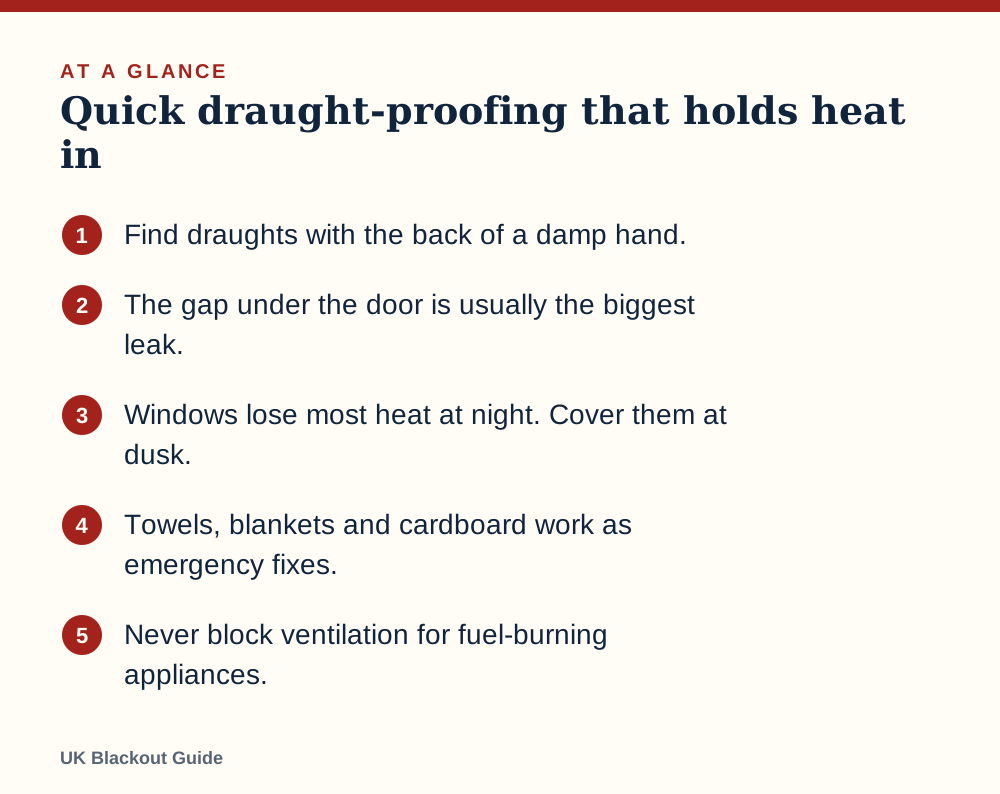
- Find draughts with the back of a damp hand.
- The gap under the door is usually the biggest leak.
- Windows lose most heat at night. Cover them at dusk.
- Towels, blankets and cardboard work as emergency fixes.
- Never block ventilation for fuel-burning appliances.
Stopping draughts is the fastest win
A draught is warm air leaving and cold air arriving. When the heating is on, the boiler replaces what is lost and you barely notice. When the heating is off, every bit of warmth that escapes is gone for good, so stopping draughts is the fastest way to slow a house cooling, and an early step in any winter power cut plan.
You do not need to do the whole house. Concentrate on the room you plan to live in, as set out in the one warm room method, and do it early while the room is still warm.
A two-minute draught hunt
Wet the back of your hand and move it slowly around the edges of the door, the window frames, the skirting boards and any pipes that pass through the wall. Moving air feels cold on damp skin. A strip of tissue or a ribbon held near a gap will flutter.
Check the places people forget: the letterbox, keyholes, cat flap, loft hatch, unused fireplaces, gaps between floorboards and the edges of fitted cupboards on outside walls. On a windy day the leaks are obvious. On a still day they are still there.
Fixes by location, with what to use tonight
| Leak | Tonight, from the house | Proper fix for next time |
|---|---|---|
| Under internal doors | Rolled towel, or a pair of tights stuffed with socks | Fabric or twin-roll draught excluder |
| Round the door frame | Blanket hung over the whole doorway | Self-adhesive foam or brush strip |
| Letterbox and keyhole | Folded cloth taped over the inside | Letterbox brush and keyhole cover |
| Window glass | Curtains closed, blanket pegged over, bubble wrap pressed on | Window insulation film, thermal curtains |
| Window frame gaps | Masking tape or rolled cloth on the sill | Foam or rubber seal strip |
| Bare floorboards | Rugs, duvets, cardboard, yoga mats | Gap filler and a thick rug with underlay |
| Unused chimney | Leave it unless you are certain no fire will be lit | Removable chimney draught excluder |
Doors
The gap under a door is often a centimetre high and the full width of the door, which adds up to a hole the size of a small window. Close it first. A rolled bath towel pushed firmly against the bottom works at once, and a proper draught excluder does the same job every night.
For the front door, cover the letterbox on the inside and hang a heavy blanket or spare curtain across the whole door if it opens straight into the room you are using. Keep it clear enough that you can still get out quickly. That matters in any emergency and especially when you are using candles or fires, as covered in fire safety during a power cut.
Windows
Glass is the coldest surface in most rooms. Warm air touching it cools, sinks and rolls out across the floor, which is the cold draught you feel at your ankles even when the window is shut tight.
Close curtains at dusk and tuck them onto the sill or behind the radiator so that falling cold air is trapped. On a sunny winter day, open the curtains on the sunny side to let free heat in, then close them again before the light goes. Thin curtains can be backed up with a blanket pegged or pinned over the rail.
Window insulation film is clear plastic that you tape around the frame and shrink tight with a hairdryer, which means it has to go up before a power cut, not during one. It adds a still layer of air like temporary double glazing and suits single-glazed or leaky windows through winter.
Floors and the things you sit on
Cold air pools at floor level and uncarpeted floors pull heat from your feet. Lay down anything with thickness: rugs from other rooms, spare duvets, flattened cardboard boxes, foam play mats. Move chairs and the sofa away from outside walls and windows towards the middle of the room.
Sit on a folded blanket and put another over your knees. If you are short of bedding, thick wool and fleece blankets are among the most useful things to add to a winter kit.
The vents and flues you must leave open
Never block an air brick, wall vent, window trickle vent or chimney in a room where a fuel-burning appliance is in use. That includes boilers, gas fires, wood burners, open fires and portable gas heaters. They need air to burn safely, and a starved flame produces carbon monoxide, which has no smell. Fit an audible alarm that meets EN 50291.
If you have stuffed a chimney to stop a draught, take the stuffing out before anyone lights a fire, and tie a visible reminder to the fireplace. When using a portable gas heater indoors, a window needs to be slightly open, so accept that small draught as the price of the heat.
A sealed room full of people also gets damp. Open the door for five minutes once or twice a day to change the air.
Pipes are the exception to closing everything
In freezing weather, shutting every door can leave pipes in unheated rooms and the loft colder than they need to be. Keep your living room sealed, but follow the advice on how to keep pipes from freezing for the cupboard doors and loft hatch you should open. And if you are wondering whether all this is enough, our answer on how cold a house can safely get gives the numbers to watch.
Common questions
Does bubble wrap on windows work?
Yes, as a stopgap. Pressed onto slightly damp glass it clings and adds a layer of trapped air. It blocks the view and some light, so it suits rooms you are not sitting in by day.
Should I block my chimney in a power cut?
Only if no fire will be lit in that fireplace, and remove the blockage fully before any fire is used. A chimney serving a working fire or stove must stay clear.
Is cling film a substitute for window insulation film?
It can help a little if taped airtight around the frame, but it tears easily. Purpose-made film is thicker and shrinks tight.
Will draught-proofing cause damp?
Short-term emergency sealing will not, if you air the room briefly each day. Permanent draught-proofing should leave purpose-built ventilation in place.
Reviewed against these sources on 18 November 2026. If official advice has changed since, follow the official advice.
General information only. This page is not professional, safety, medical, legal or financial advice, and it is not official guidance. No national blackout has been forecast or announced, and nothing here suggests one is expected. We are independent and have no connection to the government or any energy company. Anything involving electricity, gas, fuel or food safety should be checked with a qualified professional or the relevant official body before you act on it. Always check the official sources linked on this page. Full disclaimer
Keep reading
 Buying guide
Best draught excluders to keep heat in during a power cut
Draught excluders to keep heat in during a power cut: seven door excluders and window film kits from Amazon UK listings, with ventilation advice.
Read: Best draught excluders to keep heat in during Guide
The one warm room method
The one warm room method for power cuts: how to pick the room, seal it, furnish it and live in it so that a cold house stays bearable for days.
Read: The one warm room method Question
Are portable gas heaters safe indoors in a power cut?
Portable gas heaters are safe indoors only if made for indoor use and run with ventilation and a CO alarm. The rules, and which heaters to keep outside.
Read: Are portable gas heaters safe indoors in a Buying guide
Best blankets for power cuts
Wool and fleece blankets for keeping warm in a power cut, picked from Amazon UK listings on material, size and price, with advice on how many to keep.
Read: Best blankets for power cuts