On this page
Use sealed bottled water first. If you must treat water, boiling is the most dependable method: bring it to a rolling boil and let it cool. Purification tablets and filters are useful back-ups when you cannot boil, but each has limits. Nothing you can do at home makes chemically contaminated water or floodwater safe.
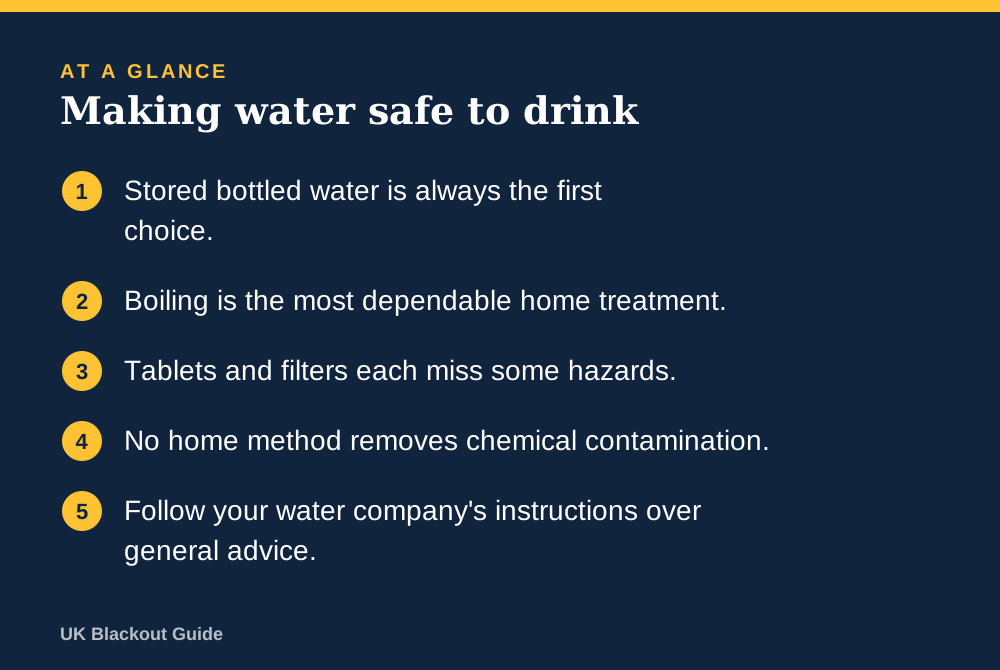
- Stored bottled water is always the first choice.
- Boiling is the most dependable home treatment.
- Tablets and filters each miss some hazards.
- No home method removes chemical contamination.
- Follow your water company's instructions over general advice.
Use stored water first
The safest water in a long power cut is the water you stored beforehand. That is why the official Be Ready list starts with bottled water, at 3 litres per person per day for three days. If you have not done that yet, working out how much water to store is the place to start.
Treating water is the fallback for when stored water is running low or the tap supply has become doubtful. It takes time, fuel or supplies, and it is easy to get slightly wrong when you are tired.
How you will know tap water is unsafe
Tap water does not become unsafe just because the electricity is off. In most local power cuts it stays exactly as it was. The official advice is that mains water can be disrupted during and after power cuts, so whether water works in a power cut can come down to low pressure, no flow or, less often, a quality problem.
If there is a quality problem, your water company will say so, typically with a "boil water" or "do not drink" notice. With the internet down you are most likely to hear it on local radio, which is one reason a battery radio is on the official kit list and at the centre of getting news in a blackout.
A "boil water" notice and a "do not drink" notice are different. If you are told not to drink the water, boiling will not fix it. Use bottled water only.
Treat tap water with suspicion without being told if it comes out cloudy or discoloured, or smells unusual, after the supply has been off.
Boiling
Boiling kills the bacteria, viruses and parasites that cause illness. Bring the water to a full rolling boil, then leave it to cool with a lid on. Store it in a clean, covered container and use it within a day or so.
If the water is cloudy, let it settle and pour it through a clean cloth or coffee filter first.
Boiled water tastes flat because the dissolved air has gone. Pouring it between two clean jugs a few times improves it.
The obvious snag is that you need heat. If your hob is electric, look at ways to boil water without electricity. Any fuel-burning stove other than a fixed gas hob must be used outdoors because of carbon monoxide.
Purification tablets
Water purification tablets are small, cheap and need no fuel, which makes them a sensible item for a kit or grab bag. Most use a chlorine-based disinfectant. You drop one into a measured amount of water and wait for the time on the pack before drinking.
Their limits are worth knowing. They work poorly in cloudy water, so filter it first. They take longer in very cold water. And chlorine-based tablets are less effective against some parasites, such as cryptosporidium, than boiling is.
Follow the pack instructions exactly, including the dose. More is not better.
Filters
Portable water filters, including filter bottles and straw-style filters, physically strain out bacteria and parasites. They work at once and need no fuel.
Most do not remove viruses, which are far smaller, unless the maker specifically says so. That is why some people filter first and then add a tablet or boil. The jug filters many kitchens have are designed to improve the taste of safe tap water. They are not purifiers.
What each method deals with
| Method | Bacteria | Viruses | Parasites | Chemicals |
|---|---|---|---|---|
| Boiling | Yes | Yes | Yes | No |
| Chlorine tablets | Yes | Yes | Some are resistant | No |
| Typical portable filter | Yes | Usually no | Yes | Limited, check the maker's claims |
This is a general picture. Products vary, so the manufacturer's stated performance is what counts for any particular one.
Water you should not try to treat
No home method reliably removes fuel, pesticides, heavy metals or sewage-related chemical contamination. Do not drink floodwater, water from near roads, farms or industrial sites, or anything with an oily film or chemical smell, however thirsty you are. Boiling can concentrate some chemicals.
Rainwater sits in between, and whether you can drink rainwater in an emergency is a question of its own.
Be stricter for babies. When you are feeding a baby in a power cut, formula should be made with the safest water you have, following NHS guidance.
Common questions
Can I use household bleach to treat water?
Purpose-made tablets with clear dosing instructions are a safer choice. Many household bleaches contain perfumes and other additives that are not meant to be swallowed.
Does boiled water need to be kept in the fridge?
No, but keep it covered in a clean container and use it within a day or so. Boil a fresh batch each day if you can.
Is water from my hot tap or loft tank safe to drink?
Treat it as untreated. Stored household water is not kept to drinking standard, so boil it first or keep it for washing and flushing.
Reviewed against these sources on 18 November 2026. If official advice has changed since, follow the official advice.
General information only. This page is not professional, safety, medical, legal or financial advice, and it is not official guidance. No national blackout has been forecast or announced, and nothing here suggests one is expected. We are independent and have no connection to the government or any energy company. Anything involving electricity, gas, fuel or food safety should be checked with a qualified professional or the relevant official body before you act on it. Always check the official sources linked on this page. Full disclaimer
Keep reading
 Question
Can I drink rainwater in an emergency?
Whether rainwater is safe to drink in an emergency in the UK, how to collect and treat it if you have no alternative, and what it is better used for.
Read: Can I drink rainwater in an emergency? Buying guide
Best emergency water filters
Emergency water filters for a household kit, from straw filters to gravity bags and purifier bottles, picked from Amazon UK listings and ratings.
Read: Best emergency water filters Buying guide
Best emergency water purification tablets
Water purification tablets for an emergency kit, picked from Amazon UK listings on litres treated per tablet, stated shelf life, price and ratings.
Read: Best emergency water purification tablets Buying guide
Best camping stoves for power cuts
Portable gas camping stoves for hot food and drinks in a power cut, picked from Amazon UK listings, with firm rules on outdoor-only use and CO.
Read: Best camping stoves for power cuts