On this page
Not untreated. Rainwater picks up bird droppings, moss, dirt and other contamination from roofs, gutters and water butts. In a real emergency with no alternative, rain caught in a clean container can be filtered and boiled before drinking. It is far better kept for flushing and washing, with stored bottled water for drinking.
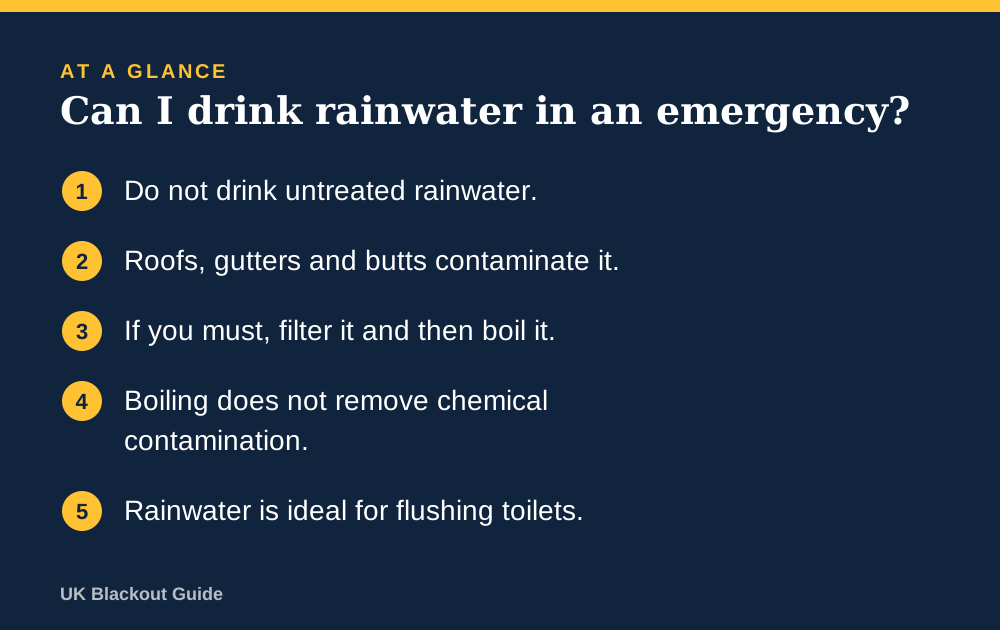
- Do not drink untreated rainwater.
- Roofs, gutters and butts contaminate it.
- If you must, filter it and then boil it.
- Boiling does not remove chemical contamination.
- Rainwater is ideal for flushing toilets.
Why rainwater is not ready to drink
Rain is fairly clean as it falls. The trouble starts when it lands. Water that runs off a roof carries bird and animal droppings, moss, leaf mould, dust and whatever the roofing and guttering shed. It then sits in a water butt, often warm and open to insects, for weeks.
That water can carry bacteria and parasites that cause stomach illness. A bout of vomiting and diarrhoea is the last thing you want when water is short, since it dehydrates you and spreads easily in a household with limited washing.
This is why the official Be Ready list starts with bottled water, at 3 litres per person per day for three days, the basis of how much water to store. With that in the cupboard you should never need to drink from the sky.
If you have no alternative
If stored water has gone, the taps are dry and no help has arrived, rainwater can be made much safer.
- Catch it cleanly. Stand clean bowls, pans or buckets in the open, away from trees and overhangs, so rain falls straight in. This is far better than water from a roof or butt.
- Strain it. Pour it through a clean cloth or coffee filter to take out grit and debris.
- Disinfect it. Bring it to a full rolling boil and let it cool. Boiling is the most dependable method. If you cannot boil, use one of the portable water filters we compare and purification tablets together.
Any fuel-burning stove you use to boil water, other than a fixed gas hob, has to be used outdoors because of carbon monoxide. Each method's strengths and gaps are set out in making water safe to drink.
What treatment cannot fix
Boiling, tablets and ordinary portable filters deal with germs. They do not reliably remove chemicals. Do not drink rainwater collected from roofs with lead flashing, old asbestos-cement sheeting or recently treated timber, or from containers that have held anything other than food or water.
Do not give treated rainwater to babies or use it for formula if you have any other option. Use bottled or mains water and follow NHS guidance.
What rainwater is good for
Here rainwater earns its keep. Flushing a toilet takes more water than anything else you do, and it does not need to be clean. A full water butt can keep a toilet working for days and leaves your stored water for drinking. The bucket-flush method is in washing and toilets when the water is off.
It is also fine for mopping up and for a first rinse of muddy boots and tools. For a hand wash or a strip wash, use clean water or wipes if you can.
If you are planning for a longer outage, a water butt on a downpipe is a cheap addition to the household. Where it fits alongside stored and treated water is covered in our long-term water plan.
Common questions
Is rainwater safe for pets to drink?
Animals can pick up the same stomach bugs from dirty water. Give pets the same clean water you drink where you can.
Can I drink melted snow?
Treat it like rainwater. Collect clean, fresh snow, melt it, then boil it before drinking.
Can I cook with rainwater?
Only if it is boiled as part of the cooking, and only when cleaner water has run out. Chemical contamination is not removed by cooking.
Reviewed against these sources on 18 November 2026. If official advice has changed since, follow the official advice.
General information only. This page is not professional, safety, medical, legal or financial advice, and it is not official guidance. No national blackout has been forecast or announced, and nothing here suggests one is expected. We are independent and have no connection to the government or any energy company. Anything involving electricity, gas, fuel or food safety should be checked with a qualified professional or the relevant official body before you act on it. Always check the official sources linked on this page. Full disclaimer
Keep reading
 Guide
Making water safe to drink
How to make water safe to drink when the tap supply is in doubt: boiling, purification tablets and filters, what each removes and when not to drink at all.
Read: Making water safe to drink Buying guide
Best emergency water filters
Emergency water filters for a household kit, from straw filters to gravity bags and purifier bottles, picked from Amazon UK listings and ratings.
Read: Best emergency water filters Buying guide
Best emergency water purification tablets
Water purification tablets for an emergency kit, picked from Amazon UK listings on litres treated per tablet, stated shelf life, price and ratings.
Read: Best emergency water purification tablets Guide
A long-term water plan
How to plan water for a long outage in three layers: what to store, where to top up, and how to treat doubtful water by boiling, filtering or tablets.
Read: A long-term water plan