On this page
A grab bag is a small rucksack you can pick up and leave with in a couple of minutes if you have to get out of your home, for example in a flood, fire or gas leak. Pack documents, medication, cash, a phone charger, a torch, water, snacks and warm layers. In a power cut alone, you will almost always stay put.
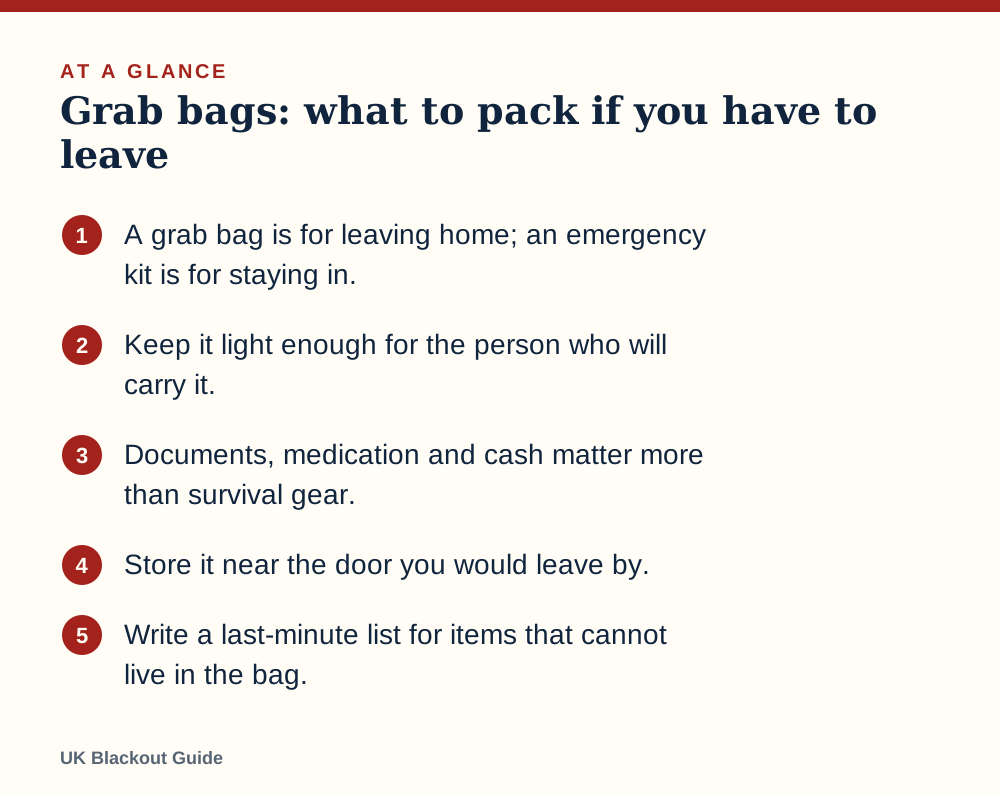
- A grab bag is for leaving home; an emergency kit is for staying in.
- Keep it light enough for the person who will carry it.
- Documents, medication and cash matter more than survival gear.
- Store it near the door you would leave by.
- Write a last-minute list for items that cannot live in the bag.
A grab bag does a different job from your home kit
Your home emergency kit is built for sitting out three days indoors. It includes 9 litres of water per person and a pile of tins, none of which you could carry far. A grab bag is the opposite: the minimum you need to spend a night or two somewhere else, such as a relative's house or a council rest centre.
For a power cut on its own, staying at home is nearly always the right call. Leaving makes sense when the building itself is unsafe or you are told to go, and deciding whether to stay or leave is a judgement worth thinking through in advance.
What goes in, in order of importance
Think about what would be hardest to replace or do without at two in the morning in a village hall. That puts paperwork and medicine well ahead of knives and paracord.
- Medication for several days, plus a written list of what each person takes. Follow your clinician's advice on anything that needs special storage.
- Copies of documents: ID, insurance details, prescriptions, key contacts and the other important documents to copy.
- Cash in small notes and coins, since card payments can fail in a wide outage and cash in an emergency still works.
- Phone power: a charged power bank and cable.
- Light: a head torch with spare batteries.
- Water and food: a filled bottle and a few snack bars per person. This is hours of supply, not days.
- Warmth: a hat, gloves, spare socks, a waterproof and a foil blanket.
- Hygiene and first aid: a small first aid kit, wipes, sanitiser, tissues, any sanitary products.
- Spare glasses, keys and a pen and paper.
Choosing the bag and keeping the weight down
A plain, comfortable rucksack makes the best grab bag, because it leaves both hands free for children, a stair rail or a torch. An ordinary 20 to 30 litre daysack is plenty for one adult. You may already own one.
There is no official weight limit, so use a practical test: the person it belongs to should be able to carry it down the stairs and walk for twenty minutes without stopping. If they cannot, take things out.
A head torch is the better choice of light here, since you may be carrying a bag and holding a child's hand at once.
What a foil blanket can and cannot do
Foil emergency blankets earn a place in a grab bag because they weigh almost nothing and fold to the size of a phone. They work by blocking wind and reflecting some of your body heat back, so they help most when wrapped over clothes or a fleece.
They do not generate heat and they are no substitute for proper layers, which is the honest answer to whether foil blankets really work.
The last-minute list taped inside the lid
Some things cannot sit in a bag for months: your phone, wallet, house keys, daily medication, hearing aids, a child's comforter, the pet carrier. Write these on a card and tape it inside the bag's flap or on the cupboard door.
In a hurry, people forget obvious things. A five-line card removes the thinking. Add the address and phone number of where you would go, in case you are separated or your phone is flat. A family communication plan covers how to agree a meeting point in advance.
If you are leaving because of fire, a gas smell or a carbon monoxide alarm, do not stop to collect anything. Get out first. The gas emergency number is 0800 111 999.
Where to keep it and how many you need
Keep the bag near the door you would leave by, in a hall cupboard or under the stairs. Not the loft, and not behind the Christmas decorations.
One bag per adult works well for couples, with children's items split between them. A single shared bag is fine for a small household as long as someone can carry it. People who drive most days sometimes keep a second, simpler set in the boot, and our car emergency kit guide covers that.
Check the bag when you check your main household kit, every six months. Swap the snacks, test the torch, top up the power bank and make sure the clothes still fit growing children.
Checklist
Grab bags: what to pack if you have to leave
- Rucksack you can carry comfortably for twenty minutes
- Medication and a written list of doses
- Copies of ID, insurance and key contacts
- Cash in small notes and coins
- Charged power bank and cable
- Head torch and spare batteries
- Water bottle and snack bars
- Hat, gloves, socks, waterproof and foil blanket
- Small first aid kit, wipes and sanitiser
- Last-minute list taped inside the flap
Common questions
Do I need a grab bag for a power cut?
Rarely. In a power cut on its own you are usually safest and most comfortable at home. A grab bag is for events that force you out, such as flooding, fire or a gas leak.
How much water should a grab bag hold?
A filled bottle of around a litre per person is a realistic amount to carry. The 3 litres per person per day in official advice applies to supplies kept at home.
Should children have their own grab bag?
A small, light bag with a torch, a snack, a drink and a familiar toy can help a child feel involved. Keep anything essential in an adult's bag.
Is a grab bag the same as a bug-out bag?
The idea is similar, but a UK grab bag is aimed at a night or two with family or in a rest centre, not at living outdoors. It should be far lighter.
Reviewed against these sources on 18 November 2026. If official advice has changed since, follow the official advice.
General information only. This page is not professional, safety, medical, legal or financial advice, and it is not official guidance. No national blackout has been forecast or announced, and nothing here suggests one is expected. We are independent and have no connection to the government or any energy company. Always check the official sources linked on this page. Full disclaimer
Keep reading
 Buying guide
Best emergency preparedness gifts
Ten emergency preparedness gifts that work in a power cut: radios, power banks, head torches, hand warmers and flasks picked from Amazon UK listings.
Read: Best emergency preparedness gifts Buying guide
Best grab bags for emergencies
Grab bags for emergencies are rucksacks kept packed by the door. Seven backpacks from Amazon UK compared on stated size, weather protection and price.
Read: Best grab bags for emergencies Question
What is an emergency grab bag?
What a grab bag is, how it differs from a home emergency kit, who should have one in the UK and the short list of things that belong inside it.
Read: What is an emergency grab bag? Guide
Car emergency kit for winter
What to keep in a UK car emergency kit for winter breakdowns and power cuts: warmth, light, phone charging, a jump starter and a few items people forget.
Read: Car emergency kit for winter