On this page
A car emergency kit should keep you warm, visible and in contact if you are stuck for several hours. Carry a blanket, a foil blanket, a torch, a phone charging cable, water, snacks, a warning triangle, a high-visibility vest and an ice scraper. A jump starter is a useful addition, especially in winter.
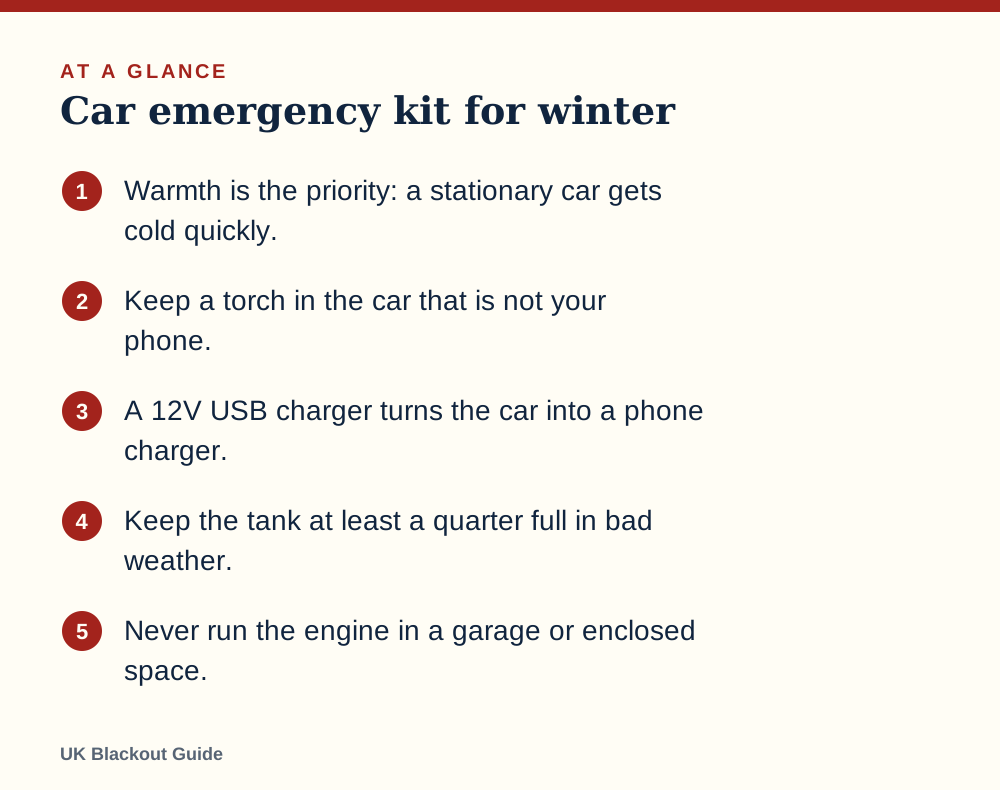
- Warmth is the priority: a stationary car gets cold quickly.
- Keep a torch in the car that is not your phone.
- A 12V USB charger turns the car into a phone charger.
- Keep the tank at least a quarter full in bad weather.
- Never run the engine in a garage or enclosed space.
Why a car kit belongs in a blackout plan
A car kit is mainly for breakdowns and being stranded in snow or floods. It also happens to be a useful backup at home. A car has a radio, a heater and a battery that can charge phones, all independent of the mains, which is the idea behind using a car as backup power.
During a wide power cut, driving itself gets harder. Traffic lights may be out, and fuel pumps need electricity. We cover that side in how to drive safely in a power cut. This page is about what sits in the boot.
Warmth for a long wait
If the engine is off, a car loses heat fast, and you may not want to idle for hours on limited fuel. A proper blanket per usual passenger is the single most useful item, and the blankets we recommend for cold conditions include types that pack down well. Wool or thick fleece stays warm even if slightly damp.
Add a foil blanket for each seat. They take up no space and block draughts when wrapped over a coat or a fleece blanket. Our round-up of foil emergency blankets includes the tougher reusable sort. A hat and gloves in the glovebox complete the set, because most people dress for the car's heater, not for the weather outside.
Never run the engine to keep warm inside a garage or any enclosed space. Exhaust fumes contain carbon monoxide, which has no smell and can kill. If you are stuck in snow and idling outdoors, keep the exhaust pipe clear of drifts.
Light, visibility and being found
Keep a torch in the car that lives there permanently, chosen from our list of dependable LED torches if you need one. Using your phone as a torch drains the one device you need for calling help. A torch with a magnetic base or a head torch is handy if you have to look under the bonnet or change a wheel.
A warning triangle and a high-visibility vest for each occupant help other drivers see you. Keep the vests inside the cabin, not under the luggage.
Keeping the phone and the battery alive
A USB cable and a 12V socket charger cost little and mean your phone can charge whenever the car is running, or for a while with the ignition on, within the limits set out in charging a phone from a car.
Cold weather is hard on older car batteries, and leaving the ignition on to charge phones or listen to the radio adds to the drain. A compact lithium jump starter, such as those in our guide to car jump starters, lets you restart without another vehicle. Many also have USB outputs, so they double as a power bank.
Your car radio is also worth remembering. It runs from the car battery and can pick up FM news when home broadband is down, as explained in whether a car radio works in a blackout.
Water, food and the small practical items
Keep a bottle of water per person and some snacks that survive heat and cold: cereal bars, nuts, dried fruit. Rotate the water in summer, when a hot boot does plastic bottles no favours.
Then the practical bits: an ice scraper and de-icer, a small first aid kit, a paper road atlas, a pen, tissues, any regular medication you would miss if delayed overnight, and a little cash in coins. If you have young children, add nappies, wipes and a change of clothes.
A paper map sounds old-fashioned until mobile data fails. In the Spain and Portugal blackout of April 2025, phone networks were widely disrupted for hours.
Fuel is part of the kit
Petrol pumps run on electricity, so a wide outage can close forecourts, as whether petrol stations work in a power cut explains. The simple habit is to refill at a quarter of a tank instead of at the warning light, especially when storms are forecast. Electric car drivers can apply the same idea by not letting the battery run low before bad weather.
If you carry or store spare petrol, the Health and Safety Executive's guidance allows up to 30 litres at home without notifying anyone, in suitable containers (plastic up to 10 litres, metal up to 20 litres), kept in a garage or shed and never in the living space.
Seasonal swaps and upkeep
In October, add the winter items: scraper, de-icer, gloves, an extra blanket, and a small shovel if you live somewhere that gets snow. In spring, take out what you do not need and add extra water and sun cream.
Check the kit when you check the household emergency kit at home. Test the torch, recharge the jump starter and replace any snacks that have been eaten on the school run.
Checklist
Car emergency kit for winter
- Blanket for each regular passenger
- Foil blankets, hats and gloves
- Torch with spare batteries
- Warning triangle and high-visibility vests
- 12V USB charger and phone cable
- Jump starter, charged
- Water and long-lasting snacks
- Ice scraper and de-icer in winter
- First aid kit and paper road atlas
- Tank kept above a quarter full
Common questions
Is a car emergency kit a legal requirement in the UK?
There is no general legal requirement to carry one in the UK. Rules differ abroad, so check before driving in other countries.
Can I sleep in the car to keep warm in a power cut?
It is possible outdoors with blankets, but never run the engine in a garage or enclosed space because of carbon monoxide. A sleeping bag indoors is usually warmer and safer.
How often should I charge a jump starter?
Follow the manufacturer's instructions. As a rule of thumb, check and top it up every few months and before winter.
Will leaving the ignition on to charge a phone flatten the battery?
Phone charging draws little power, but an older battery in cold weather can still be run down over many hours. Start the engine periodically outdoors, or carry a jump starter.
Reviewed against these sources on 18 November 2026. If official advice has changed since, follow the official advice.
General information only. This page is not professional, safety, medical, legal or financial advice, and it is not official guidance. No national blackout has been forecast or announced, and nothing here suggests one is expected. We are independent and have no connection to the government or any energy company. Always check the official sources linked on this page. Full disclaimer
Keep reading
 Question
What does the government say to keep at home for a power cut?
What to buy for the blackout, according to the government: the Be Ready list of water, food, a torch, an FM radio, a power bank, medication and cash.
Read: What does the government say to keep at home Question
Why are shops selling out of torches and emergency radios?
Why some shops are reported to be selling out of torches and radios after the Be Ready launch, what the official advice is, and what to buy in their place.
Read: Why are shops selling out of torches and Guide
72-hour emergency kit UK: the Be Ready list, item by item
72 hour kit UK: the government's Be Ready three-day list explained item by item, with quantities per person, what each item is for and how to store it.
Read: 72-hour emergency kit UK: the Be Ready list, Guide
Blackout shopping list: what to buy first, and what can wait
What to buy for the blackout, in order: a shopping list based on the government's Be Ready kit, with what to buy first, what can wait and what to skip.
Read: Blackout shopping list: what to buy first,