On this page
To keep a fridge-freezer cold through a blackout you need a power station with at least 1,000 Wh and an output above 1,000 W to handle the starting surge. A 2,000 Wh unit runs a typical fridge-freezer for roughly a day to a day and a half. Expect to pay from about £600 to £1,500.
- A fridge-freezer averages 40 to 80 W but needs 600 W or more to start.
- 2,000 Wh gives roughly 21 to 43 hours of fridge-freezer running.
- For cuts under four hours, a closed fridge needs no backup at all.
- A UPS function lets the battery take over while you are out or asleep.
- These units weigh a lot. Decide where it will live before you buy.
Most power cuts are over before food safety in a power cut becomes a worry. The Food Standards Agency says an unopened fridge should stay cold for around four hours, and a full freezer typically stays frozen for about 48 hours. A big battery earns its place when a blackout runs past those limits, or when the fridge holds medicine.
Every pick here has at least 1 kWh of storage and is judged on one job: starting a compressor and keeping it running for as many hours as possible. The method for connecting and cycling an appliance is in running a fridge-freezer on backup power.
Our picks for a power cut, at a glance




Anker SOLIX C2000 Gen 2, 2048Wh 2400W
★ 4.7 from 828 buyers · About £999 when checked 18 November 2026The listing gives 2,048 Wh and 2,400 W. For a fridge-freezer averaging 60 W, that works out at about 29 hours of continuous running, and the output is well above the 600 W or so a compressor needs to start. Rated 4.7 from about 830 buyers, at about £1,000.
- 2,400 W output with plenty of headroom
- About 2 kWh of storage
- High rating
- One of the dearer picks here
Anker SOLIX S2000, 2010Wh 1500W, UPS
★ 4.7 from 485 buyers · About £849 when checked 18 November 2026The listing describes a 10 ms UPS function and is sold for home backup, so the fridge can stay plugged into it and carry on when the mains drops, including when you are out or asleep. The listed 2,010 Wh is about 28 hours for a 60 W fridge-freezer, and 1,500 W covers the starting surge. Rated 4.7 from about 485 buyers, at about £850.
- Takes over automatically
- About 2 kWh of storage
- High rating
- 1,500 W is the lowest output among the 2 kWh picks
- Check the listing for how UPS mode should be set up
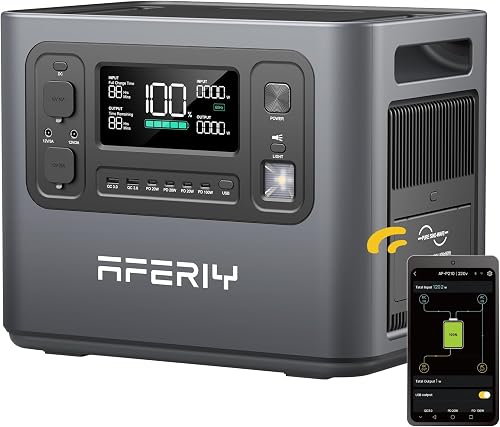
AFERIY 2400W Power Station, 2048Wh LiFePO4, UPS
★ 4.5 from 274 buyers · About £749 when checked 18 November 2026At about £750 this is the cheapest way on the list to get 2,048 Wh and a 2,400 W output, which is about 29 hours for a 60 W fridge-freezer. The listing also mentions a UPS function and a seven year warranty. Rated 4.5 from about 270 buyers.
- Low cost per Wh
- UPS function listed
- LiFePO4 battery
- Less established brand in the UK
- Check the warranty terms and who honours them
Anker SOLIX C1000 Gen 2, 1024Wh 2000W
★ 4.7 from 1,700 buyers · About £599 when checked 18 November 2026Half the storage for about £600. The listed 1,024 Wh gives roughly 14 hours for a 60 W fridge-freezer, and the 2,000 W output is far above the starting surge. It has the most buyer ratings on this list: 4.7 from about 1,700.
- Lower price and weight than 2 kWh units
- 2,000 W output
- Most ratings on the list
- Well under a day of fridge running without recharging
VTOMAN FlashSpeed Pro 3600, 3096Wh LiFePO4
★ 4.7 from 31 buyers · About £1500 when checked 18 November 2026The listing gives 3,096 Wh, half as much again as the 2 kWh units, and sells it as battery backup. For a fridge-freezer averaging 60 W that works out at about 44 hours, close to two days. That extra runtime is what the money buys. It costs about £1,500 and is rated 4.7, from only 31 buyers so far.
- Most stored energy on the list
- LiFePO4 battery
- Sold as battery backup
- Very few ratings
- Output wattage is not stated plainly in the title, so confirm it
- The dearest pick
BLUETTI Elite 200 V2, 2073.6Wh LFP
★ 4.7 from 251 buyers · About £899 when checked 18 November 2026BLUETTI lists this at 2,073.6 Wh with an LFP battery and sells it as battery backup. That capacity is about 29 hours for a 60 W fridge-freezer. Rated 4.7 from about 250 buyers, at about £900.
- Slightly more capacity than rivals
- High rating
- Sold for battery backup
- Output wattage is not in the title, so confirm it on the listing
Jackery Solar Generator 1000 v2 with 100W Panel
★ 4.6 from 142 buyers · About £699 when checked 18 November 2026A 1 kWh power station bundled with a 100 W panel for about £700, rated 4.6 from about 140 buyers. On a clear summer day a panel that size typically adds 300 to 400 Wh, which is five to six extra hours of fridge running when the mains is still off.
- Panel included with matching connectors
- Extends runtime in summer
- A dull winter day may add only 30 to 80 Wh
- Output wattage is not in the title
BLUETTI Elite 100 V2, 1024Wh 1800W
★ 4.5 from 348 buyers · About £599 when checked 18 November 2026Listed at 1,024 Wh and 1,800 W for about £600, sold for home and camping. That is roughly 14 hours for a 60 W fridge-freezer. It is a direct rival to the Anker C1000 with a slightly lower output and a 4.5 rating from about 350 buyers.
- 1,800 W is well above a compressor's starting surge
- Same capacity as the Anker C1000
- Fewer ratings than the Anker C1000
How we chose
These were chosen from Amazon UK listings on 18 November 2026 on listed capacity, listed output, price and verified buyer ratings. This site has not hands-on tested any of them, and no runtime below was measured. They are estimates from the listed Wh using the standard 85% efficiency rule. Smaller units in the same category were left out as too small for this job. Prices change often.
The starting surge decides whether it works at all
A fridge-freezer averages only 40 to 80 W over an hour, but its compressor needs 600 W or more for a moment each time it starts. If the power station cannot supply that, the fridge clicks and never gets going. An output of 1,000 W or more gives a safe margin. Check the rating plate inside your own appliance, and see how many watts common appliances use for comparison.
If a listing quotes a peak figure and a continuous one, the peak only helps for the instant of starting. Chest freezers and older appliances can ask for more than modern ones, so leave headroom.
Work out the hours you will get
Runtime is capacity in Wh times 0.85, divided by the average watts, the same sum used in whether a power station can run a fridge. For 2,000 Wh that is about 43 hours at 40 W and about 21 hours at 80 W. For 1,000 Wh, halve those figures. Old appliances, warm kitchens and frequent door opening all push the average up.
You can stretch a battery, as in saving your freezer in a long power cut, by running the freezer for an hour or two, then unplugging it for several hours with the door shut. A thermometer inside tells you whether that is working. The Food Standards Agency says a fridge should be at 5°C or below.
Connecting it safely
Plug the appliance straight into the power station with its own lead, or a short heavy-duty extension. Do not try to feed power into a wall socket. Back-feeding house wiring can kill engineers working on the network and damage your home.
Any connection between backup power and your home's fixed wiring needs a changeover switch fitted by a qualified electrician.
Power stations are fine to use in the kitchen, since they burn no fuel. Keep the unit off wet floors and leave space around its vents.
Weight, storage and whether you need one this big
Units of 2 kWh are heavy and are best kept on the ground floor near the appliance they will serve. Store them indoors, charged, and top up every three months. If your real need is a router, phones and a lamp, a smaller unit from the portable power stations for home backup list costs a third as much. For outages of several days, compare the cost with petrol in power station versus generator.
Whatever you buy, try it on the fridge-freezer for an hour on a normal day, so you know it starts before you depend on it.
How much to spend on a power station for a fridge-freezer
There is no cheap tier for this job. The smaller, cheaper units in the catalogue were left out because they cannot be relied on to start a compressor or run one for long. The budget end is about £600, which buys 1 kWh and roughly 14 hours of running for a 60 W fridge-freezer. With the door kept shut and the unit run in bursts, that covers most cuts.
The middle tier, about £750 to £1,000, doubles the storage to 2 kWh and about 29 hours, and some models add UPS switchover. This is the right tier if you have a full freezer or live where cuts run past a day.
The high end, about £1,500, buys 3 kWh and close to two days. It is worth it for medicine that must stay cold or a rural home at the end of a long line. For anyone else, compare the cost with the food at risk before spending that much.
Common questions
How long will a 2,000 Wh power station run a fridge-freezer?
Roughly 21 to 43 hours of continuous running, depending on the appliance. Running it in bursts with the door shut can stretch that over several days.
Do I need backup for the fridge in a short power cut?
No. An unopened fridge should stay cold for around four hours and a full freezer for about 48 hours, according to the Food Standards Agency.
Can one of these run a kettle?
Units rated above the kettle's 2,000 to 3,000 W can, but each boil uses a noticeable slice of the battery. A camping stove outdoors or a pre-filled flask is a better use of resources.
What if my food has warmed up anyway?
Follow Food Standards Agency guidance. If in doubt, throw it out.
Reviewed against these sources on 18 November 2026. If official advice has changed since, follow the official advice.
General information only. This page is not professional, safety, medical, legal or financial advice, and it is not official guidance. No national blackout has been forecast or announced, and nothing here suggests one is expected. We are independent and have no connection to the government or any energy company. Products are chosen from retailer listings and buyer ratings and have not been tested by us; some links earn us a commission. Anything involving electricity, gas, fuel or food safety should be checked with a qualified professional or the relevant official body before you act on it. Always check the official sources linked on this page. Full disclaimer
Keep reading
 Question
Can a power station run a heater in a power cut?
A power station can run a 2,000 W fan heater for under an hour at best. The maths, and three far better ways to turn stored battery power into warmth.
Read: Can a power station run a heater in a power Question
Can a power station run a kettle in a power cut?
A standard kettle needs 2,000 to 3,000 W, more than small power stations supply. Which sizes can boil water, what it costs in battery, and better options.
Read: Can a power station run a kettle in a power Guide
Portable power stations explained
How portable power stations work, what watt-hours and watts mean, what one can and cannot run in a UK power cut, and the features that matter.
Read: Portable power stations explained Guide
Running a fridge or freezer on backup power
When a fridge or freezer needs backup power in a power cut, what size power station or generator will start one, and how long it will keep running.
Read: Running a fridge or freezer on backup power