On this page
For home emergencies, buy a mid-sized first aid kit that includes an emergency blanket, a cold pack and burn or eye care, in a bag you can find by torchlight. A 100 to 220 piece kit covers the cuts, burns and falls that are more likely when the lights are out. Add your own essential medication.
- A first aid kit is on the official Be Ready kit list
- Burn gel and a foil blanket matter more in a power cut
- A reflective or brightly coloured bag is easier to find in the dark
- Add your own medication and a written medication list
- Check expiry dates every six months
A first aid kit and essential medication both appear on the official Be Ready kit list. In a power cut, small injuries become more likely: trips in dark hallways, burns from candles and unfamiliar stoves, cuts from opening tins by torchlight. Help may also take longer to arrive if phone networks and roads are affected.
This list covers ready-made kits for the home, ordered by how well the listed contents match those risks. Kits whose titles name an emergency blanket, burn gel, cold packs or a reflective bag come first. A kit is only as useful as your grasp of first aid basics for emergencies. This is general information only. For medical conditions, follow the advice of your own clinician.
Our picks for a power cut, at a glance


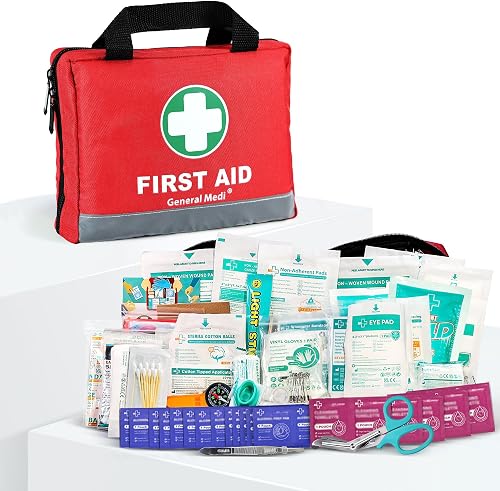
General Medi 210 piece first aid kit
★ 4.8 from 7,400 buyers · About £30 when checked 18 November 2026The title describes a reflective design, which helps when you are searching a cupboard with a torch. It also names a cold pack, a moleskin pad and an emergency blanket among its 210 pieces, covering sprains from a fall and keeping someone warm in an unheated house. Rated 4.8 from about 7,400 buyers, at around £30.
- Reflective bag
- Cold pack and emergency blanket listed
- 4.8 from about 7,400 buyers
- No burn gel named in the title
- Check the full contents list on the page
General Medi 215 piece kit with 43 piece mini kit
★ 4.8 from 14,800 buyers · About £39 when checked 18 November 2026Two kits in one purchase: a 215 piece main kit for the house and a 43 piece mini kit for a grab bag or the car. The title lists an emergency blanket, bandages and scissors. It is the most reviewed kit here, 4.8 from about 14,800 buyers, and costs just under £40.
- Main kit and mini kit
- Emergency blanket included
- About 14,800 ratings
- The dearest kit on this list
- Piece count includes many small items
HONYAO 180 piece first aid kit
★ 4.6 from 837 buyers · About £19.99 when checked 18 November 2026Burns are a real risk when people light candles or cook on unfamiliar equipment, and this title names two burn gels, two instant cold packs, eyewash and an emergency blanket. That is the fullest list of power cut items in any title here. Rated 4.6 from about 840 buyers, at around £20.
- Two burn gels listed
- Two cold packs and eyewash
- Emergency blanket
- Fewer ratings than the kits above
HONYAO 105 piece small first aid kit
★ 4.8 from 4,300 buyers · About £9.99 when checked 18 November 2026For around £10, the title lists plasters, an emergency foil blanket, burn gel and eyewash in a small red case. It is a low-cost way to tick the first aid line of the kit list, or to put a second kit upstairs. Rated 4.8 from about 4,300 buyers.
- Around £10
- Burn gel, eyewash and foil blanket listed
- Red case is easy to spot
- Small, so supplies run out quickly in a large household
Astroplast 90 piece premium kit
★ 4.8 from 4,600 buyers · About £11.85 when checked 18 November 2026A 90 piece kit in a bag, with eyewash, two cold packs and an emergency blanket named in the title. It suits a flat or a small household with little storage. Rated 4.8 from about 4,600 buyers and priced at around £12.
- Two cold packs and eyewash
- Emergency blanket
- Around £12
- No burn care named in the title
- Fewer dressings than larger kits
170 piece hard case first aid kit
★ 4.8 from 2,500 buyers · About £24 when checked 18 November 2026The title describes a hard, lightweight case with an instant cold pack and an emergency blanket. A rigid case protects the contents where a soft bag would be crushed, such as a car boot or a garage shelf next to the rest of your emergency kit. Rated 4.8 from about 2,500 buyers, at around £24.
- Hard case
- Cold pack and emergency blanket
- 4.8 buyer rating
- Less room to add your own items than a soft bag
General Medi 309 piece first aid kit
★ 4.8 from 7,400 buyers · About £32 when checked 18 November 2026With 309 pieces in a reflective bag, including eyewash, bandages, a moleskin pad and an emergency blanket, this is the choice if several people may need the kit over a few days without a trip to the chemist. Rated 4.8 from about 7,400 buyers, at a little over £30.
- Largest kit on the list
- Reflective bag
- Eyewash and emergency blanket
- Bulkier to store
- Much of the count is small items
How we chose
These picks were chosen from Amazon UK listings on 18 November 2026, using the stated specification, the price and verified buyer ratings. Nothing here has been hands-on tested by us, so every claim comes from the listing itself. Prices and stock change, so check the listing before you buy.
Read the contents list, not the piece count
A 300 piece kit is not three times as useful as a 100 piece kit. Much of the count is plasters, wipes and safety pins. What matters is whether the kit has the things you would struggle to improvise: sterile dressings in a few sizes, bandages, gloves, scissors, eyewash, a cold pack and burn dressings or gel. Compare the listed contents against a sensible first aid kit list and top up any gaps from a chemist. Knowing how to use the contents matters more than the number, and organisations such as the British Red Cross offer first aid guidance and courses.
How much to spend on a first aid kit for home emergencies
Prices in this category run from about £10 to £40. Under £15 buys a 90 to 105 piece kit with the basics, and some titles at that price still name a foil blanket, eyewash or burn gel. That is enough for one or two people. The middle, £20 to £30, buys 170 to 220 pieces, more dressings, and extras such as two cold packs or a hard case, which suits a family. The high end, £30 to £40, buys the largest counts or a second mini kit for the car or grab bag. It is worth it for a big household, and more than a flat needs. Whatever you spend, keep the kit where everyone can find it by torch, with one of the head torches that leave both hands free beside it.
Add medication and written information yourself
No ready-made kit contains your prescriptions. Official advice is to keep essential medication ready, along with a written list of medication and contacts. Put a copy of that list inside the kit. Add pain relief you know suits your household, any children's medicines, spare inhalers if your clinician agrees, and a thermometer. If any medicine needs to stay cold, plan for storing medicines without a fridge and ask your pharmacist for advice specific to it.
Injuries that power cuts make more likely
Think about what changes when the lights are off. Falls on stairs, burns from camping stoves and hot water, and cuts are the usual ones, so dressings, burn care and a cold pack earn their place. Cold is a risk too: an emergency blanket helps, and the signs of hypothermia at home are worth knowing. For anything serious, call 999.
A first aid kit does not treat carbon monoxide poisoning. Headache, dizziness, nausea or breathlessness around a fuel-burning appliance means get into fresh air and get medical help.
Common questions
Do first aid kits go out of date?
Yes. Sterile dressings, wipes, eyewash and cold packs carry expiry dates. Check them every six months and replace what has expired.
Is one kit enough for a house?
One well-stocked kit is enough for most homes, with a smaller one in the car. Larger households may want a second upstairs.
Should I buy a kit or build my own?
A ready-made kit is cheaper and quicker for the basics. Building your own makes sense if you have specific needs, and most people end up adding to a bought kit anyway.
Do I need first aid training?
It helps a great deal. A short course or a reputable first aid guide makes the kit far more useful.
Reviewed against these sources on 18 November 2026. If official advice has changed since, follow the official advice.
General information only. This page is not professional, safety, medical, legal or financial advice, and it is not official guidance. No national blackout has been forecast or announced, and nothing here suggests one is expected. We are independent and have no connection to the government or any energy company. Products are chosen from retailer listings and buyer ratings and have not been tested by us; some links earn us a commission. Nothing here is medical advice: follow your own clinician, pharmacist or equipment supplier. Always check the official sources linked on this page. Full disclaimer
Keep reading
 Guide
First aid basics worth learning now
The first aid most likely to be needed in a power cut: burns, cuts, falls, cold and carbon monoxide, plus when to call 999 or NHS 111 and how to get trained.
Read: First aid basics worth learning now Question
What should be in an emergency first aid kit at home?
A plain list of what a home first aid kit should contain for power cuts and other emergencies, what to add for your household and how to keep it in date.
Read: What should be in an emergency first aid kit Guide
Babies and toddlers in a power cut
A practical plan for a power cut with a baby or toddler: feeds, safe warmth, sleep, night light, nappies and the baby items to add to your household kit.
Read: Babies and toddlers in a power cut Question
Can I get a free backup battery for my landline for power cuts?
Who can get a free battery backup for a digital landline, how to ask your phone provider, how long it lasts and what to do if you do not qualify for one.
Read: Can I get a free backup battery for my