On this page
For a power cut, buy a battery whose listing names your CPAP model and matches its input voltage, with enough watt-hours for a night. Around 270 to 300 Wh gives roughly 4 to 8 hours at typical CPAP draws without a humidifier. Ask your sleep clinic or equipment supplier before relying on any backup, and register with the Priority Services Register.
- Match the battery to your machine's voltage and connector
- Runtime in hours is roughly Wh x 0.85 divided by watts
- Turning off the humidifier and heated tube saves a lot of power
- Plan how you would recharge it if the cut lasts a second night
- Ask your clinic what to do if therapy is interrupted
A CPAP machine stops when the mains does, like most medical equipment in a power cut. How much an interrupted night matters is a question for your own clinician, not a website. What follows is general information about batteries sold for CPAP use. Follow your clinic's advice on whether you need one and how to use it.
A battery is only one part of running a CPAP in a power cut. If you rely on powered medical equipment you are likely to qualify for the free Priority Services Register, which you should join whatever you buy.
Our picks for a power cut, at a glance




EASYLONGER ES960 CPAP battery (297.6Wh)
★ 4.6 from 201 buyers · About £237 when checked 18 November 2026The listing gives a stated capacity of 297.6 Wh in a pack sold for CPAP use. By the usual rule of thumb that is roughly 4 to 8 hours at a 30 to 60 W draw, which is the difference between losing a night and sleeping through a cut. It has the highest rating of the dedicated batteries, 4.6 from about 200 buyers, and costs around £240. The part of the title we can see names no machines, so confirm yours on the listing.
- 297.6 Wh stated
- Highest rating of the CPAP batteries here
- Sold specifically for CPAP use
- About 200 ratings
- Check compatibility and cables for your exact model
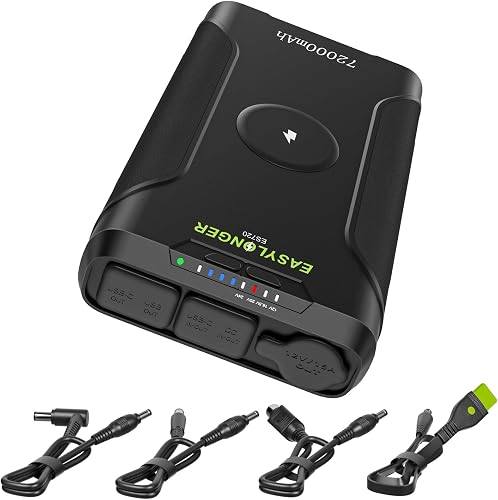
EASYLONGER ES720 PRO CPAP battery (276Wh)
★ 4.5 from 188 buyers · About £230 when checked 18 November 2026The listing describes a CPAP battery backup power supply with a stated capacity of 276.48 Wh. By the usual rule of thumb that is roughly 4 to 8 hours at a 30 to 60 W draw. It is rated 4.5 from about 190 buyers and costs around £230. Confirm on the listing that your machine is supported.
- 276 Wh stated
- Sold specifically for CPAP use
- 4.5 rating
- Fewer than 200 ratings
- Check compatibility with your exact model
EASYLONGER ES720 CPAP battery (266Wh)
★ 4.5 from 188 buyers · About £220 when checked 18 November 2026The title lists 266 Wh with 12 V and 24 V outputs and names ResMed AirSense 11, AirSense 10, S9, AirMini and AirCurve 10 models along with Philips machines. A named model list makes checking easier. It costs around £220 and shares its 4.5 rating with the PRO version.
- 12 V and 24 V outputs stated
- Machine models named in the title
- 266 Wh
- You may still need the right DC cable for your machine
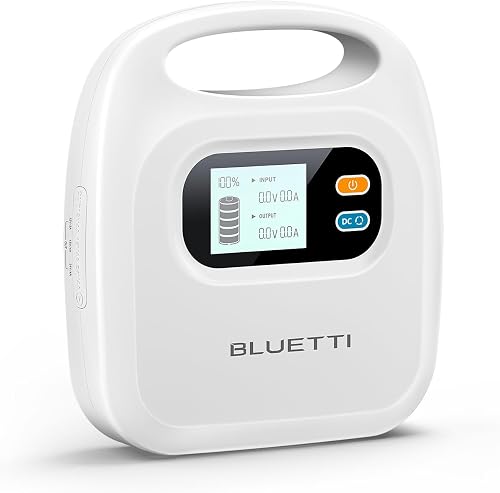
BLUETTI X30 CPAP battery backup (297Wh)
★ 4.1 from 281 buyers · About £697 when checked 18 November 2026Bluetti is an established power station brand, and this unit is listed at 297 Wh for AirSense 10, AirSense 11, AirMini, AirCurve 10, S9 and DreamStation machines. It was priced at roughly £700 when checked, about three times the alternatives, with a 4.1 rating from about 280 buyers. Compare carefully before paying that much.
- 297 Wh stated
- Named machine compatibility
- Known battery brand
- Roughly three times the price of similar capacity
- Lowest rating of the main batteries
Pilot-24 Lite CPAP battery (95Wh)
★ 4.0 from 608 buyers · About £325 when checked 18 November 2026The Pilot-24 Lite is a 95 Wh battery listed for 24 V CPAP machines. At 95 Wh the rule of thumb gives only about 1.3 to 2.7 hours at 60 to 30 W, so treat it as cover for short cuts or part of a night unless your machine draws less. It has about 600 ratings averaging 4.0 and costs around £325. That fits a three hour rota cut better than a full night.
- Small capacity suits travel
- About 600 buyer ratings
- Short runtime by the standard maths
- Expensive per watt-hour
- 24 V machines only
12V car charger for Pilot-12 Lite and Pilot-24 Lite
★ 4.5 from 156 buyers · About £29 when checked 18 November 2026This is an accessory, not a battery. The listing describes a 12V car charger for the Pilot-12 Lite, Pilot-24 Lite and Pilot Flex CPAP batteries. In a cut that runs past one night, a car socket may be the only way to refill a small battery, so it earns its place beside the Pilot above. It is rated 4.5 from about 160 buyers and costs around £30.
- Recharges from a car with the mains off
- 4.5 rating
- Around £30
- Only for the Pilot batteries named on the listing
- Run the engine outdoors, never in a garage
EnginStar 300W portable power station (296Wh)
★ 4.3 from 1,400 buyers · About £294 when checked 18 November 2026This is a general power station with a stated 296 Wh, rated 4.3 from about 1,400 buyers at around £295. It would also charge phones and run a lamp. The title describes a 110 V AC outlet, which is not UK mains voltage, so do not plan to plug a UK CPAP power brick into it without confirming the specification with the seller. A DC adapter for your machine is the safer route.
- 296 Wh stated
- Most buyer ratings on this list
- Useful for other devices too
- 110 V AC outlet stated, not UK voltage
- Not sold specifically for CPAP
TAIFU 12V-24V DC adapter for ResMed S10 series
★ 4.6 from 101 buyers · About £31 when checked 18 November 2026This is a cable, not a battery. The listing describes a vehicle charger DC adapter converting 12 V to 24 V for ResMed AirSense 10 and AirCurve 10 machines. Running a machine from DC avoids the losses of an inverter. It is rated 4.6 from about 100 buyers at around £30. It is a third-party part, so ask your equipment supplier before using it.
- Lets a 12 V source feed a 24 V machine
- 4.6 rating
- Around £30
- Third-party accessory
- Only for the machines named on the listing
How we chose
These picks were chosen from Amazon UK listings on 18 November 2026, using the stated specification, the price and verified buyer ratings. Nothing here has been hands-on tested by us, so every claim comes from the listing itself. Prices and stock change, so check the listing before you buy.
Work out the runtime you need
Runtime in hours is roughly the battery's watt-hours multiplied by 0.85, divided by the watts your machine draws. A CPAP typically uses 30 to 60 W without a humidifier. So a 276 Wh battery gives about 235 usable Wh: close to 8 hours at 30 W, or about 4 hours at 60 W. Your pressure setting, mask leak and room temperature all change the draw. The machine's manual or your supplier can give its real figure, which is the number to use when working out what size power station you need.
Voltage and connector must match your machine
CPAP machines run on low-voltage DC, commonly 12 V or 24 V depending on the make, through a connector specific to the model. A battery that names your machine on its listing, or a DC adapter made for it, is far safer than guessing. Do not force a similar-looking plug. If you already own a power station, a correct DC adapter may be all you need, and the portable power stations we list are worth comparing on price per watt-hour. Check with the equipment supplier that third-party power will not affect your agreement or warranty.
Humidifiers and heated tubes use most of the power
The heater plate in a humidifier and a heated tube can use more power than the blower itself, and the typical figures above assume they are off. Many users can run for one or two nights without humidification, but comfort and suitability vary, so ask your clinic in advance what they recommend during a power cut. Practise a night on battery while the mains is working. You will learn the true runtime and whether the settings suit you.
Recharging and the rest of your plan
One battery covers one night, perhaps two. In a longer outage you need a way to refill it: a car socket, a larger power station, or a relative's house that still has power. Solar is slow in a UK winter. Tell your network operator about your equipment through the Priority Services Register, and agree with family where you would go if the cut runs on. If the household also has a powered chair, whether an electric wheelchair needs backup is worth settling in the same conversation.
Never run a petrol generator indoors or in a garage to power medical equipment. Carbon monoxide has no smell and can kill.
How much to spend on a CPAP battery for a power cut
Dedicated CPAP batteries are not cheap, and the catalogue has nothing of useful capacity under about £220. The only picks near £30 are cables and chargers, not batteries. The budget and middle tiers, roughly £220 to £240, already give 266 to 298 Wh, enough for about a night at typical draws without a humidifier. A general power station of similar capacity sits a little under £300. The high end, at roughly £700, buys an established battery brand and a named compatibility list, but the stated capacity is about the same as packs a third of the price. That premium is hard to justify on the listing alone, so ask your equipment supplier what they recommend before paying it.
Common questions
Can any power bank run a CPAP?
No. Ordinary phone power banks do not supply the voltage or power a CPAP needs. Use a battery or adapter that names your machine.
Will the NHS or my supplier provide a backup battery?
Policies vary. Ask your sleep clinic or equipment supplier, and tell them if a power cut would put you at particular risk.
Can I use a UPS for my CPAP?
A UPS is designed for short bridging, usually minutes, so it suits brief cuts only. Check the machine's wattage against the UPS rating first.
How often should I charge a CPAP battery in storage?
Follow the listing or manual. As a general habit, top it up every few months and test a full night once or twice a year.
Reviewed against these sources on 18 November 2026. If official advice has changed since, follow the official advice.
General information only. This page is not professional, safety, medical, legal or financial advice, and it is not official guidance. No national blackout has been forecast or announced, and nothing here suggests one is expected. We are independent and have no connection to the government or any energy company. Products are chosen from retailer listings and buyer ratings and have not been tested by us; some links earn us a commission. Nothing here is medical advice: follow your own clinician, pharmacist or equipment supplier. Always check the official sources linked on this page. Full disclaimer
Keep reading
 Question
How do I run a CPAP machine in a power cut?
How to keep a CPAP machine running in a power cut using a dedicated battery or portable power station, how to estimate runtime and what to ask your clinic.
Read: How do I run a CPAP machine in a power cut? Guide
Medical equipment at home in a power cut
How to plan for a power cut if you rely on medical equipment at home: who to tell, what to ask your supplier, backup power options and when to call 999.
Read: Medical equipment at home in a power cut Guide
Babies and toddlers in a power cut
A practical plan for a power cut with a baby or toddler: feeds, safe warmth, sleep, night light, nappies and the baby items to add to your household kit.
Read: Babies and toddlers in a power cut Question
Can I get a free backup battery for my landline for power cuts?
Who can get a free battery backup for a digital landline, how to ask your phone provider, how long it lasts and what to do if you do not qualify for one.
Read: Can I get a free backup battery for my