On this page
Keep enough non-perishable food for three days that needs no cooking and no fridge, plus a manual tin opener. That is what the government's Be Ready campaign asks households to have. Plan it as nine meals per person from foods you already eat, such as tinned fish, beans, oatcakes, cereal, long-life milk and fruit.
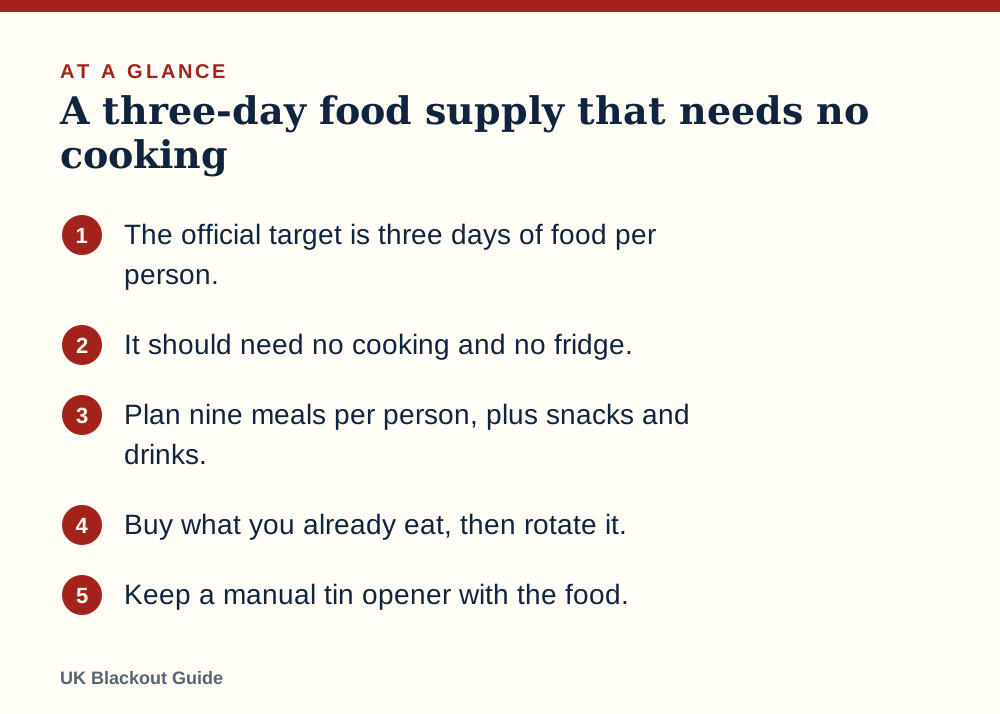
- The official target is three days of food per person.
- It should need no cooking and no fridge.
- Plan nine meals per person, plus snacks and drinks.
- Buy what you already eat, then rotate it.
- Keep a manual tin opener with the food.
What the official advice asks for
The UK government's Be Ready campaign, launched on 22 October 2026, asks households to be able to manage for three days. On food, its kit list is short: non-perishable food for three days that needs no cooking or fridge, a tin opener, and baby supplies and pet food if you need them.
The campaign presents this as general preparedness, not as a forecast. No national blackout is planned or predicted.
Three days of cupboard food is useful well beyond power cuts. It covers snow, flooding, illness, or a week when the card machine at the shop is down.
Count meals, not tins
The easiest way to get this right is to count meals. Three days is nine meals per person. A household of four needs 36 meals, plus snacks and something to drink.
Write the nine meals down as you would a normal weekly plan. People who buy "some tins" tend to end up with twelve cans of chopped tomatoes and nothing to eat them with. People who plan breakfast, lunch and dinner for three days, perhaps from a list of no-cook meals from the cupboard, end up with food they can actually serve.
A sample three days for one adult
This is an example to adapt, not a prescription. Everything in it can be eaten cold, straight from the pack or tin.
| Breakfast | Lunch | Dinner | |
|---|---|---|---|
| Day 1 | Cereal or muesli with long-life milk | Tinned tuna and sweetcorn on crackers | Tinned mixed bean salad, oatcakes, tinned fruit |
| Day 2 | Oatcakes with peanut butter, a fruit pot | Tinned chicken or chickpeas in a wrap | Ready-to-eat rice or grain pouch with tinned mackerel |
| Day 3 | Cereal bars, dried fruit and nuts | Tinned soup (safe cold, nicer hot) with crackers | Tinned potatoes, tinned ham or lentils, tinned vegetables |
Add snacks (biscuits, nuts, chocolate), and remember that drinking water is counted separately. When you work out how much water to store, the official figure is 3 litres per person per day.
Buy what you already eat
The best emergency food is ordinary food. The food worth keeping in for an emergency is mostly cupboard staples your household eats anyway, so you can use it up and replace it without waste, and nobody has to face an unfamiliar meal on a stressful day.
That matters most for children, who often refuse new food when they are unsettled, and for anyone with allergies, coeliac disease, diabetes or other dietary needs. Build their three days around what they can safely eat now.
Purpose-made long-life emergency food does have a place. It keeps for years and takes up little room, which suits a car kit or a grab bag you do not want to keep checking.
The tin opener problem
A surprising number of kitchens have only an electric opener, or a manual one that no longer grips. Ring-pull tins help, but ring pulls snap. Put a working manual tin opener in the same box as the food and test it on a tin before you forget about it.
If grip is a concern for you or a relative, look for an easier-turn design.
Where to keep it and how to stop it going out of date
Store the food somewhere cool, dry and dark, in one place, so you are not searching cupboards by torchlight. A lidded plastic box under the stairs works well and keeps mice and damp out.
Be Ready's advice is to build a kit gradually and check it every six months. Adding two or three items to a normal shop over a few weeks does the job without clearing shelves for other people, a point we expand on in preparing without panic buying.
At each six-monthly check, move anything approaching its date into the kitchen to be eaten and replace it, the simple routine set out in food storage and rotation.
Three days is all the official advice asks for. Working out how much food 30 days takes is a separate, optional sum.
Babies, pets and medical diets
The official list names two groups people forget. For babies, Be Ready prefers ready-to-feed formula, because it needs no water or heating. For pets, keep at least three days of their usual food.
If anyone in the house relies on a prescribed or tube feed, ask your dietitian or clinical team what to hold in reserve and follow their advice.
Checklist
A three-day food supply that needs no cooking
- Nine no-cook meals per person
- Snacks and long-life drinks
- Manual tin opener, tested
- Baby formula and food if needed
- Three days of pet food
- Food for any special diets
- Date written on the box for the next check
Common questions
Does emergency food have to be tinned?
No. Anything that keeps at room temperature and can be eaten without cooking counts, including crackers, cereal, nut butters, dried fruit, pouches and long-life milk.
Is it safe to eat tinned food cold?
Tinned food is cooked during canning, so foods such as beans, soup, fish and vegetables can be eaten cold straight from the tin. Check the label if you are unsure about a product.
How much does three days of food cost?
It depends on what you choose, but because it is ordinary cupboard food bought gradually, most of it replaces things you would have bought anyway.
Should I count food in the fridge and freezer?
Treat it as a bonus for the first day. The three-day supply should work with no fridge at all.
Reviewed against these sources on 18 November 2026. If official advice has changed since, follow the official advice.
General information only. This page is not professional, safety, medical, legal or financial advice, and it is not official guidance. No national blackout has been forecast or announced, and nothing here suggests one is expected. We are independent and have no connection to the government or any energy company. Anything involving electricity, gas, fuel or food safety should be checked with a qualified professional or the relevant official body before you act on it. Always check the official sources linked on this page. Full disclaimer
Keep reading
 Question
What food should I keep in for an emergency?
What food to keep in for an emergency in the UK: a short list of cupboard staples that need no cooking or fridge, and how much to hold for three days.
Read: What food should I keep in for an emergency? Guide
No-cook meal ideas from the cupboard
No-cook meal ideas for a power cut using ordinary UK cupboard food: breakfasts, lunches and dinners that need no hob, no fridge and no hot water.
Read: No-cook meal ideas from the cupboard Buying guide
Best emergency food for a three-day blackout kit
Emergency food for a three-day blackout kit: ready-to-eat pouches and ration biscuits that need no cooking, picked from Amazon UK listings.
Read: Best emergency food for a three-day blackout Buying guide
Best manual tin openers for an emergency kit
Manual tin openers to keep with your emergency food, as the official kit list asks, including easy-grip and smooth edge designs. Picked from Amazon UK listings.
Read: Best manual tin openers for an emergency kit